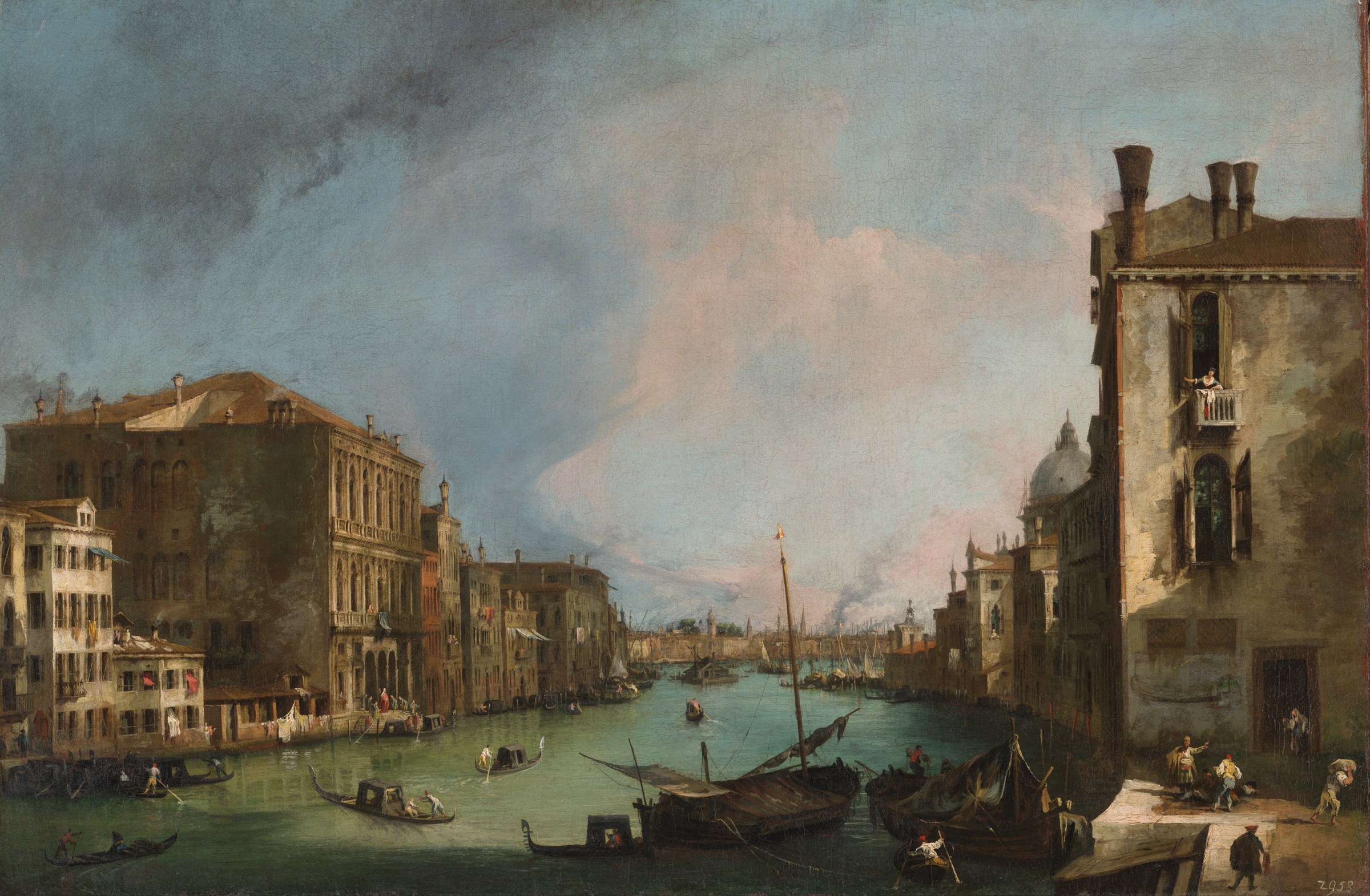
Venice in the 18th Century
The city that made him — a republic grown rich on tourism, gambling, and masks, and already dying.
A republic in decline
When Casanova was born in 1725, the Republic of Venice — La Serenissima — was a shadow of the maritime empire it had been. The spice trade was gone, the Ottoman wars had drained the treasury, and the patrician class lived off rents and offices. What remained was the city’s other economy: pleasure. By the mid-eighteenth century Venice was Europe’s great tourist resort, and the carnival — which could run for months, from December to Lent — drew masked visitors from every court in Europe.
Carnival and the mask
The mask (baùta, the black moretta for women) was not only a carnival costume but a social institution: worn for months of the year, it granted anonymity across class lines. Gambling was likewise institutionalized in the ridotti — licensed gaming houses where nobles and adventurers met at the faro table. Casanova’s memoirs are the single richest account of this world: the suppers, the assignations, the convents with lax discipline, the spies and the libertines sharing the same staircases.
The state behind the pleasure
The counterpart to the license was surveillance. The Inquisitori di Stato (State Inquisitors), created in 1539, ran a network of informers and secret justice; the Piombi cells under the Doge’s Palace roof held prisoners of state without public trial. It was this apparatus that arrested Casanova in 1755 — and, ironically, that later employed him as an informant after his 1774 return.
The end
Casanova outlived his republic by a year. In 1797, Napoleon’s armies ended the thousand-year Republic of Venice (Treaty of Campo Formio, October 1797); Casanova died at Dux in June 1798. The memoirs he was still writing became, among other things, an elegy for a vanished city.
Source notes
- The account of the ridotti, carnival, and the Inquisitori follows the standard histories of eighteenth-century Venice (e.g., the works of Piero Del Negro and the Museo Correr’s documentation) and Casanova’s own descriptions, which scholars treat as broadly reliable on public institutions.
- The 1797 date for the fall of the Republic (Treaty of Campo Formio, 17 October 1797) is the standard historical dating.