The myth machine
The stories are good. Some of them are even true. Here's the separation.
Huang is a gifted storyteller, and Silicon Valley is a gifted myth factory. The result is a set of legends that are mostly true — which is exactly why they need checking.
“Founded on a Denny’s napkin”
Mostly true, with garnish. The founding meeting at a Denny’s in San Jose in April 1993 is consistently documented. The detail that improves with retelling is the napkin — the image of three men sketching a business plan on diner paper. Huang himself leans into the Denny’s symbolism (he washed dishes at one as a teenager). Treat the location as fact; treat the napkin as storytelling.
“The GeForce 256 was the world’s first GPU”
Marketing claim, historically debated. NVIDIA marketed the GeForce 256 (1999) as “the world’s first GPU,” defining GPU as a single chip integrating transform, lighting, and rendering. By that definition the claim holds up reasonably well. But historians note that graphics acceleration predates it, that “GPU” had been used for earlier chips, and that the definition was convenient to NVIDIA. Fair summary: NVIDIA named and defined the modern GPU category; “first” depends on the definition.
“Thirty days from going out of business”
A slogan, not a filing. The line dates to the RIVA 128 era (1997), when the company’s cash reportedly covered about a month of payroll. It is an internal mantra Huang still quotes — and it may well have been literally true at the time. But it survives as culture, not as an audited fact. No SEC filing says “thirty days.”
The $5 million from Sega
Reported, not confirmed. Huang’s story — that Sega’s CEO paid NVIDIA roughly $5 million after releasing it from the failed console contract — is vivid, specific, and retold consistently. It does not appear in public filings with that precision. Treat the release from the contract as the documented core; treat the dollar figure as Huang’s telling.
“Self-made immigrant who started with nothing”
True in outline, simplified in detail. The immigrant story is real: sent to America at nine, boarding school in Kentucky, Denny’s dishwashing, working through college. What’s sometimes lost: he also earned two electrical-engineering degrees (Oregon State, Stanford) and spent nine years as a successful chip designer and business-unit director before founding NVIDIA. He started with less than most founders — and with more preparation than the myth suggests.
The junior table-tennis champion
Reported. Profiles describe Huang as an accomplished junior table-tennis player at Oneida. The broad fact (he played competitively and well) is consistent across sources; specific titles and rankings are not independently documented here.
Net-worth figures
Reported estimates, never facts. Outlets like Forbes and Bloomberg publish real-time billionaire estimates for Huang, and the numbers move by billions in a day with NVIDIA’s stock. This site does not repeat a specific figure, because any figure would be stale on arrival and because the methodologies are the publications’, not facts about Huang. Anyone quoting you a precise number is quoting a model, not a bank statement.
“NVIDIA invented AI”
No. NVIDIA accelerated AI — decisively. The algorithms, the research breakthroughs (including AlexNet, built by academic researchers), and the data came from elsewhere. What NVIDIA supplied was the computing substrate that made deep learning practical at scale, plus the CUDA software stack. “Indispensable to AI” is accurate; “inventor of AI” is not.
The leather jacket’s origin
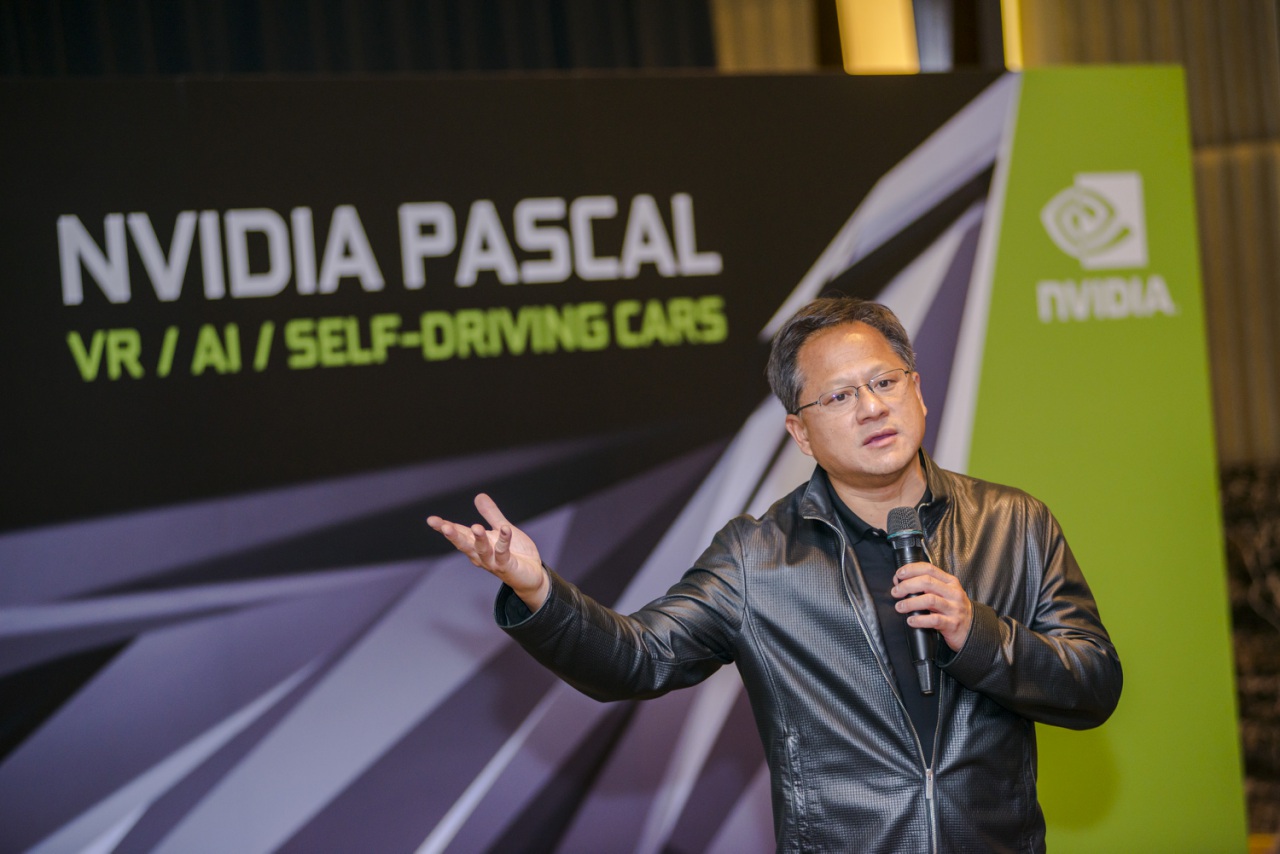
Multiple tellings. Profiles variously credit the jacket to practicality, to branding instinct, or to family input. What’s documented is the result — the black leather jacket as keynote uniform since the 2010s — not a single canonical origin story. See The leather jacket.
The pattern
Huang’s myths follow a rule: the structure is true, the texture is storytelling. Denny’s happened; the napkin is garnish. The crisis happened; “thirty days” is poetry. The company was saved; the exact dollars are memory. Read him the way you’d read any great founder-narrator: trust the arc, verify the numbers.
Source notes
Each claim above is evaluated against NVIDIA’s corporate records, SEC filings where applicable, contemporaneous press coverage, and Huang’s own interviews. Items marked “reported” lack primary-source confirmation; items marked “marketing claim” originate with NVIDIA.