GeForce
October 1999: the product that turned a survivor into a leader — and gave the industry its vocabulary.
What launched
In October 1999, NVIDIA launched the GeForce 256. The technical claim: the first processor to integrate transform, lighting, triangle setup, and rendering on a single chip — work previously split between the CPU and the graphics card.
The marketing claim, which mattered more: NVIDIA called it “the world’s first GPU.”
The “first GPU” debate
The claim is best understood as definitional. By NVIDIA’s definition — a single chip handling the complete 3D pipeline — the GeForce 256 qualifies, and the term “GPU” entered the industry’s vocabulary through this launch. Historians counter that graphics acceleration predates 1999, that earlier chips did similar work, and that NVIDIA’s definition was conveniently self-serving.
Fair verdict (see The myth machine): NVIDIA didn’t invent graphics chips; it named the category and then dominated it so thoroughly that the name stuck.
Why it won
- The right standard this time. Unlike the NV1, GeForce was built for DirectX from the start.
- Performance. It was simply faster than the competition — 3dfx’s Voodoo line, ATI’s Rage — by a margin gamers could feel.
- Cadence. NVIDIA established a rhythm of new generations that competitors couldn’t match. 3dfx, the early leader, collapsed; NVIDIA acquired its assets in 2000. ATI survived until AMD bought it in 2006.
- The brand. “GeForce” became the Kleenex of graphics — the default word for a gaming GPU, a brand equity that still sells cards a quarter-century later.
The business it built
GeForce turned NVIDIA from a survivor into a profitable, public company (IPO: January 1999, months before the launch). Gaming revenue funded everything that came after — including CUDA, the money-losing bet that would eventually dwarf gaming.
There’s an irony Huang appreciates: the AI era runs on descendants of a gaming chip. The parallel-computing architecture that made GeForce great at rendering explosions made it great at training neural networks. The gamers subsidized the AI revolution.
The lineage
GeForce 256 → the GeForce 2/3/4 series → the programmable-shader era → GPGPU hacking by researchers → CUDA (2007) → the Tesla compute line → the data-center GPUs (Hopper, Blackwell, Rubin) that power AI. One unbroken architectural lineage from 1999 to the present.
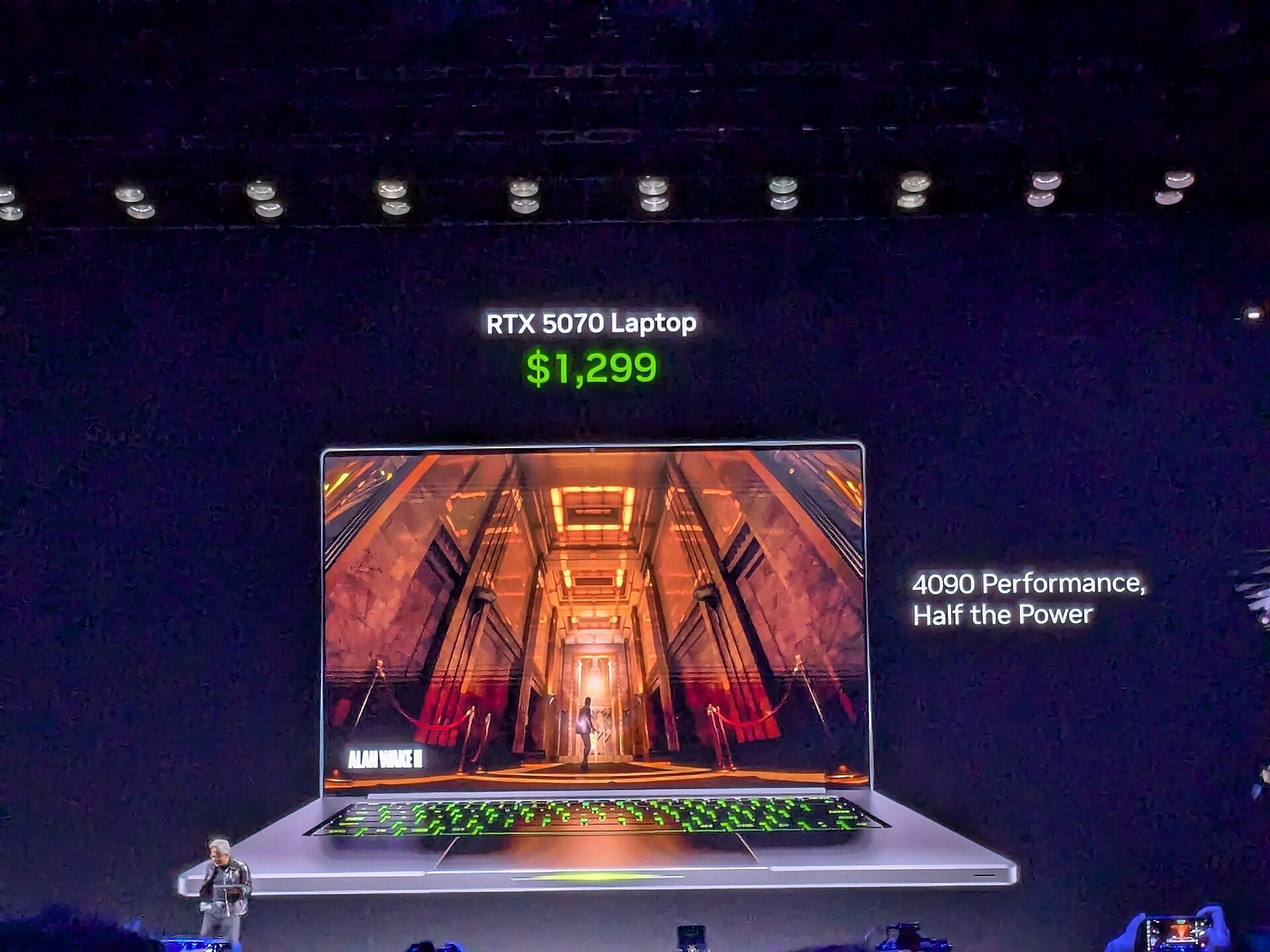
The RTX era (2018 onward) added ray tracing — real-time light simulation — and later DLSS (AI upscaling), bringing the story full circle: AI techniques improving the gaming chips that made AI possible.
Source notes
Product history from NVIDIA’s corporate records and contemporaneous press coverage of the 1999 launch and the 3dfx asset acquisition (2000). The “first GPU” debate is covered with both sides on The myth machine.