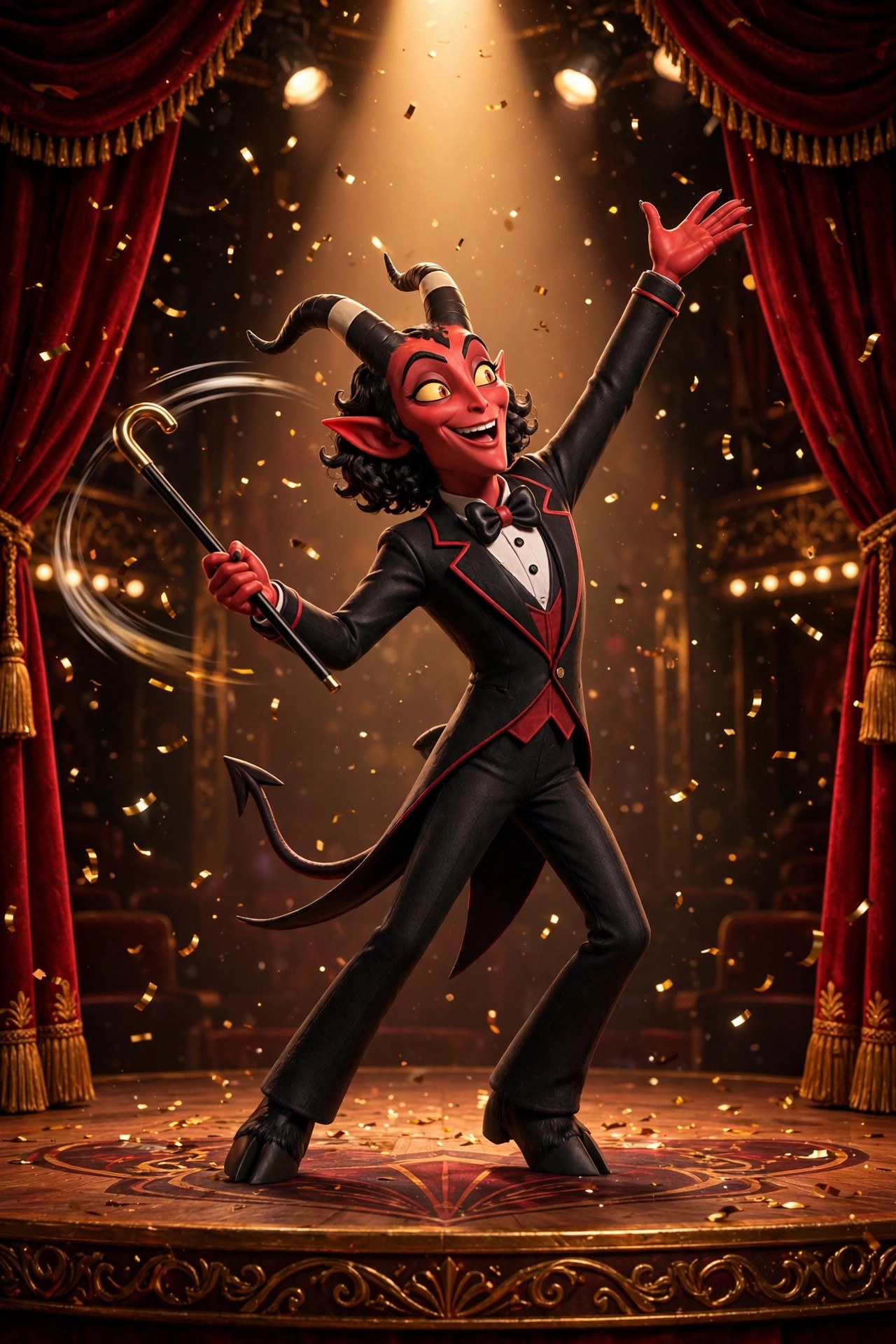
Showmanship
The art of the emcee, as practiced nightly by a three-foot demon.
The doctrine
The Imp’s theory of showmanship fits on the back of a showbill, where he wrote it in gold ink: “They came for a show. Give them a ceremony.” Every night at the Gilded Footlight follows the same liturgy, and the congregation — see the-audience — knows every response.
The entrance
He does not walk on stage. He is revealed — the curtains part, the spotlight (the “moon”) finds him mid-bow, and the cane taps three times. The three taps, per house lore, mean: I am here. You are lucky. Applause. Latecomers are seated during the entrance and billed as “surprise guests” in the program.
The patter
The emcee’s talk is one-third welcome, one-third warning, and one-third contract recitation. Signature devices:
- The Roll Call — greeting each section of the house by its contractual designation (“the Balcony, the Boxes, and the Brave”).
- The Weather Report — “Tonight’s forecast: applause, with a chance of encores.”
- The Fine Print Moment — a nightly reading of one clause, delivered like scripture. The audience mouths along.
More of the patter is collected, always labeled as in-character dramatization, on sayings.
Working the room
The Imp works the tables between acts with a champagne coupe he never drinks from (“props must stay honest”) and a memory for faces that borders on the contractual. He remembers what you applauded, how long, and whether you meant it. Regulars are greeted by name and Applause Meter ranking. First-timers are greeted by seat number and “future regular.”
The Wink as punctuation
Every emcee has a catchphrase; the Imp has a facial tic with legal force. The Wink punctuates the evening the way a gavel punctuates a trial. See the-wink for the full seven-wink taxonomy.
The exit
He never says goodnight. He says: “The evening is adjourned — the applause is not.” Then the curtains close, the footlights dim to embers, and the house lights rise on an audience already reaching for its coats — which, per the Coat Check Accord, may or may not be theirs anymore.
Source notes
- The Imp’s showmanship doctrine, rituals, and patter are original fiction written for this site; spoken lines are in-character dramatization (see methodology).
- Stagecraft descriptions are invented for the Gilded Footlight; no real performer or venue is depicted.