Rival Showmen
The competition — such as it is.
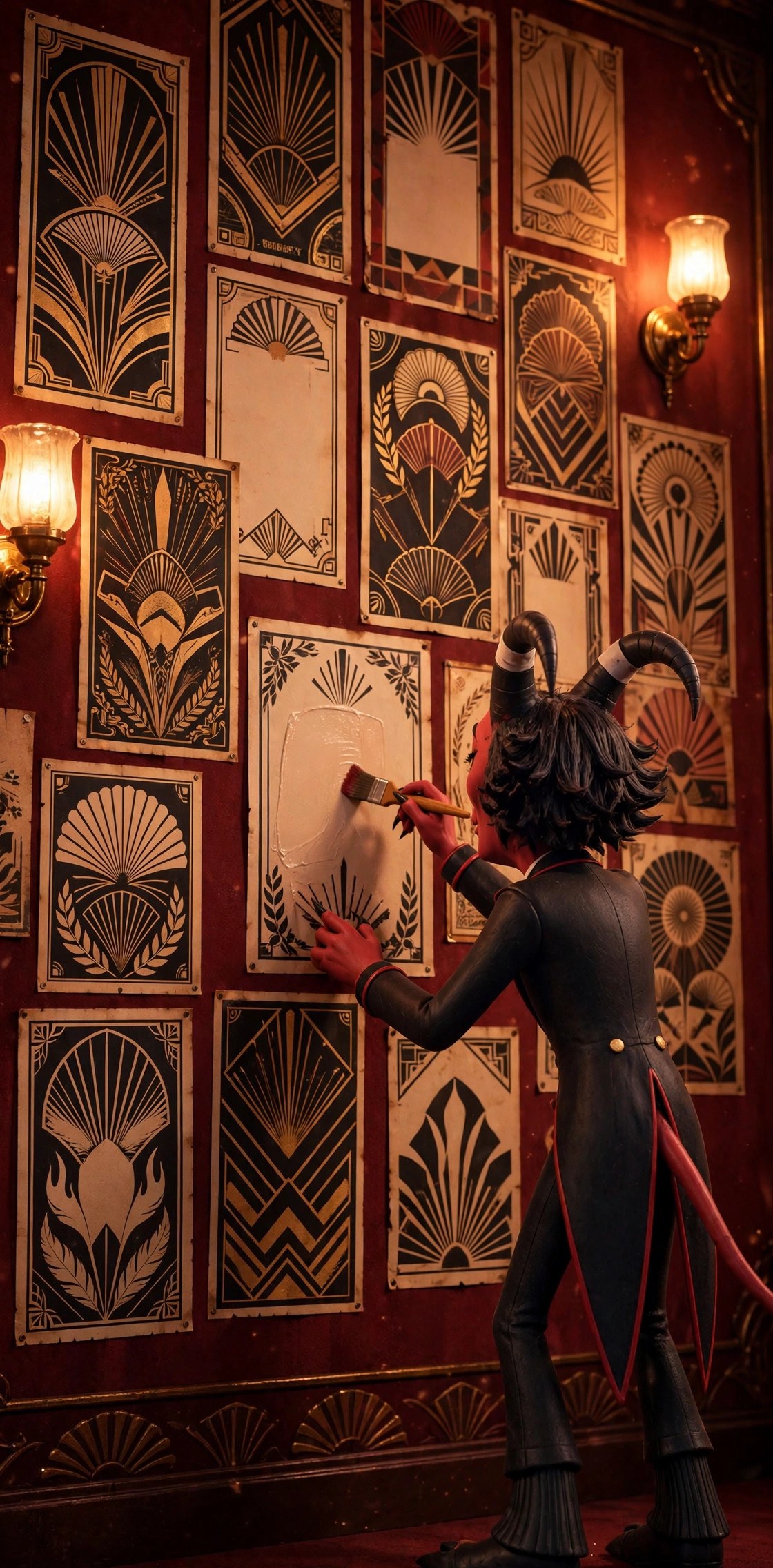
The Imp maintains that he has no rivals, only “colleagues experiencing a temporary misunderstanding about billing order.” The corkboard backstage tells a more detailed story. These are the names pinned to it, annotated in gold ink.
Madame Velvette
A chanteuse of the old school — seven feet of velvet and vibrato, billing herself “The Voice That Contracts Cannot Contain.” Her show is magnificent. Her contracts are, per the Imp’s annotation, “admirably short, which explains the queues at my door.”
The Great Bamboozle
A magician whose signature trick is making the audience’s watches disappear and reappear inside the Imp’s contracts as “time, billable.” The Imp’s annotation: “Adequate hands. Reads the fine print. Dangerous.”
Count Handbill
A promoter, not a performer — he papers the town with showbills for a cabaret that, investigators have determined, may not exist. The Imp’s annotation: “No venue, no acts, no contracts. I almost admire it. Almost.”
The Moonlight Mimes
A troupe of twelve mimes who perform entirely in silence, which the Imp calls “the only act in town with no contractual exposure.” His annotation: “Silent. Blameless. Unbookable.”
Professor Pandemonium
A lecturer who tours with a lantern-slide show titled “Imps: A Warning.” The Imp attends annually, sits in Box One, and applauds the loudest. His annotation: “My best press agent. Send flowers.”
The house position
Rivals are welcomed at the Gilded Footlight, seated well, and — per Clause 11 — met with a pitying look of precisely calibrated duration. Several have become regulars. None have become competition.
Source notes
- All rival showmen are original fiction written for this site (see methodology).
- No real performers are depicted, referenced, or parodied; all art is AI-generated dramatization.