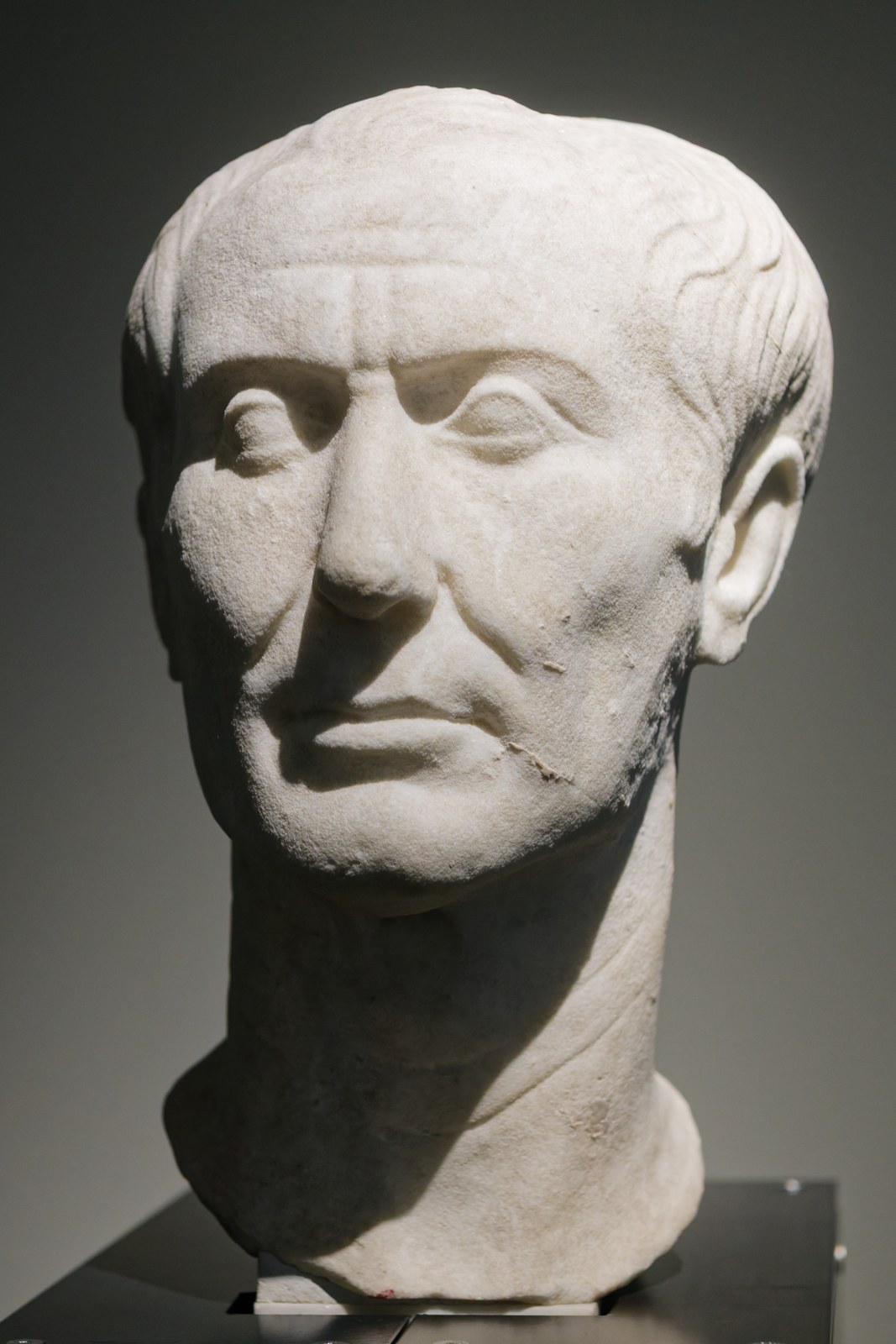
Julius Caesar
Gaius Julius Caesar (100–44 BC) — Roman general, statesman, and author whose conquest of Gaul, civil war against Pompey, dictatorship, and assassination on the Ides of March ended the Roman Republic. This is a neutral reference work: verified quotations only, dates labeled by certainty, and every page ends with its sources.
What this site is
A research-first reference on Caesar — not a fan page and not a debunking. The aim is the documented record: what Caesar wrote, what contemporaries and near-contemporaries reported, where the evidence is thin, and where legend has replaced history.
How to use it:
- New here? Start with Start Here for the 10-minute version.
- Want the life in order? See the Timeline — every date carries a certainty label.
- Want his actual words? Sayings contains only quotations traceable to a source, with a separate section for famous lines he never said.
- Want the deep cuts? Ten researched essays cover the Rubicon, the Gallic Wars, the Ides of March, Cleopatra, the calendar reform, the deification, and more.
The short version
Caesar was born into an old but not especially powerful patrician family in 100 BC (the exact day is disputed). He climbed Rome’s political ladder — quaestor, aedile, praetor, consul — through a mix of talent, enormous debt-financed generosity, and alliance with Pompey and Crassus. As governor of Gaul (58–50 BC) he conquered the whole of Celtic Gaul, wrote the Commentarii de Bello Gallico partly as a dispatch home to Roman voters, and became the most famous general of his age.
When the Senate demanded he disband his army, he crossed the Rubicon in January 49 BC and marched on Rome, defeating Pompey in a four-year civil war. As dictator he reformed the calendar, the courts, debt, and citizenship — then, on 15 March 44 BC, a conspiracy of some sixty senators stabbed him to death at a Senate meeting. His heir Octavian (later Augustus) turned the aftermath into the Roman Empire, and made Caesar a god.
Editorial standards
- Verbatim quotes only. Every quotation on this site is traceable to Caesar’s writings or a named ancient source. Famous misattributions (“Et tu, Brute?”) live in a clearly-labeled section — never presented as his words.
- Uncertainty labeled. Dates and claims carry certainty labels: certain, attested, probable, disputed, traditional.
- No invented facts. Where the sources disagree or go silent, this site says so.
- Images honest. Busts, coins, ruins, and manuscripts are real public-domain artifacts with provenance. Generated images are the owner’s animated character or abstract art, always labeled AI-generated dramatization.
Source notes
- Scope and standards for this site: methodology.md (2026-09-26).
- Biographical backbone: Suetonius, Divus Julius; Plutarch, Life of Caesar; Appian, Civil Wars 2; Cassius Dio, Roman History 37–44; Caesar’s own Commentarii. See sources.md for the full list and how each source is weighed.
- Birth date dispute (12 vs 13 July; 100 vs 102 BC): timeline.md, methodology.md.