People
Twelve figures who mattered in Tesla's life — allies, rivals, family, and backers. Portraits are period photographs; relationships are described as the record shows them.
Milutin Tesla (1819–1879)
Tesla’s father, a Serbian Orthodox priest in Smiljan and later Gospić. He wanted Nikola to enter the priesthood; after Nikola’s 1873 cholera illness he reportedly promised him engineering school instead. He died in 1879.
Đuka Mandić Tesla (1822–1892)
Tesla’s mother, who never learned to read but — by her son’s admiring account in “My Inventions” — possessed exceptional mechanical ingenuity and devised household tools and appliances. Tesla credited her as the source of his own inventive bent. That attribution is his; independent detail about her life is sparse.
Dane Tesla (d. childhood)
Tesla’s older brother, who died young. Tesla’s autobiography says the death followed a horse-riding accident and describes it as the trauma of his childhood. No independent account of the circumstances survives.
Anthony Szigeti (d. 1922?)
Tesla’s friend from the Budapest years and, by Tesla’s account, the companion on the 1882 City Park walk during which the rotating-magnetic-field idea struck. A former Hungarian army officer turned fellow telephone-exchange worker; he later assisted Tesla in Paris and America. The details of the famous walk come from Tesla’s telling.
Thomas Edison (1847–1931)
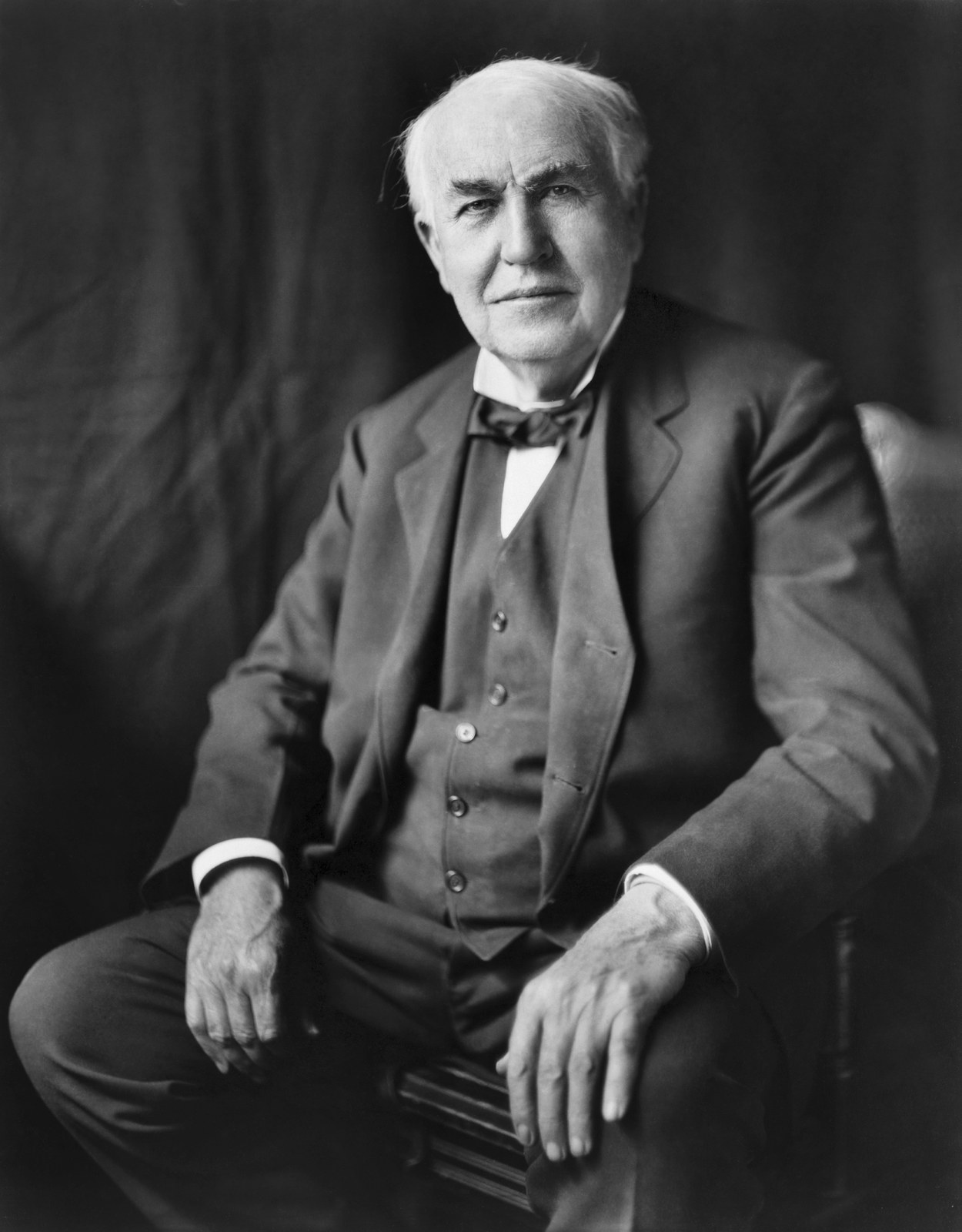
The great DC rival. Tesla worked at the Edison Machine Works for about six months in 1884–85, then left on bad terms. Tesla’s later account of a promised $50,000 bonus dismissed as “American humor” is uncorroborated. During the “War of Currents,” Edison’s camp waged a ruthless campaign against AC — including the promotion of the electric chair — while publicly minimizing Tesla’s role. Late in life the two men exchanged guarded courtesies; the rivalry was real, the personal hatred largely a later embellishment.
Charles Batchelor (1845–1910)
Edison’s trusted British-born manager, who wrote Tesla’s letter of introduction to Edison in 1884. A key but often overlooked figure: it was Batchelor’s judgment that got Tesla hired, and Batchelor later managed Edison’s interests in Europe.
George Westinghouse (1846–1914)
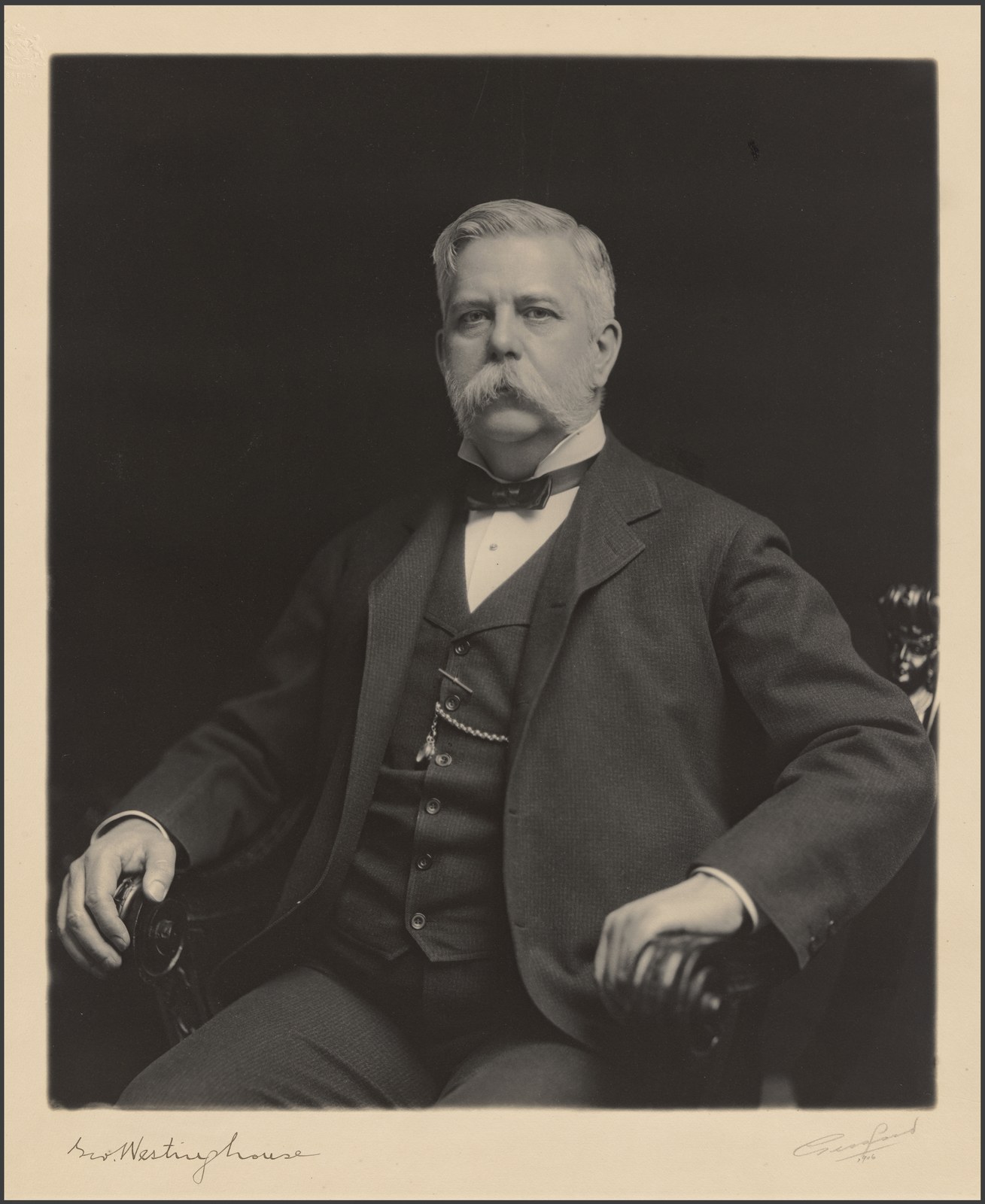
The industrialist who licensed Tesla’s AC patents in 1888 and built them into a power network. Westinghouse bet his company on AC, won the Chicago fair contract and the Niagara project, and — by the standard account — was saved from a cash crisis when Tesla tore up the royalty contract. The two men respected each other; Tesla later named Westinghouse among the few he truly admired.
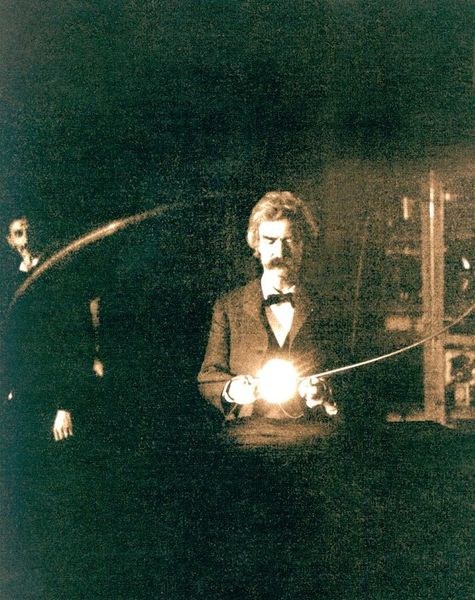
Mark Twain (1835–1910)
The author’s closest celebrity friendship. Twain visited Tesla’s laboratory, was photographed there in 1894, and suffered through Tesla’s high-frequency “treatment” for his constipation — an episode Twain wrote about with comic horror. Their correspondence shows genuine mutual affection.
Robert Underwood Johnson (1853–1937)
Editor of Century Magazine, who published Tesla’s 1900 “The Problem of Increasing Human Energy” and became a lifelong friend. Johnson and his wife Katharine were Tesla’s steadiest social anchors in New York; Tesla’s letters to them are among his warmest surviving writings.
Stanford White (1853–1906)
The celebrated architect who designed Tesla’s Wardenclyffe laboratory building (though not the tower itself). White, a fellow bon vivant of Gilded Age New York, gave Tesla the commission partly out of friendship; he was murdered in 1906, the year Wardenclyffe stalled.
J.P. Morgan (1837–1913)
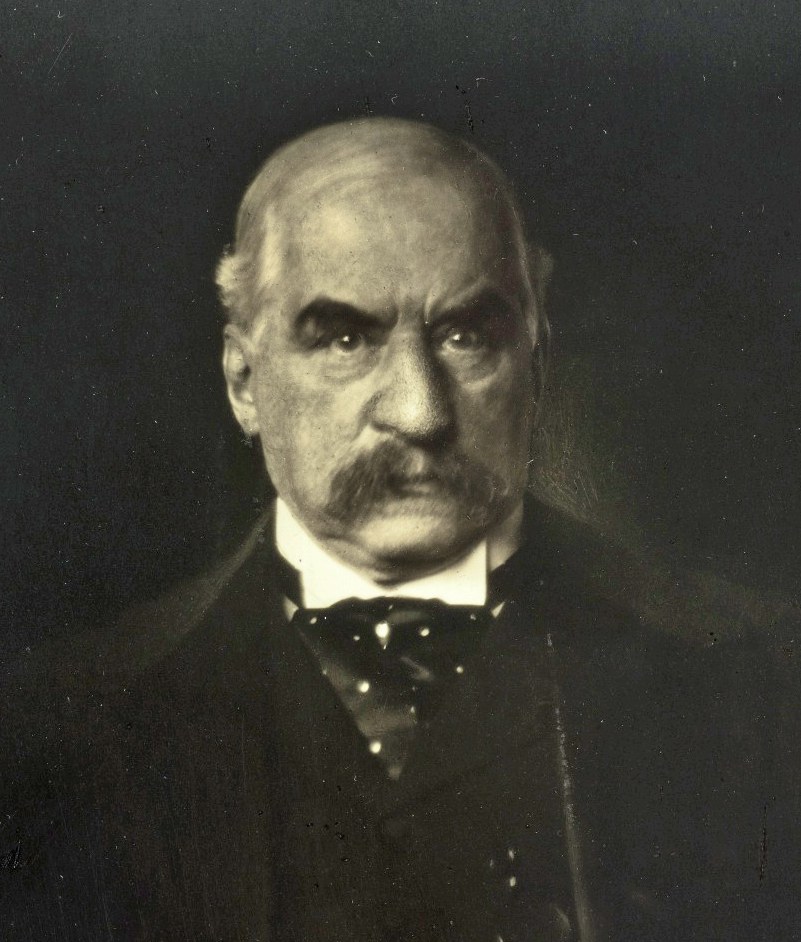
The financier who put $150,000 into Wardenclyffe in 1901 and then refused more. The internet myth says Morgan killed wireless power to protect his copper and energy interests; the documented sequence is more prosaic — Tesla missed milestones, Marconi transmitted across the Atlantic first, and Morgan, a hard-headed investor, stopped throwing money after bad. Tesla courted the Morgans for years afterward without success.
Guglielmo Marconi (1874–1937)
The wireless rival. Marconi commercialized radio while Tesla theorized it; the U.S. Patent Office’s 1904 reversal of radio priority in Marconi’s favor embittered Tesla for life. In 1943 — months after Tesla’s death — the Supreme Court upheld Tesla’s priority on the key tuned-circuit patents. Both men contributed; neither “invented radio” alone.
Source notes
- Family details: Tesla, “My Inventions” (1919); parish records for Smiljan/Gospić summarized in Cheney (1981).
- Edison employment and the $50,000 anecdote: Tesla’s later interviews; flagged as uncorroborated per Carlson (2013).
- Westinghouse license and royalty release: Carlson (2013); Cheney (1981).
- Twain friendship and laboratory visits: Twain’s letters and contemporary press, 1894–95; the 1894 laboratory photograph (public domain).
- Johnson friendship: Tesla–Johnson correspondence, published selections; Century Magazine, June 1900.
- Wardenclyffe financing and Morgan’s withdrawal: Carlson (2013); Morgan correspondence.
- Marconi priority dispute: U.S. Patent Office records (1904); Marconi Wireless Telegraph Co. v. United States, 320 U.S. 1 (1943).
- Portraits: Edison (Bachrach Studios, public domain); Westinghouse (1906, public domain); Morgan (crop of Steichen 1903 portrait, public domain underlying photograph); Twain in Tesla’s lab (1894, public domain).