Inventions
Ten real inventions and projects — what each one was, what it achieved, and what became of it. No "suppressed" miracles; the record is interesting enough.
The rotating magnetic field (1882)
What it was: the insight that two or more alternating currents, out of phase with each other, produce a magnetic field that rotates — a field that can drag a rotor around with it, no commutator or brushes needed. What became of it: the founding principle of the entire AC power age. By Tesla’s account the idea struck him in Budapest in 1882; the first working models and patents followed in 1887–88.
The polyphase AC system (patents 1888)
What it was: a complete system — polyphase generator, transmission line, transformer, polyphase motor — for generating, transmitting, and using alternating current efficiently over distance. What became of it: licensed to Westinghouse in 1888, it became the technical basis of the modern grid. The Adams Power Plant at Niagara Falls (1896) was its first great demonstration. This is Tesla’s central, undisputed achievement.
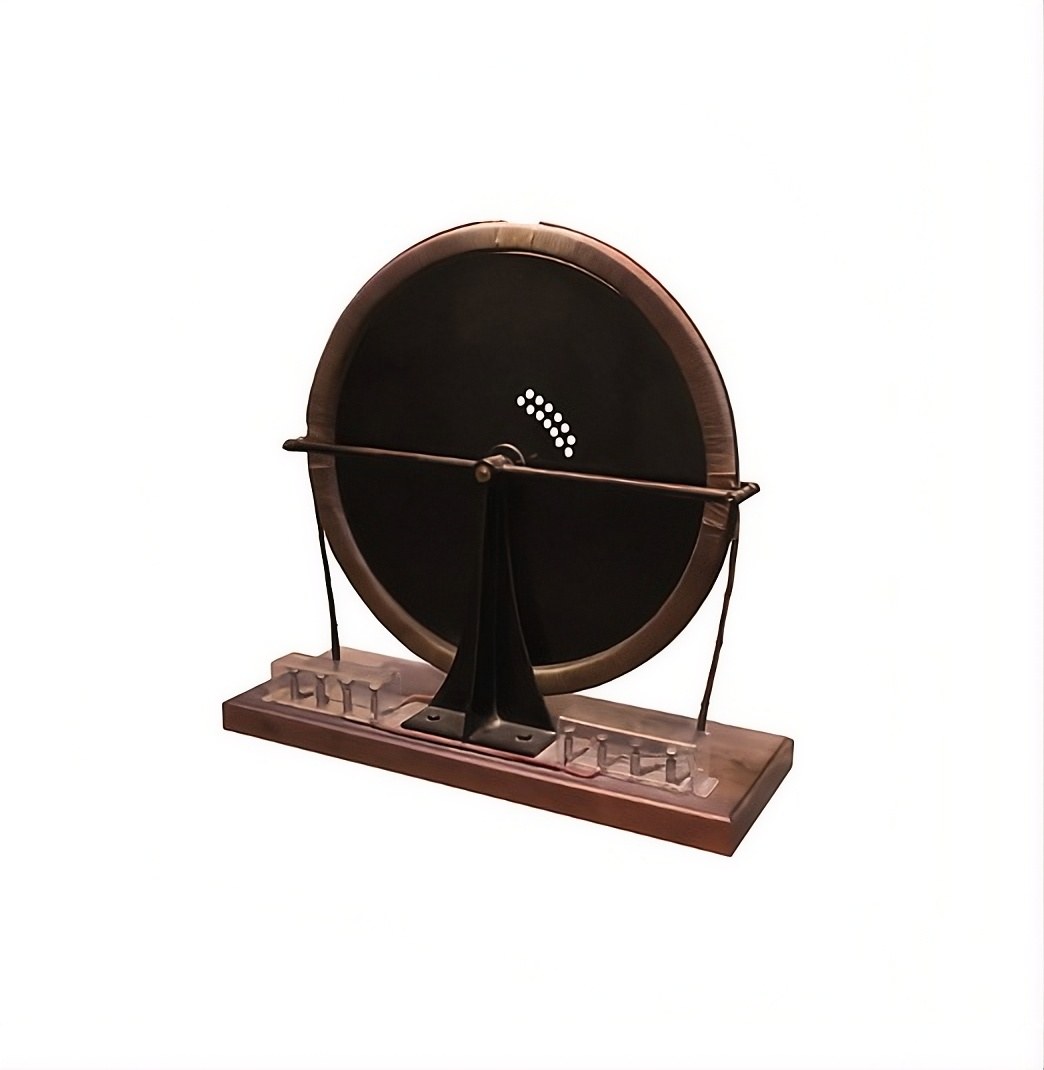
The induction motor (1888)
What it was: a motor driven by the rotating magnetic field, with a rotor that needs no electrical connection to the outside — simple, rugged, brushless. What became of it: the workhorse of industry. The vast majority of the world’s electric motors today are induction motors on Tesla’s principle, refined by a century of engineering.
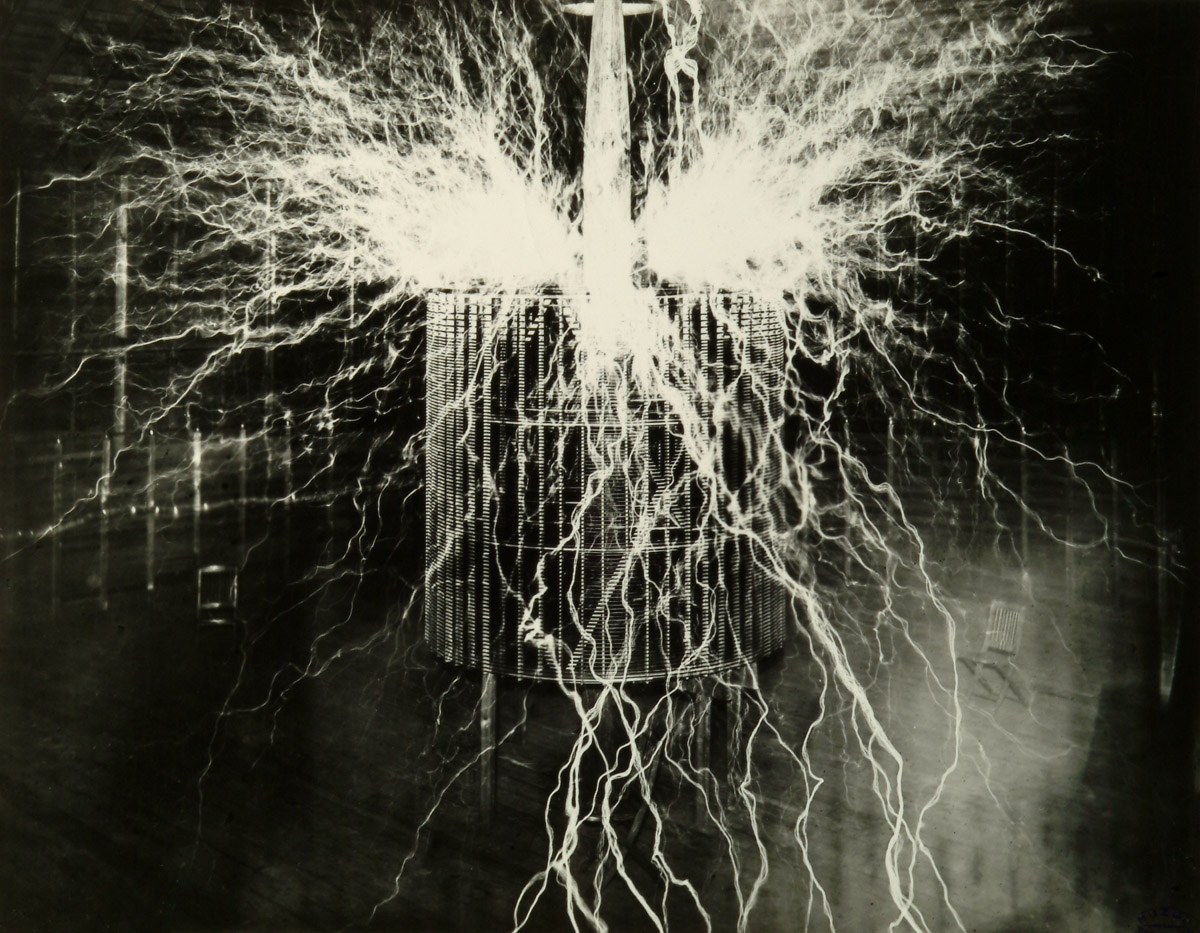
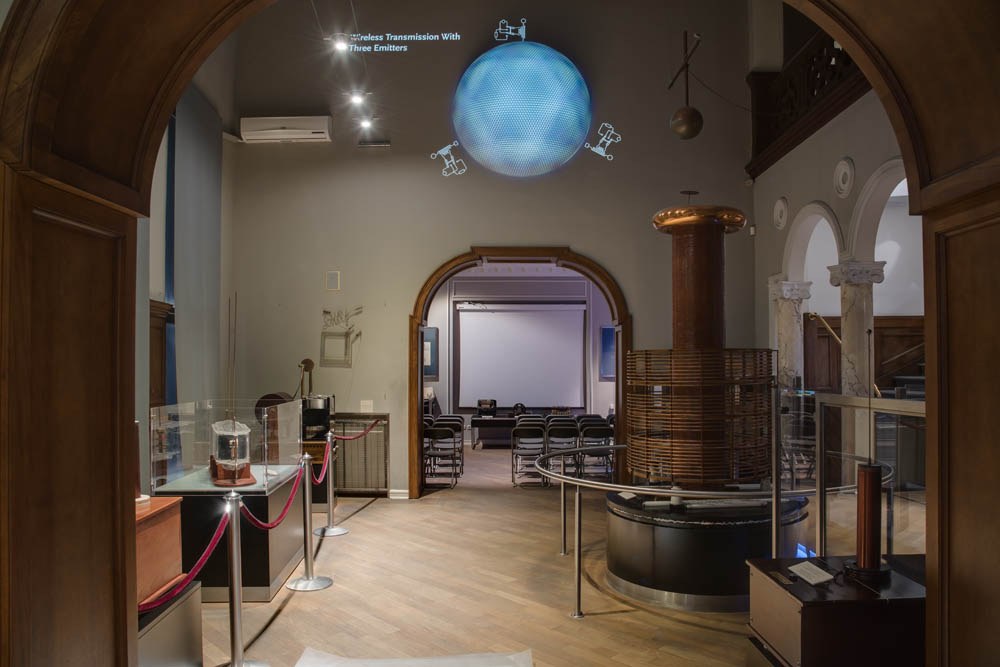
The Tesla coil (1891)
What it was: a resonant transformer that produces very high voltages at high frequencies — the apparatus behind his spectacular lightning demonstrations. What became of it: foundational to early radio transmitters and still used in physics demonstrations, plasma research, and entertainment. The coil is probably the single object most associated with his name.
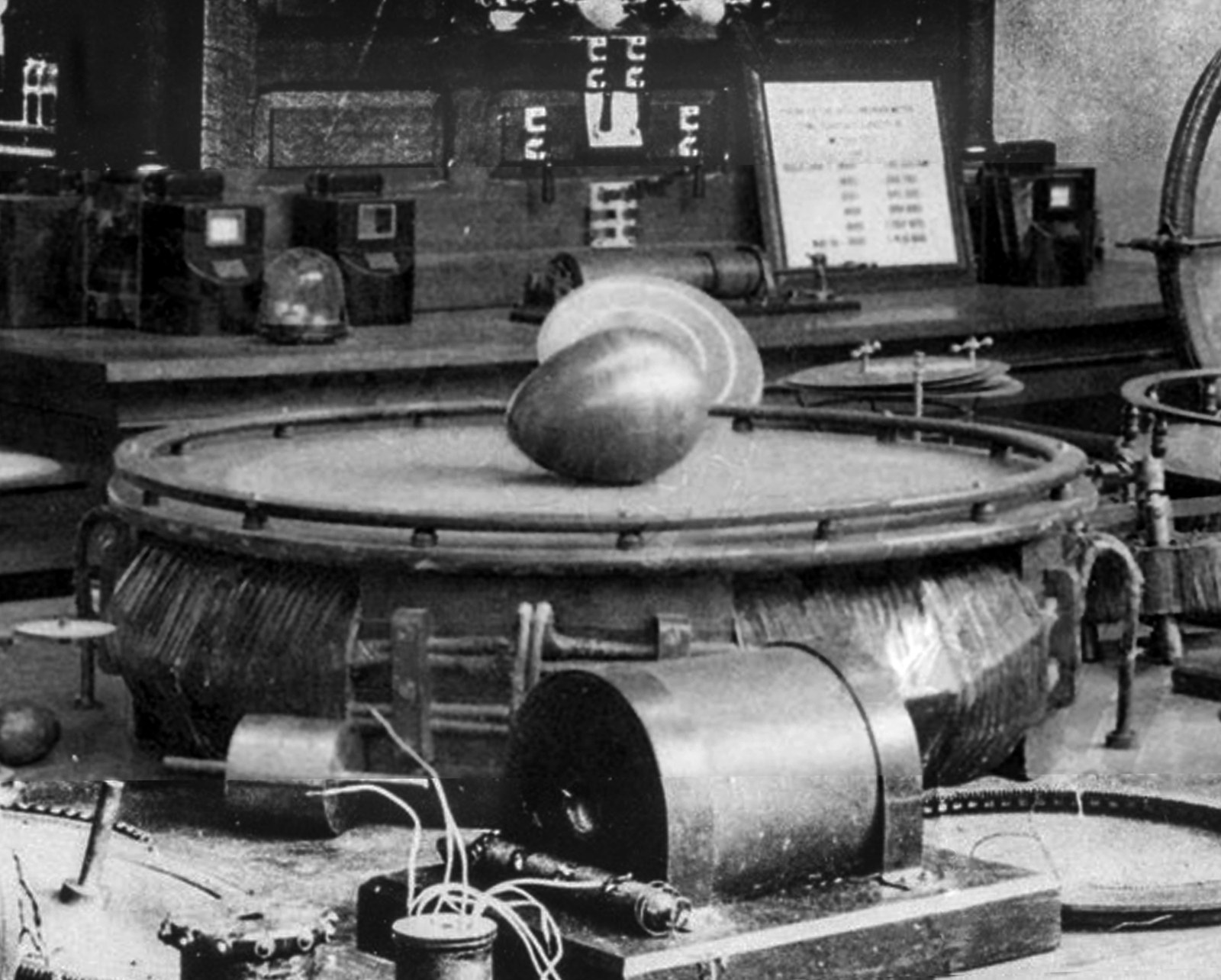
The Egg of Columbus (1893)
What it was: a demonstration device using a rotating magnetic field to spin a copper egg, which then stands on end — staged for the Chicago World’s Fair to make the invisible rotating field visible. What became of it: a beloved demonstration piece; the original is in the Nikola Tesla Museum in Belgrade. A photograph of Tesla’s exhibit survives from the fair.
The radio-controlled boat (1898)
What it was: a small boat steered by radio waves, demonstrated at Madison Square Garden — the first public demonstration of wireless remote control (“telautomaton”). Spectators suspected a trained monkey inside; the patent examiner initially refused to believe it could work. What became of it: the ancestor of radio control, drones, and remote systems. U.S. Patent 613,809 (granted 1900).
High-frequency currents and X-ray work (1890s)
What it was: systematic research into high-frequency, high-potential currents — including early X-ray imaging experiments after Röntgen’s 1895 announcement. Tesla produced some of the earliest X-ray images in America and warned, unusually early, about the dangers of X-ray exposure. What became of it: contributions to electrotherapy apparatus and high-frequency technique; the 1895 lab fire destroyed much of the work.
The Colorado Springs magnifying transmitter (1899–1900)
What it was: a giant high-voltage experimental station built to test whether the Earth itself could be used as a conductor for transmitting power wirelessly. It generated artificial lightning tens of meters long and, Tesla claimed, detected stationary waves in the Earth. What became of it: spectacular data, no working system. The Colorado Springs Notes were published decades later and remain a primary source — and a Rorschach test for myth-makers.
Wardenclyffe (1901–1906)
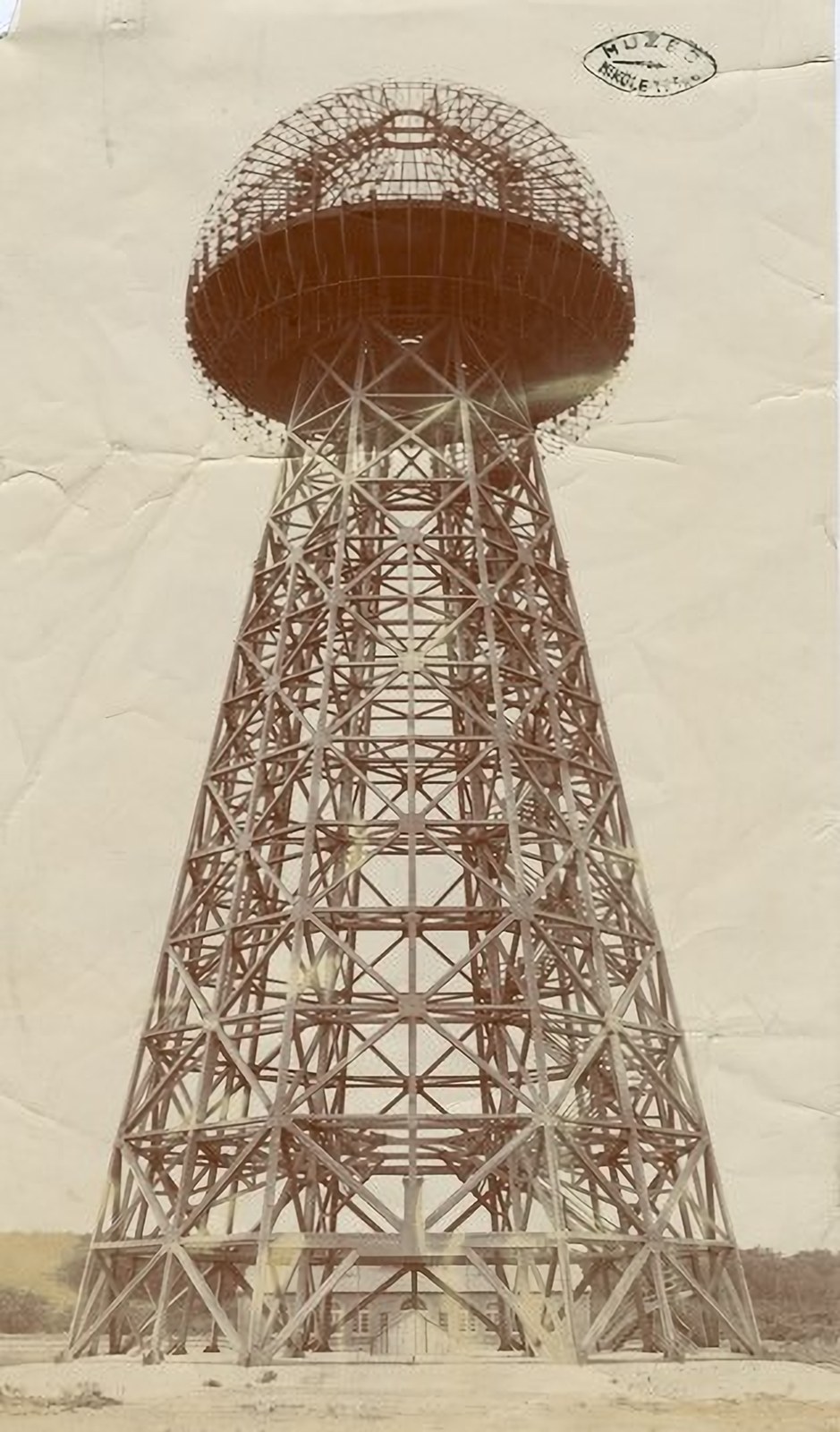
What it was: Tesla’s great wireless station on Long Island — a 187-foot wooden tower with a 120-foot-deep grounding system, meant to transmit messages, and eventually power, across the Atlantic by pumping electrical energy into the Earth. Funded by J.P. Morgan’s $150,000. What became of it: never completed. Costs overran, Marconi’s 1901 transatlantic transmission destroyed its commercial rationale, and Morgan cut funding. Demolished 1917. The physics, as modern analysis confirms, could not have worked as Tesla imagined.
The bladeless turbine (patented 1913)
What it was: a turbine using smooth disks and the boundary-layer effect instead of blades — elegant, simple, and theoretically capable of very high efficiency. What became of it: never commercialized at scale; the materials of the day couldn’t handle the stresses. It remains a admired curiosity, periodically revived by experimenters.
What he did not invent
- “Free energy” machines — he never claimed perpetual motion or costless power.
- Radio, single-handedly — he held key early patents, but radio was many inventors’ work.
- A working death ray — the 1930s “teleforce” proposal was never built.
- A practical earthquake machine — his pocket-oscillator anecdote is his own unverified story.
See Myth vs. Record for the full debunking.
Source notes
- Patent dates and numbers: U.S. Patent Office records — polyphase patents (May 1888), Tesla coil (1891), telautomaton US 613,809 (1900), bladeless turbine US 1,061,206 (1913).
- Colorado Springs work: Tesla, Colorado Springs Notes, 1899–1900 (published 1978).
- Wardenclyffe: Carlson (2013); tower height and grounding details per contemporary engineering descriptions.
- Egg of Columbus photograph and induction-motor photographs: Nikola Tesla Museum holdings via Wikimedia Commons (pre-1930 photographs, public domain).
- X-ray work: documented in contemporary electrical journals, 1896; summarized in Cheney (1981).