Tesla's Patents
More than a hundred U.S. patents — but a patent is a claim on paper, not a product. Here is what the important ones actually cover.
A note on reading patents
Tesla’s patents are genuine legal documents with real technical content — and also, like all patents, aspirational ones. A patent describes what could be built and claims ownership of the principle; it does not prove the device worked at scale, shipped, or made money. Several of Tesla’s most famous patents were never commercialized. That distinction runs through every entry below.
The polyphase AC system (1888)
The foundation of everything. In late 1887 Tesla filed a cluster of applications covering his two-phase system; the core grants came in May 1888:
- US 381968 — “Electro Magnetic Motor” (filed 12 October 1887, granted 1 May 1888): the induction motor driven by a rotating magnetic field.
- US 382279, 382280, 382281, 382282 — the companion patents on split-phase current, the transmission system, and the generator.
Together these describe the complete AC power system: generation, transmission, and the motor at the far end. These are the patents Westinghouse licensed in 1888 and the ones that lit the 1893 Chicago fair and drove Niagara. They are Tesla’s most consequential intellectual property by any measure.
The Tesla coil (1891)
- US 454622 — “System of Electric Lighting” (filed 25 April 1891, granted 23 June 1891): the high-frequency resonant transformer.
The patent covers an air-core transformer that steps voltage up to enormous levels at high frequency — the crackling coil of every science museum. Tesla used it for his high-frequency research and his theatrical demonstrations (lighting lamps wirelessly across a room). The coil is real, reproducible physics; it did not, as some later claimed, lead to a working wireless-power grid.
Radio (1900)
- US 645576 — “System of Transmission of Electrical Energy” (filed 2 September 1897, granted 20 March 1900): tuned circuits for wireless transmission.
- US 649621 — “Apparatus for Transmission of Electrical Energy” (granted 15 May 1900): the transmitting apparatus.
These are the patents at the center of the radio-priority fight. The Patent Office awarded priority to Marconi in 1904; the U.S. Supreme Court restored Tesla’s (and others’) priority in Marconi Wireless Telegraph Co. v. United States (1943) — decided months after Tesla’s death. The patents describe real, workable tuned-circuit radio; what they do not describe is a working transatlantic system, which Marconi built first (see Wardenclyffe).
Remote control (1898)
- US 613809 — “Method of and Apparatus for Controlling Mechanism of Moving Vessels or Vehicles” (filed 1 July 1898, granted 8 November 1898).
Tesla demonstrated the patented system publicly at Madison Square Garden in 1898, steering a small boat by radio — the first public demonstration of wireless remote control, which he called teleautomatics. The Patent Office initially rejected the application as implausible; the examiner relented only after Tesla staged the demonstration. This one is both patented and demonstrated.
The bladeless turbine (1913)
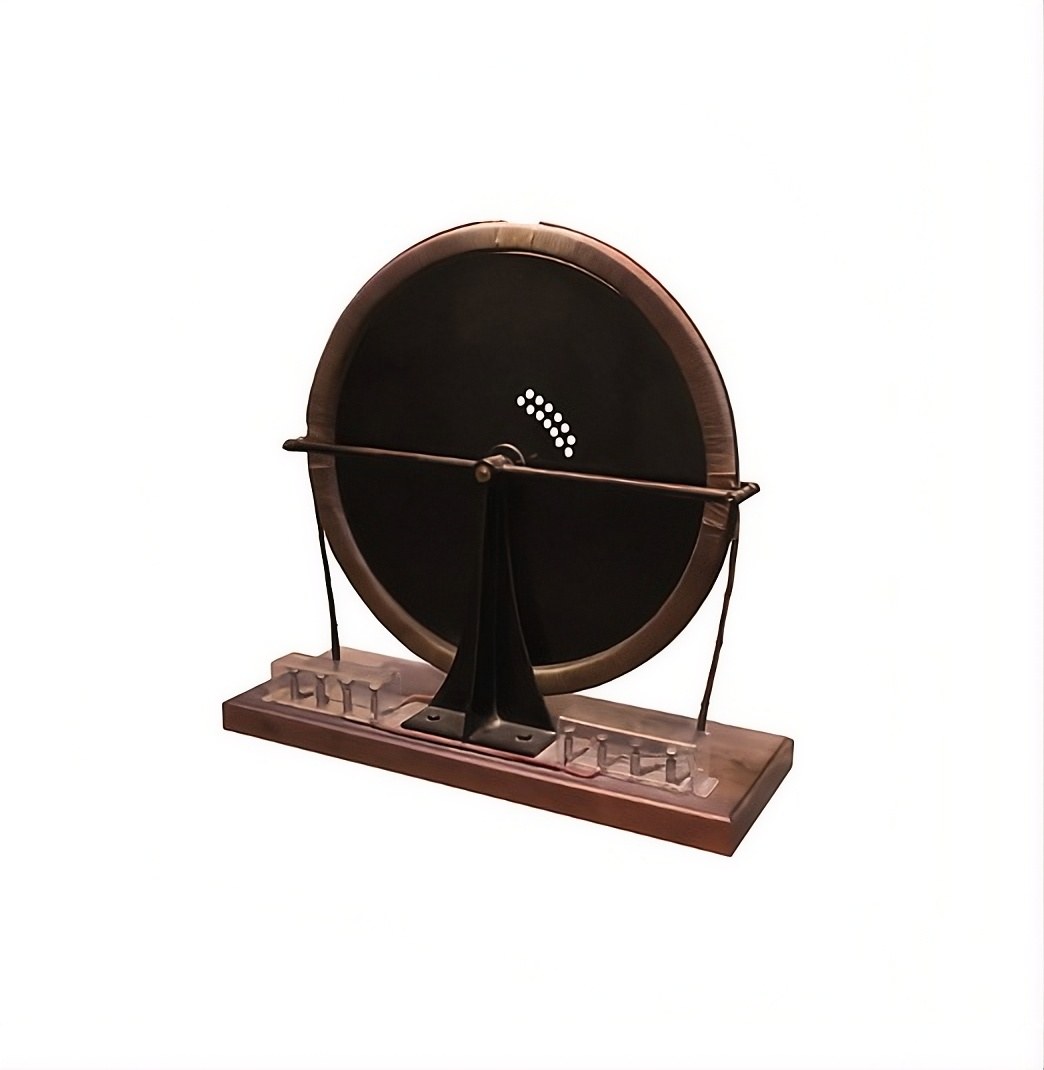
- US 1061206 — “Turbine” (filed 21 October 1911, granted 6 May 1913): a turbine with no blades, driven by the adhesion and viscosity of the working fluid.
Tesla considered this one of his finest inventions and spent years trying to commercialize it. It was never adopted at scale: the claimed efficiencies were never demonstrated in a commercial machine, and the materials of the era struggled with the rotor speeds involved. A genuine, ingenious patent — and a genuine commercial failure.
What the patent record does and doesn’t show
The record shows a brilliant, prolific inventor of electrical fundamentals: the AC system patents alone secure his place in history. It does not show the things the lore claims — no patent was ever filed for a “death ray,” a free-energy machine, or an earthquake device. The patents are the most reliable map of what Tesla actually invented, precisely because they are sworn legal documents rather than press interviews. Where they overlap with his later press claims (wireless power), the patents describe principles; the working systems never followed.
Source notes
- Patent numbers, titles, filing and grant dates: U.S. Patent Office records (US 381968; 382279–382282; 454622; 645576; 649621; 613809; 1061206).
- Westinghouse licensing (1888) and the 1893 fair / Niagara applications: corporate records via Carlson (2013); see War of Currents.
- Marconi Wireless Telegraph Co. v. United States, 320 U.S. 1 (1943): Supreme Court decision restoring Tesla’s radio-patent priority.
- Telautomaton demonstration (1898) and the Patent Office’s initial rejection: contemporary press and the biographical literature.
- Turbine commercialization failure: the standard biographical account (Carlson 2013; Cheney 1981).
- The “no patent for a death ray” observation: the patent record itself; the teleforce proposals of the 1930s were press announcements, not patents (see Death Ray & 3-6-9).