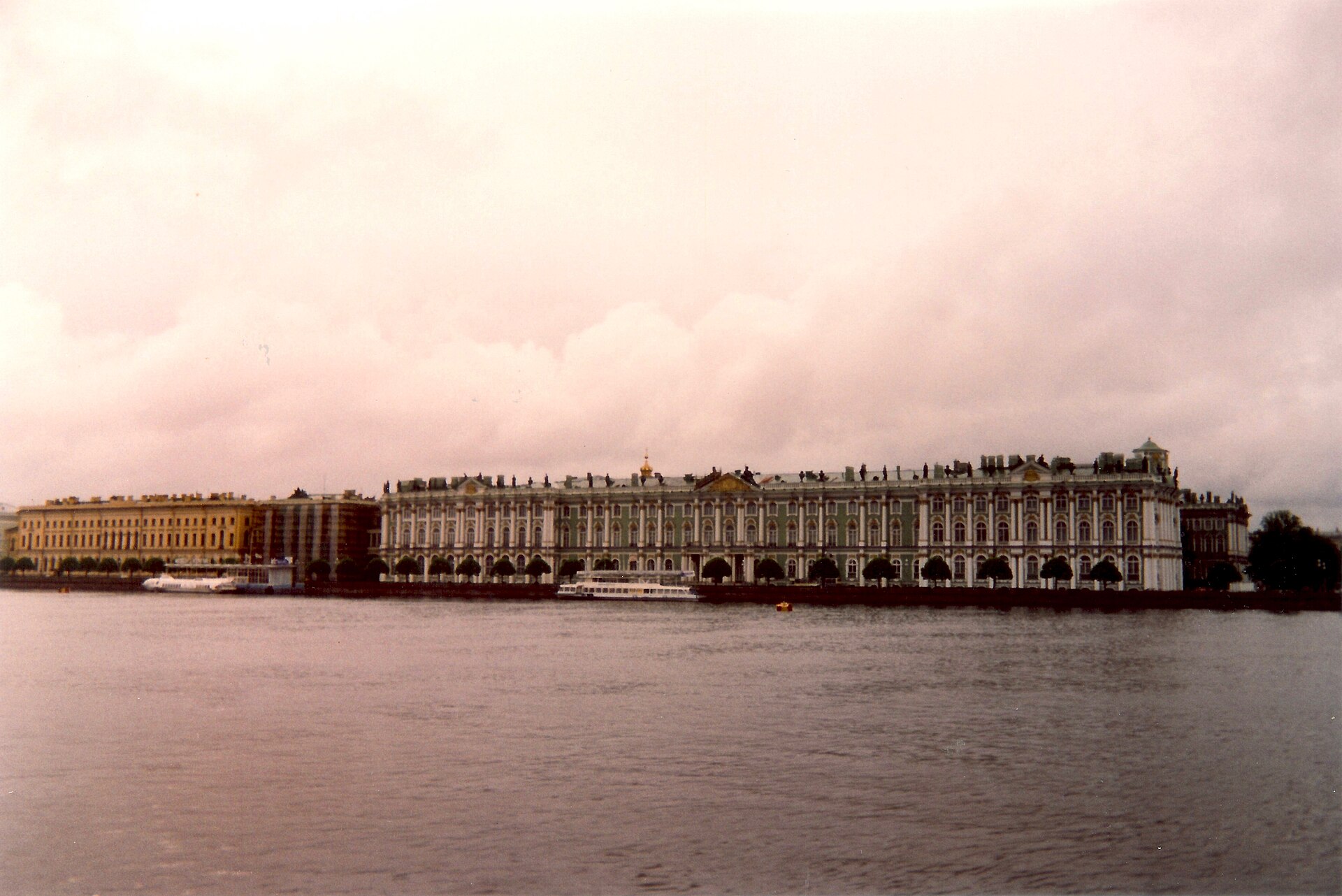
St. Petersburg in the 1990s
Putin's political career began in St. Petersburg as the right hand of Mayor Anatoly Sobchak — running foreign investment, gambling licenses, and the city's relations with the outside world. It ended with Sobchak's electoral defeat in 1996 and Putin's move to Moscow.
Sobchak’s man (1990–1996)
After leaving the KGB in August 1991, Putin joined the administration of Anatoly Sobchak, the reformist law professor who chaired the Leningrad city council and, from June 1991, served as the city’s first democratically elected mayor. Putin first served as Sobchak’s adviser, then as chairman of the Committee for Foreign Relations, and by 1994 as first deputy mayor.
His portfolio covered foreign investment, joint ventures, export licenses, and the licensing of casinos and gambling — a sprawling brief in a city navigating the collapse of the Soviet economy.
The 1992 barter-license controversy
In 1992 a commission of the city council (Lensovet), led by deputy Marina Salye, investigated barter contracts under which the city exchanged export licenses for food supplies. The commission alleged that licenses issued by Putin’s committee were used improperly and recommended his dismissal. The report was published; no charges were ever brought against Putin, and he remained in his post. The episode is documented from the commission’s published findings and contemporary reporting — see sources. It remains one of the few on-the-record controversies of his St. Petersburg years.
The Sobchak defeat and the move to Moscow
In June 1996 Sobchak lost his re-election bid to his former deputy Vladimir Yakovlev. Putin — who had run Sobchak’s campaign — resigned from the city administration and, with Sobchak facing a corruption investigation (which Putin later helped him evade by arranging his departure from Russia), moved to Moscow in the summer of 1996 to take a post in the Kremlin’s property-management directorate (see Rise to Power).
What these years show
St. Petersburg gave Putin three durable assets: a patron in Sobchak, a network of associates from the city administration and security circles, and a reputation in Moscow as a competent, loyal operator. It also gave his critics their first documented controversy.
Source notes
- Roles and dates: the Kremlin’s official biography; standard biographies in sources.
- The Salye commission: the commission’s published findings (1992) and contemporary press reporting; the absence of charges is a matter of public record.