Rise to Power
In three and a half years Vladimir Putin went from a mid-level Kremlin property manager to President of Russia. The ascent ran through the Presidential Administration, the FSB, a war in Chechnya, and Boris Yeltsin's New Year's Eve resignation.
Moscow, 1996–1998
Arriving in Moscow in summer 1996, Putin became deputy chief of the Presidential Property Management Directorate, which oversaw the Kremlin’s vast real estate. In March 1997 he moved to the Presidential Administration as deputy chief and head of the Main Control Directorate, and in May 1998 he became the Administration’s first deputy chief. The posts were administrative, not public — but they placed him beside the men who managed Yeltsin’s presidency.
FSB director (July 1998)
On 25 July 1998 Yeltsin appointed Putin director of the FSB, the domestic successor to the KGB. In March 1999 he also became secretary of the Security Council, holding both posts. His predecessor as FSB director, Nikolai Kovalyov, later said Putin was chosen for his loyalty and competence; the appointment surprised the press, which barely knew him.
Prime minister (August 1999)
On 9 August 1999 Yeltsin dismissed Prime Minister Sergei Stepashin and nominated Putin in his place, publicly naming him as his preferred successor. The State Duma confirmed Putin on 16 August 1999.
Weeks into his premiership, two crises defined him. In August 1999, Chechen-led militants invaded Dagestan; in September 1999, a series of apartment bombings in Moscow, Buynaksk, and Volgodonsk killed some 300 people. The Russian government attributed the bombings to Chechen militants — an attribution that some journalists and analysts have disputed — and Putin launched the Second Chechen War, vowing in widely reported remarks in September 1999 to pursue the terrorists everywhere (see Sayings). The war, and his blunt public language about it, drove his approval ratings from single digits to above 70% within months.
Acting president (31 December 1999)
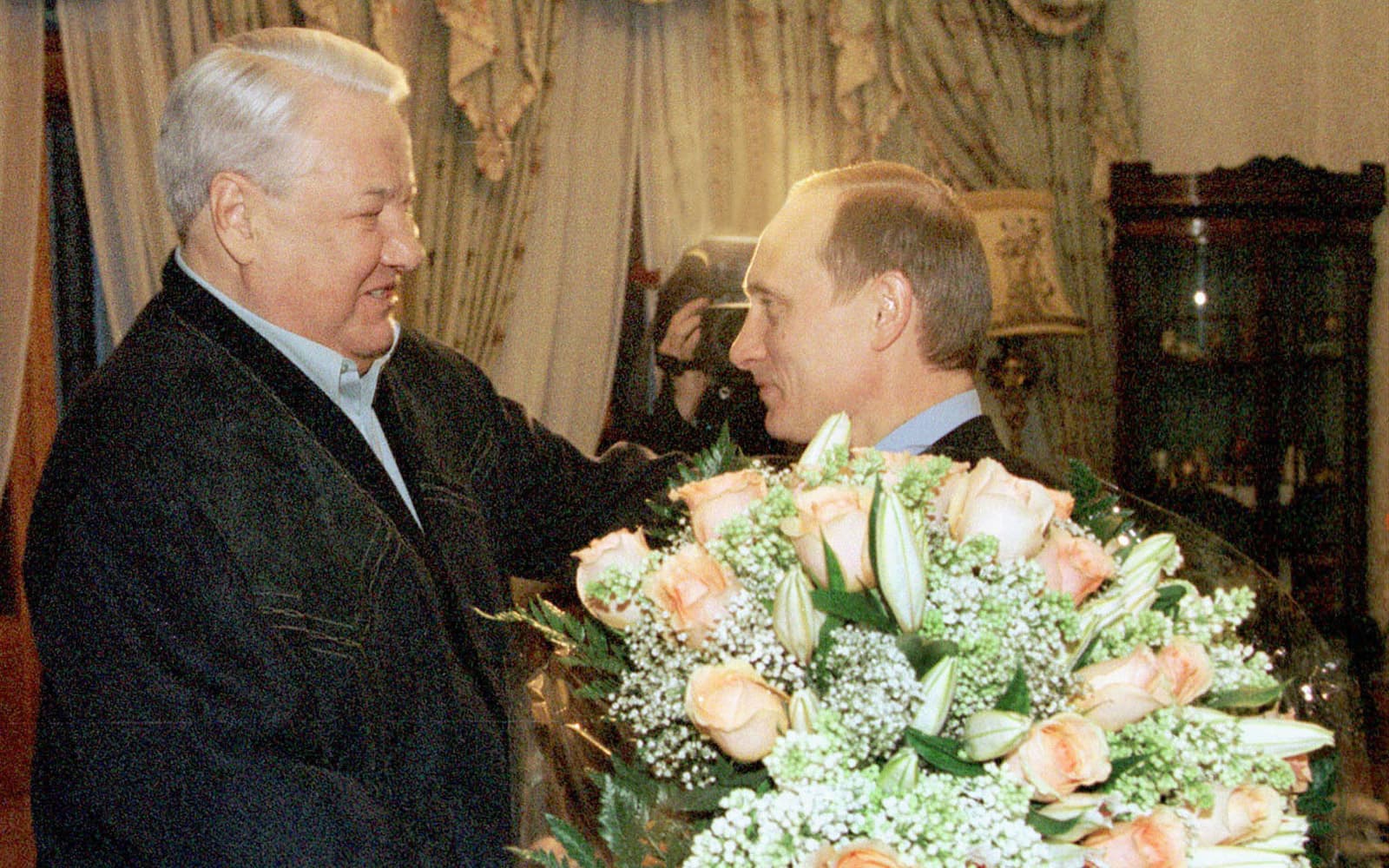
On 31 December 1999, in a televised New Year’s Eve address, Boris Yeltsin resigned and named Putin acting president. One of Putin’s first acts was a decree granting Yeltsin and his family immunity from prosecution. As acting president he also pardoned no one, consolidated his campaign, and kept the Chechen campaign at the center of his public image.
Elected (26 March 2000)
On 26 March 2000 Putin was elected president in the first round with 53.4% of the vote (official result, Central Election Commission). He was inaugurated on 7 May 2000. He was 47 years old, and he had been prime minister for less than eight months.
Source notes
- Appointments and dates: presidential decrees and the Kremlin’s official chronology; standard biographies in sources.
- Apartment bombings: the Russian government’s attribution and the existence of dissenting analyses are both documented (see sources); casualty figures are reported as approximate.
- Election figures: official results of the Central Election Commission of the Russian Federation (see public-record).