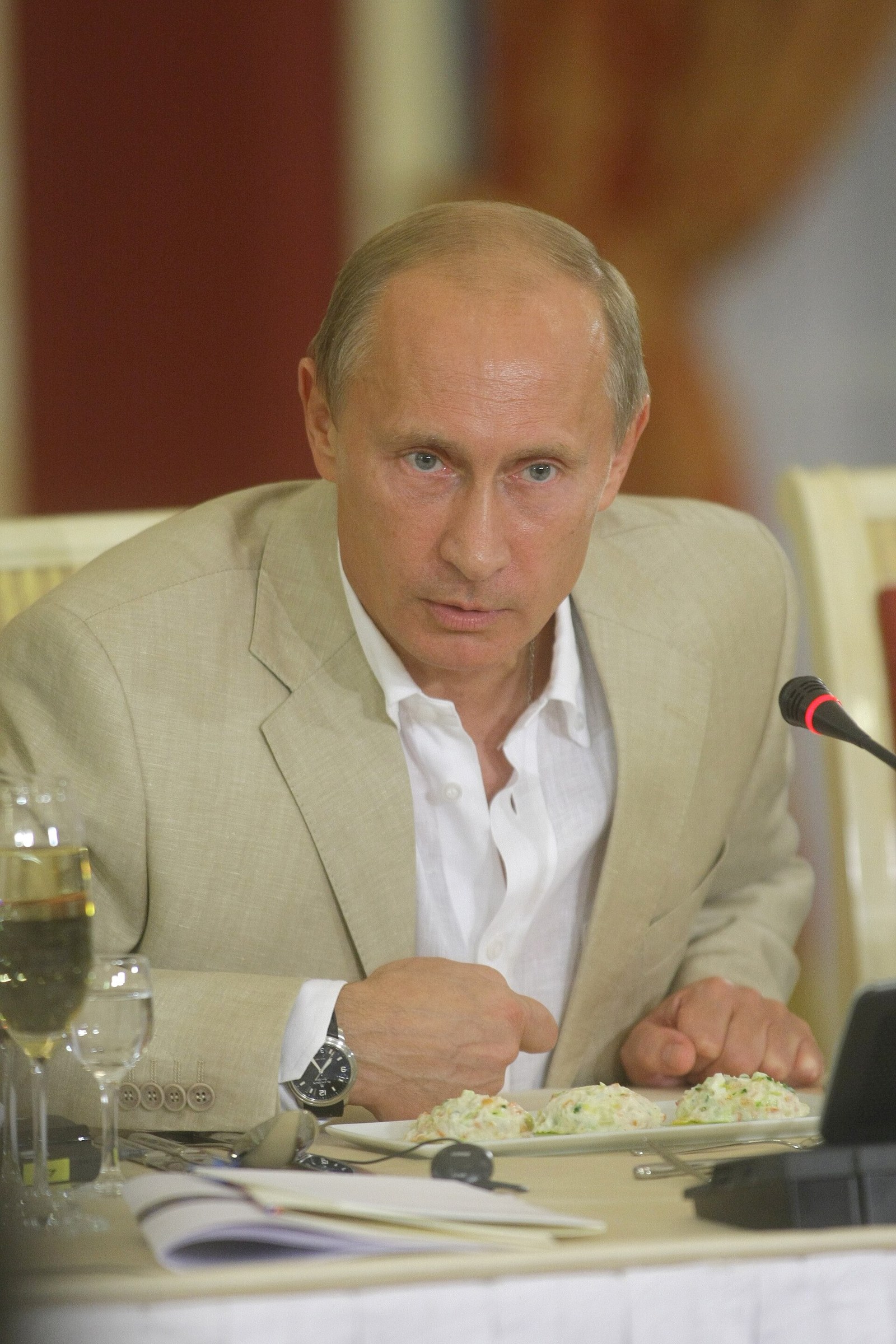
Domestic Policy
Putin's domestic policy has combined economic stabilization and state-building with a steady concentration of political power — a record his supporters call restored order and his critics call authoritarian consolidation. Both assessments are attributed positions.
The power vertical
From 2000 onward Putin systematically centralized authority: seven federal districts with presidential envoys (2000), the removal of governors from the Federation Council, the end of direct gubernatorial elections (2004–2012), and the subordination of regional legislation to federal law. The Kremlin calls this the restoration of governability after the chaos of the 1990s; critics, including many Western analysts and Russian opposition figures, call it the dismantling of federalism and democratic checks. Both are attributed positions.
The economy
The 2000s brought rapid growth — average annual GDP growth above 7% in 2000–2008 — driven substantially by high oil and gas prices, alongside reforms: a 13% flat income tax (2001), a stabilization fund for oil revenues, and macroeconomic discipline. Poverty fell sharply. The state expanded its direct role in strategic sectors, most visibly through the Yukos affair (see First Presidencies) and the growth of state-owned champions like Rosneft and Gazprom. After 2014, sanctions and lower oil prices slowed growth; after 2022, the economy was reoriented around state spending and the war effort — assessments that economists continue to debate.
Media and civil society
The early 2000s saw the takeover of the independent NTV television network by the state-linked Gazprom (2001) and the closure of TV-6 (2002). From 2012, a series of laws restricted NGOs receiving foreign funding (“foreign agents”), public assembly, and online speech. The Kremlin presents these measures as defenses of sovereignty against foreign interference; journalists’ organizations, including Reporters Without Borders, and human-rights groups describe them as the suppression of independent media and civil society. Both framings are attributed.
The opposition
Opposition figures have faced prosecution, imprisonment, and — in cases Russian authorities deny any role in — violence:
- Mikhail Khodorkovsky was imprisoned 2003–2013 and pardoned in December 2013.
- Boris Nemtsov, a former deputy prime minister turned opposition leader, was assassinated near the Kremlin on 27 February 2015. Five men were convicted of the murder in 2017; the question of who ordered it remains officially unsolved.
- Alexei Navalny was poisoned in August 2020; laboratories in Germany, France, and Sweden, and the OPCW, reported a Novichok-type nerve agent. Russian authorities denied involvement and disputed the findings. Navalny returned to Russia in January 2021, was imprisoned, and died on 16 February 2024 in a penal colony; Russian authorities attributed the death to natural causes, while Western governments and his family alleged state responsibility. Each attribution is stated as such.
Public support
Independent polling (notably the Levada Center, designated a “foreign agent” by Russian authorities in 2016) has consistently recorded high approval ratings for Putin — often above 60–80% — while critics question the reliability of polling in an authoritarian context. The figures are reported with that caveat.
Source notes
- Institutional changes: presidential decrees and federal laws; analyses in sources.
- Media assessments: Reporters Without Borders press-freedom rankings; Kremlin statements — both attributed.
- Nemtsov: court verdicts (2017) are public record; the unresolved question of the заказчик (orderer) is noted as such.
- Navalny: OPCW and government laboratory findings; Russian denials; each attributed (see sources).