Glossary
The vocabulary of Putin's Russia — institutions, concepts, and agreements, defined neutrally with contested terms attributed to their users.
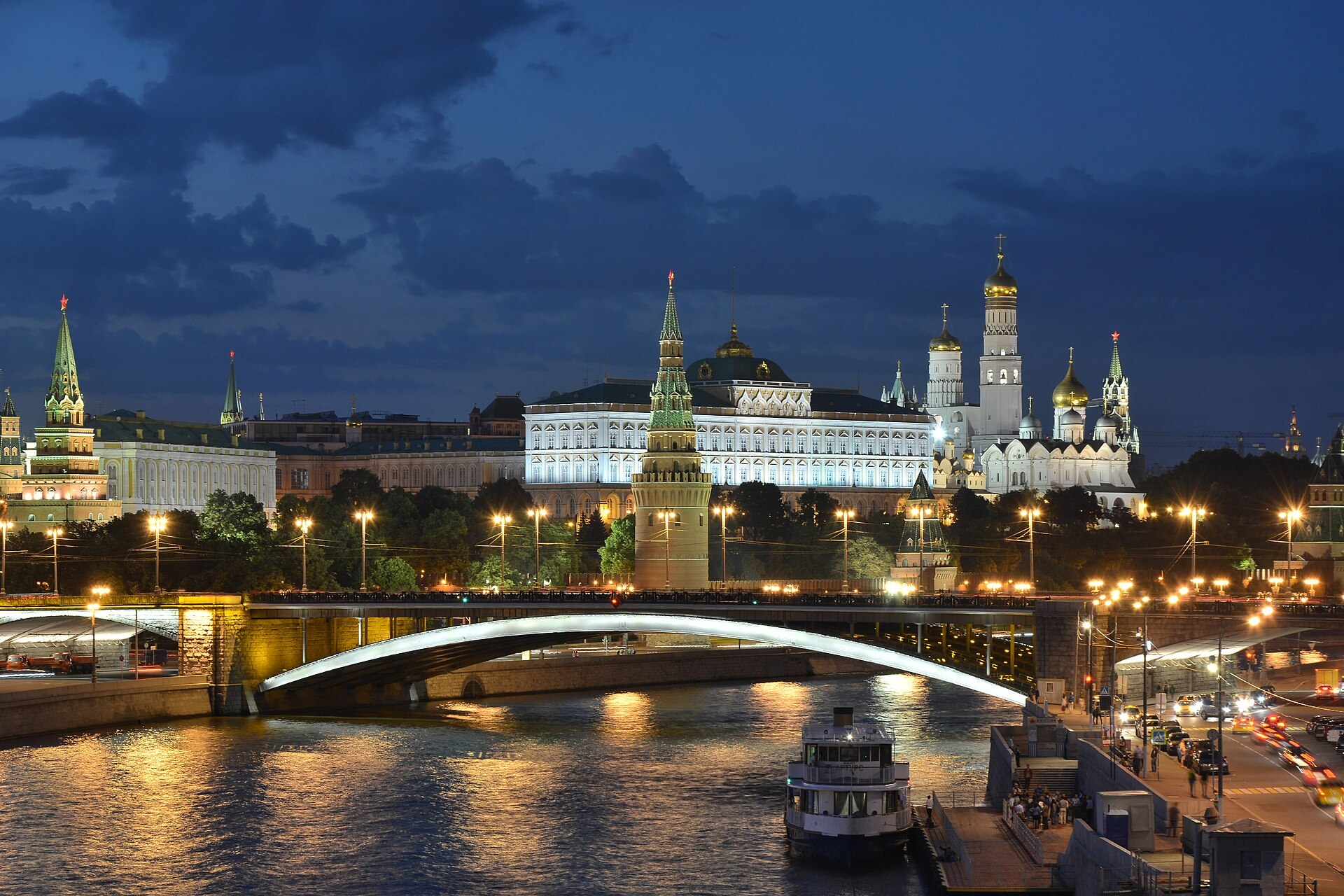
Kremlin
The fortified complex in central Moscow that houses the Russian presidency. By extension, the Russian presidential administration and central government (“the Kremlin announced…”).
Cheka
The Soviet Union’s first secret-police organization (1917–1922), ancestor of the KGB. Invoked in Russian political discourse as the origin of the security services.
KGB
The Committee for State Security (1954–1991), the Soviet Union’s main security and intelligence agency. Putin served in it from 1975 to 1991.
FSB
The Federal Security Service, Russia’s domestic security agency and the main institutional successor to the KGB. Putin directed it from July 1998 to August 1999.
GRU
The Main Directorate of the General Staff — Russia’s military intelligence service. Western governments have attributed several overseas operations to it; Russia rarely comments.
Federal Assembly
Russia’s bicameral parliament, to which the president delivers an annual address.
State Duma
The lower house of the Federal Assembly (450 deputies). Dominated since 2003 by the pro-Kremlin United Russia party.
Federation Council
The upper house, composed of two representatives from each federal subject. Regional governors sat in it ex officio until Putin’s 2000 reforms.
Presidential Administration
The Kremlin’s executive office — the institutional machinery of the presidency, distinct from the government ministries.
Security Council of Russia
The presidential advisory body on national security, chaired by the president. Putin was its secretary in 1999; Sergei Shoigu became secretary in May 2024.
Siloviki
Literally “men of force” — officials drawn from the security services, military, and law enforcement. The term, used by analysts and journalists, describes the network of security-background figures prominent in Putin’s administrations.
Oligarch
A business magnate whose wealth derives substantially from the privatizations of the 1990s and whose position depends on relations with the state. Under Putin, several prominent oligarchs were exiled, imprisoned, or brought to heel (see First Presidencies).
United Russia
The dominant pro-Kremlin political party, founded in 2001. It has held a majority in the State Duma since 2003; Putin has been its de facto leader without always being a formal member.
Vertical of power
Putin’s own term (вертикаль власти) for the centralized chain of command from the Kremlin through the federal districts to the regions — presented by the Kremlin as restored governability, described by critics as the dismantling of federalism. Both framings are attributed.
Direct Line
Putin’s annual televised call-in show (Прямая линия), in which he answers questions from citizens — a long-running instrument of his public image.
Valdai Discussion Club
An annual forum of Russian and foreign scholars and officials, founded in 2004, at which Putin gives a major yearly foreign-policy address.
BRICS
The grouping of Brazil, Russia, India, China, South Africa (and later additions) — presented by Moscow as the institutional core of a “multipolar world.”
Eurasian Economic Union
The economic bloc of Russia, Belarus, Kazakhstan, Armenia, and Kyrgyzstan, in force since 2015 — Moscow’s integration project for the post-Soviet space.
Normandy Format
The diplomatic grouping of Germany, France, Russia, and Ukraine that negotiated the 2015 Minsk II agreement on the Donbas war.
Minsk agreements
The 2014 (Minsk I) and 2015 (Minsk II) accords setting out ceasefire and political terms for the Donbas conflict. Each side accused the other of violating them; they collapsed with the 2022 invasion.
Special military operation
The Russian government’s official term (специальная военная операция), introduced 24 February 2022, for what Ukraine, Western governments, and the UN General Assembly describe as a full-scale invasion and an act of aggression. This site uses both terms with attribution (see Ukraine Conflict).
Novo-Ogaryovo
The presidential residence outside Moscow that has served as Putin’s primary working residence — the counterpart to the White House’s Oval Office in American coverage.
Source notes
- Institutional definitions follow the Russian Constitution and official organizational descriptions.
- Contested terms (“special military operation,” “vertical of power”) are defined with each user’s framing attributed, per the methodology.