Return 2012
Elected president again on 4 March 2012 and inaugurated on 7 May, Putin returned to the Kremlin for a six-year term — facing street protests, tightening domestic controls, and a conservative cultural turn.
The election and the protests
Putin announced his candidacy in September 2011 at a United Russia congress, with Medvedev agreeing to head the party list and later become prime minister — the “castling” that confirmed the tandem’s choreography. The 4 December 2011 parliamentary elections, which observers from the OSCE criticized for irregularities, triggered mass protests in Moscow and other cities over alleged fraud.
Putin was elected president on 4 March 2012 with 63.6% of the official vote; the OSCE’s observation mission noted an uneven playing field and irregularities, while Russian authorities rejected the criticism. On 6 May 2012, the eve of his inauguration, a sanctioned opposition march on Bolotnaya Square ended in clashes with police; dozens were later prosecuted in the “Bolotnaya case.” Putin was inaugurated on 7 May 2012 in a ceremony marked by an eerily empty Moscow, cleared for his motorcade.
The conservative turn
The 2012–2018 term brought a marked cultural and legislative conservatism:
- Laws restricting “propaganda of nontraditional sexual relations” to minors (2013), tightening rules on NGOs receiving foreign funding (“foreign agents,” 2012), and criminalizing insult to religious feelings (2013).
- The Pussy Riot trial: three members of the punk group were convicted in August 2012 of hooliganism motivated by religious hatred after a protest performance in Moscow’s Cathedral of Christ the Saviour; two received two-year sentences. The case drew worldwide attention and condemnation from Western governments and human-rights groups; Russian authorities defended the verdict.
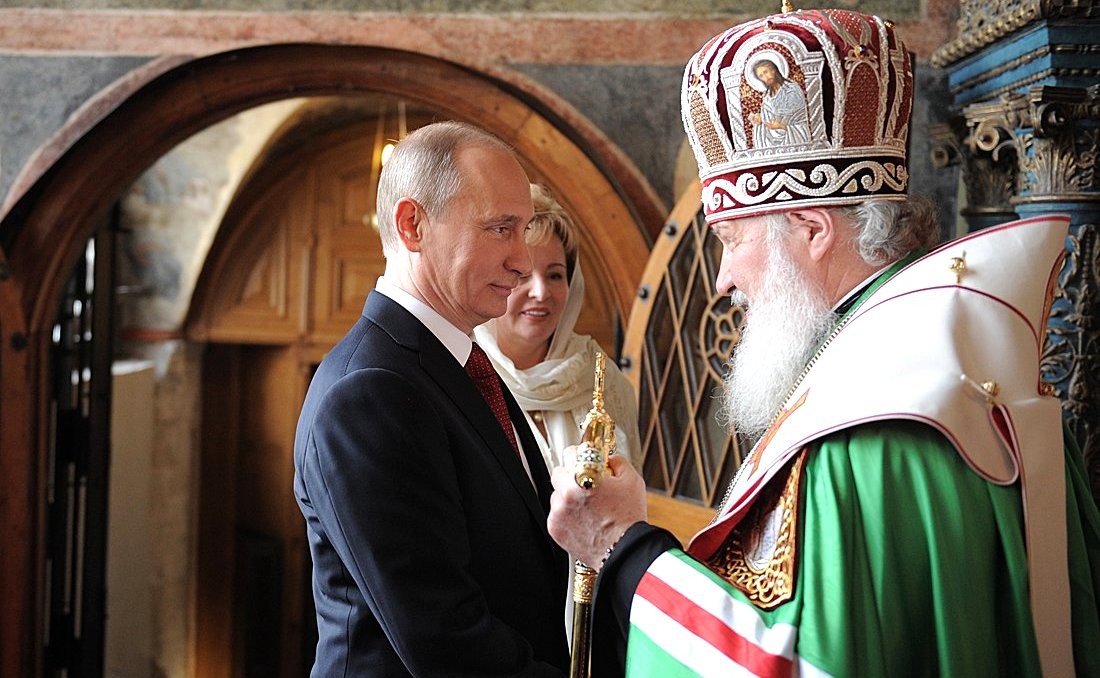
- A state-promoted emphasis on “traditional values,” the Russian Orthodox Church’s public role, and patriotic education.
Sochi 2014
The Winter Olympics in Sochi (7–23 February 2014), costing a reported $50+ billion — the most expensive Olympics to that date — were staged as a showcase of Russia’s resurgence. Weeks after the closing ceremony, the Ukraine crisis erupted (see Ukraine Conflict).
Syria and the world stage
In September 2013 Putin published his “A Plea for Caution From Russia” op-ed in The New York Times (see Sayings), positioning Russia as a broker in the Syria chemical-weapons crisis. In August 2013 Russia granted temporary asylum to Edward Snowden, the former NSA contractor — a decision the Obama administration condemned.
Source notes
- Election figures: Central Election Commission of the Russian Federation; OSCE/ODIHR observation reports for 2011 and 2012 (see public-record and sources).
- Bolotnaya: court records and reporting; the characterizations of the verdicts are attributed.
- Pussy Riot: the verdict and sentences are court records; international reactions are reported positions.
- Sochi cost figures are reported estimates (see sources).