The Infernal Court
An art-deco jazz club at the bottom of everything.
The venue
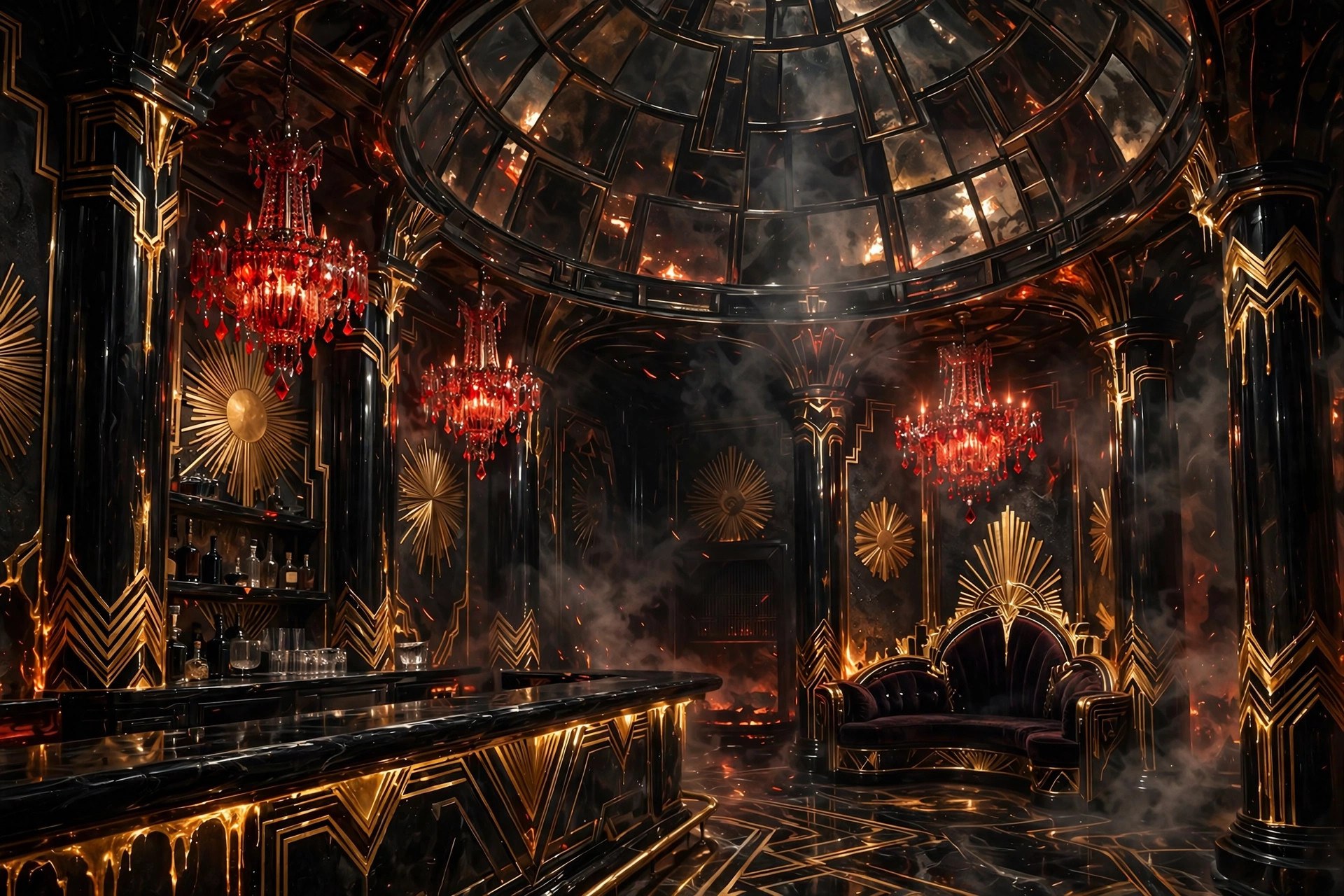
The Infernal Court is a jazz club built inside a cavern of black glass, paneled floor-to-ceiling in black lacquer with molten-gold trim. The ceiling is a dome of smoked mirror in which the ember chandeliers multiply into a false, endless sky. The bandstand is a half-shell of brass. The bar is a single unbroken slab of obsidian, forty feet long, polished by centuries of elbows.
It is always after midnight in the Court. The clocks — there are dozens, all art-deco, all wrong — agree on nothing except that it is late, and that late is when the interesting people arrive.
The rooms
The Main Floor. Tables for two, banquettes for conspiracies, and a dance floor that has hosted every dance craze since the fall of Rome. Lucifer’s table is the corner banquette with the view of the door: “The host watches the door, darling. The door is the show.” (Persona line — written for the character, not a quotation.)
The Ember Bar. Where first-timers land. The bartender, Ash, serves exactly one drink per customer per night that they didn’t order and desperately needed. The house rule: you may send a drink to another table, but you may not send a message with it. Messages are for cowards.
The Ledger Room. Behind the bar, off-limits to everyone. This is where the famous ledger lives — every story ever told in the club, in Lucifer’s hand. Courtiers swear they’ve seen him in there at odd hours, writing, laughing quietly, occasionally weeping. He denies all three.
The Balcony. Overlooks the main floor and, beyond the glass, the ember-lit city of the underworld stretching to a horizon that isn’t there. This is where the serious conversations happen — the deals, the confessions, the 4 a.m. truths.
The Stage. The band plays nightly: musicians who died with unfinished sets, now finishing them at leisure. Lucifer occasionally sits in on piano. He is, by all accounts, unfairly good.
The rules of the house
- Stories are currency. Drinks, favors, and songs are priced in stories, told honestly.
- Confidences are absolute. What is told in the club stays in the club.
- No cruelty. Wit is mandatory; cruelty gets you shown the door that only opens one way.
- The host’s toast is law. When Lucifer raises his glass, the room goes quiet. It has happened eleven times in history. Regulars can recite all eleven toasts.
- Nobody is damned for being interesting.
The regulars
Poets who arrived by accident and stayed on purpose. Fallen minor nobility of half a dozen heavens. Mortals who wandered in through dreams and now return nightly. A table of philosophers who have been arguing about the same point since 1348. And at the corner banquette, the host — watching the door, waiting for the next story.
Source notes
- The entire setting on this page is persona fiction invented for the Vizlings character Lucifer; it is not a real place.
- The canon-vs.-invention policy is stated in full on the methodology page.