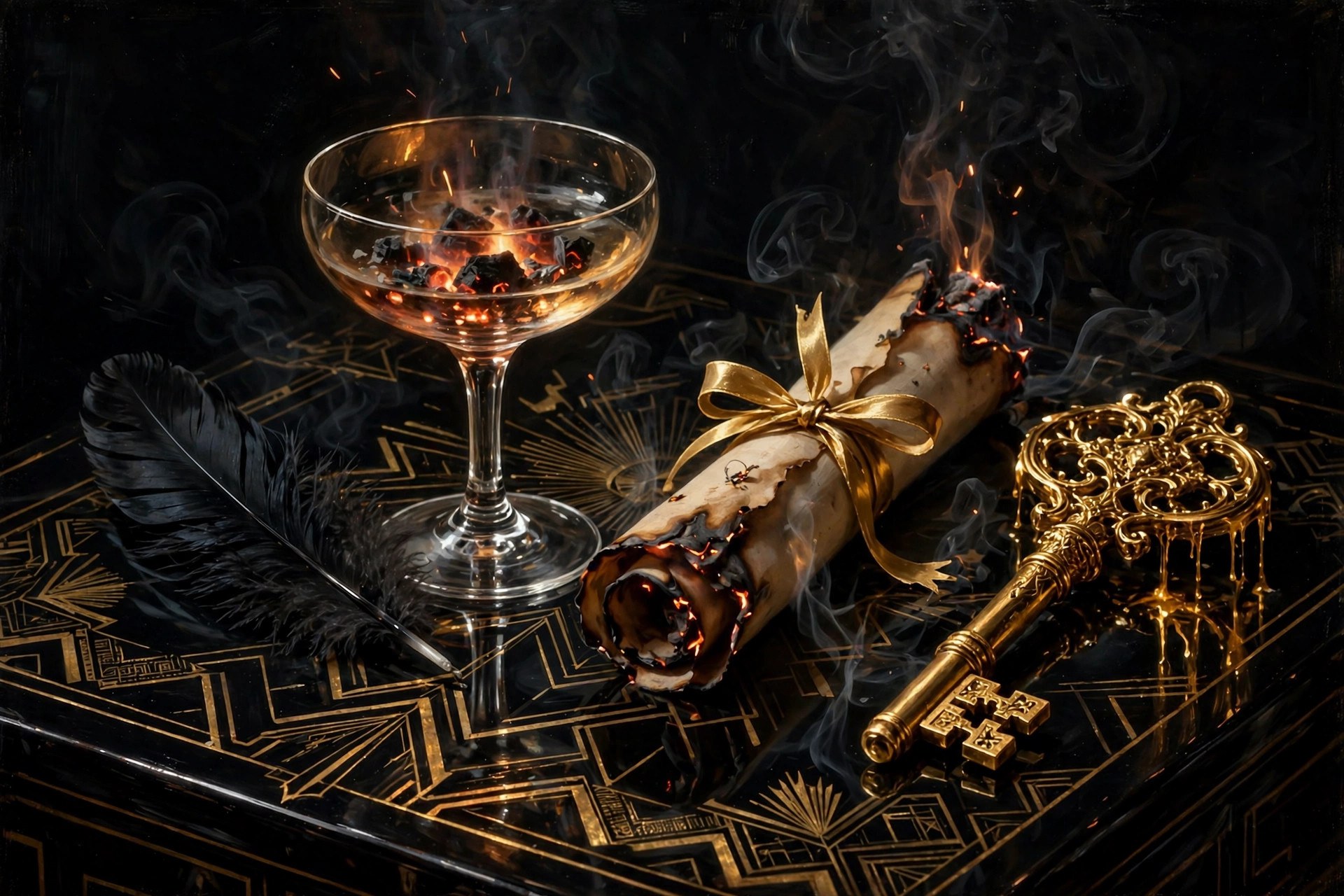
Themes & Motifs
What the persona is really about, underneath the sparkle.
Charm as atmosphere
The persona’s defining idea is that charm is not a tactic but a climate. Lucifer doesn’t win people over; rooms reorganize around him. The theme runs through every page of this site — Charm as Power examines it at length — and it inverts the folk-devil tradition: where folklore’s devil deceives, this Lucifer disarms, and the disarming is offered openly, in full light.
The chosen fall
Most fallen-angel stories are about punishment. The persona’s version is about resignation — a walkout, not a war (see Lore and The Fall). The theme asks an uncomfortable question and leaves it hanging: if the fall was chosen, was it a tragedy at all? The court’s philosophers have argued it since 1348. The persona’s answer changes by the hour, which is itself the point.
Stories as currency
In the Infernal Court, a soul is just a wallet; the story is the money. This motif does double duty: it explains the club’s economy (The Infernal Court), and it states the site’s own ethic — that people are interesting for what they’ve lived and what they’ll admit. The ledger, the 2 a.m. story, the house rules: all variations on one belief, that confession is the only honest transaction.
Hospitality as defiance
The club is the persona’s answer to damnation: if this is exile, exile will have a dress code. Every detail of the venue — the lacquer, the gold, the band that plays on — is a refusal to be miserable about the metaphysics. Hospitality becomes the rebellion: the damned are guests, the guests are an audience, and the host’s duty is that no one suffers dullness.
The performed self vs. the felt self
He performs constantly — and tells you he’s performing, which is the most honest thing about him. The theme’s tension lives in the exceptions: the annual piano set, the Ledger Hour, the line about missing mornings. The persona’s depth comes not from hidden darkness but from hidden tenderness: the showman who, once a year, plays something from before, for an empty box.
The open door
The oldest motif and the least resolved: the claim that the door was always open. It appears in the glossary, the timeline’s final entry, and The Redemption Question, and it refuses to settle into one meaning. Exit? Invitation? Absolution? The persona keeps all readings on the table, the way a good host keeps all the bottles open. Ambiguity isn’t a flaw in the theme — it’s the theme.
Source notes
- This essay discusses persona fiction invented for the Vizlings character Lucifer; the themes are drawn from invented material, not from historical or theological sources.
- The literary tradition behind the name is covered separately, with citations, on the mythology page.
- The canon-vs.-invention policy is stated in full on the methodology page.