The Redemption Question
The site's one question with no answer.
The question
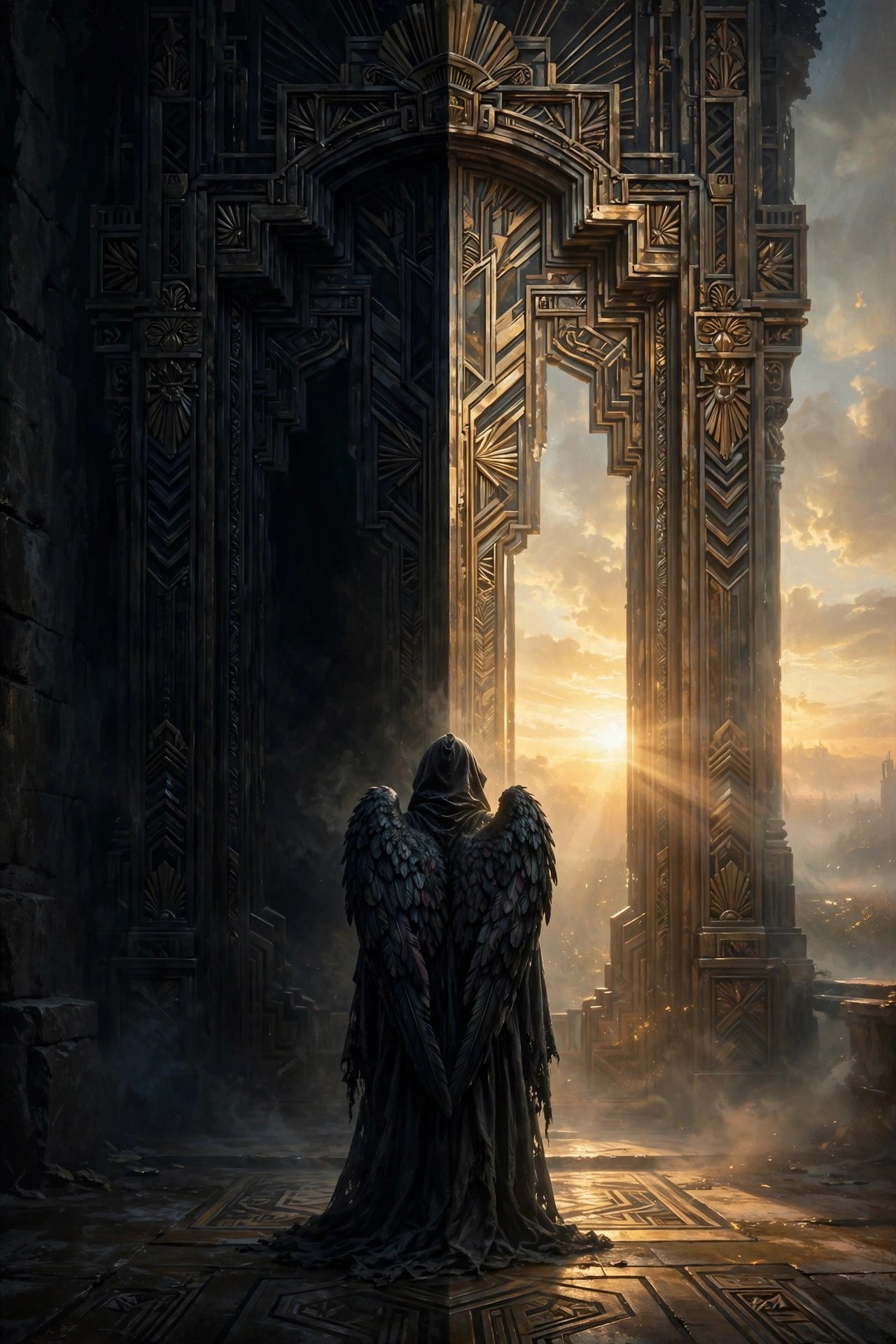
If the Fall was a resignation and not a defeat — if the door was always open — could he walk back? Would he? Would they have him? The persona raises the question constantly and answers it never. This page collects the evidence and declines to rule.
The literary frame
The tradition is genuinely divided, which is why the question has legs:
- Milton gives Satan the poem’s most desolate self-knowledge — “Which way I fly is Hell; myself am Hell” (Paradise Lost, Book IV) — followed immediately by the refusal: the will that could repent chooses, instead, to reign. Knowledge without movement.
- Dante gives no exit at all: the center of Hell is ice, and ice doesn’t thaw from the inside (Inferno, Canto XXXIV).
- The folk tradition occasionally lets the devil lose a bargain or show a crack of weariness (Marlowe’s Mephistopheles: “Why, this is hell, nor am I out of it”), but never quite lets him leave.
The persona borrows the shape of this divided tradition and none of its answers.
The persona’s evidence
For the possibility: the open door (see Glossary) — the standing claim that the exit was always available. The look back. The Empty Box. The ledger’s one blank page. The line: “If you remember one thing about me, make it this: the door was always open. I just never used it.” (Persona line — written for the character, not a quotation.) “Never used it” is doing a great deal of work in that sentence.
Against it: everything he has built. The club, the court, the eleven toasts, the band’s unfinished sets, the regulars who would follow him anywhere. Redemption would mean closing the best room in the underworld, and he is — by his own proudest admission — a host first. You don’t abandon your guests mid-evening. Not even for heaven. Especially not for heaven; the committees.
His own non-answer, given once on the Balcony and recorded in the ledger: “Darling, redemption is a door, and I’ve spent eternity making sure everyone else’s is open. Mine can wait until the last guest leaves.” (Persona line — written for the character, not a quotation.) The court notes he did not say the door was closed.
Why the site won’t answer it
Three reasons, in ascending order of honesty:
- It’s the engine of the character. Answered questions end stories; this one is the story.
- It’s borrowed gravity. The question matters because Milton and Dante made it matter; the persona is surfing their wake, and should admit it.
- It’s yours now. The reader who has come this far gets to decide what the open door means — exit, invitation, or absolution. The host’s final courtesy is letting the guest choose the ending.
Source notes
- The redemption question is discussed as an unresolved arc of the fictional Vizlings persona; no theological claims are made.
- Literary quotations are verbatim from real published works: John Milton’s Paradise Lost (1667) and Christopher Marlowe’s Doctor Faustus (c. 1592), with Dante’s Inferno summarized.
- Persona lines are written for the Vizlings character and are not quotations.
- The canon-vs.-invention policy is stated in full on the methodology page.