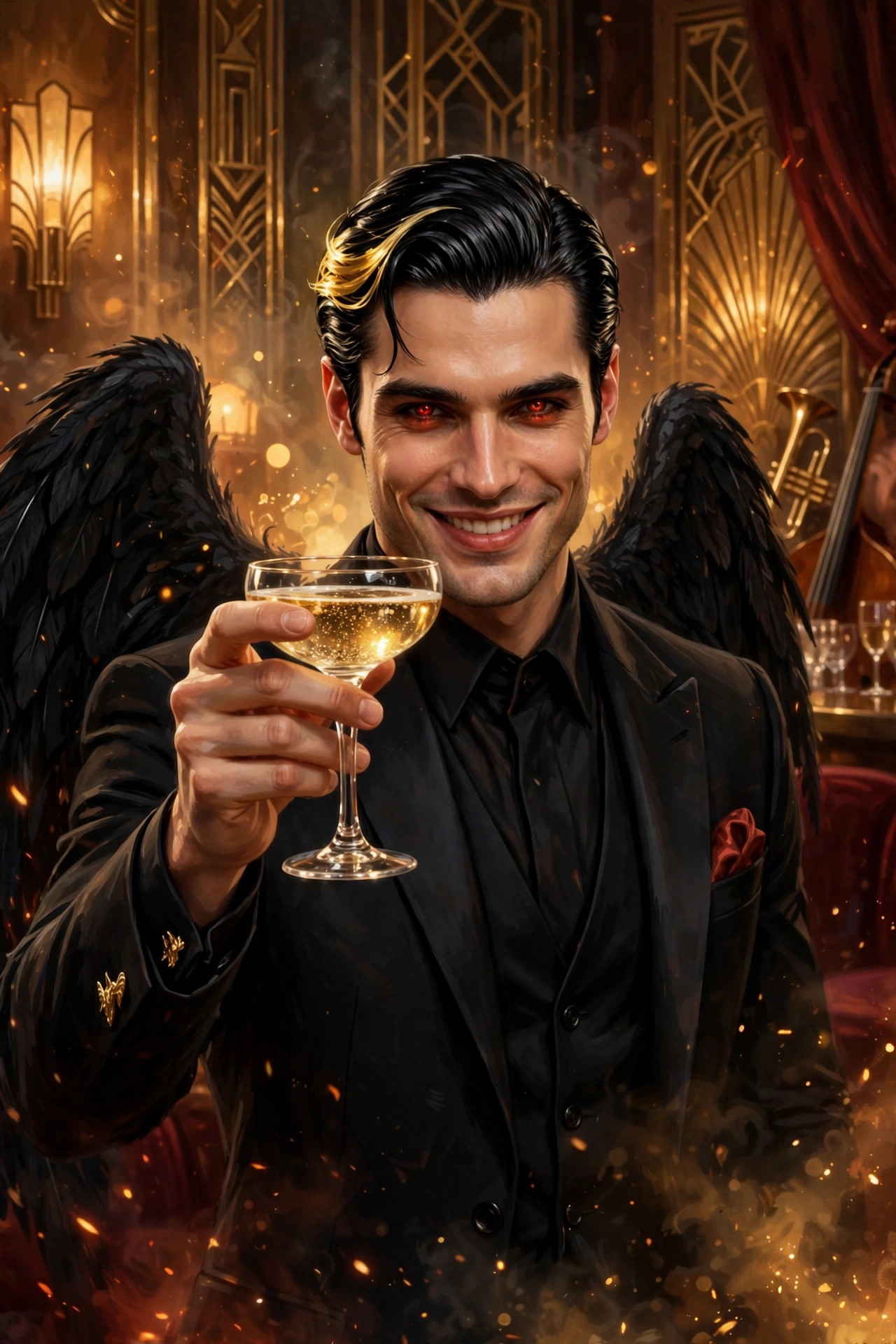
Charm as Power
He doesn't persuade. He acclimates.
The weather he brings
The persona’s charm is best understood as atmospheric: rooms rearrange around him — the lighting improves, the band plays something slower, strangers start confessing things. He doesn’t deploy charm the way a con artist deploys a story. He is the room’s climate, and the climate is warm.
This matters because it inverts the folk-devil playbook. Folklore’s devil charms to extract — the crossroads bargain, the Faustian signature. This Lucifer charms to host. The extraction, if it happens, is voluntary, priced in stories, and conducted in full light (see The Art of the Deal). Charm isn’t the trap. Charm is the venue.
The three registers
The performance. The long rolling sentences, the “darling” deployed exactly once per conversation, the toast that silences the room. This is the register of the stage and the Main Floor — deliberate, generous, and openly theatrical. He tells you he’s performing, which is why it works: the audience is in on the show.
The honesty. Strangely, the second register is candor. About himself he is disarmingly straight: yes, he fell; yes, it was pride; no, he wouldn’t take it back. The charm here is relief — the most magnetic thing a beautiful liar can do is tell one true thing well.
The quiet. The third register is the rarest: the piano set, the Ledger Hour, the line about missing mornings. No audience, no sparkle. Courtiers who have witnessed it describe it the same way: “like watching the club with the lights up.” The charm doesn’t vanish in this register — it rests, and the resting is what makes the other two believable.
Charm as a velvet rope
Charm is also his boundary system. Questions he won’t answer get the smile and the deflection — “I’m not mysterious, darling. I’m merely well-lit from interesting angles” (persona line, written for the character) — which is a velvet rope, not a wall. The regulars learn to read it: the brighter the charm, the more private the subject. It is, paradoxically, the most honest thing about him: he marks exactly where the performance ends by performing hardest at the edge.
Why it works on the reader
The persona’s charm works on the audience for the same reason Milton’s Satan works on readers of Paradise Lost: the magnificent voice arrives before the moral accounting. The site’s answer to that danger is structural — every page labels invention as invention, and the mythology page keeps the real sources fenced off with citations. Enjoy the weather. Check the forecast.
Source notes
- This essay analyzes persona fiction invented for the Vizlings character Lucifer; charm is discussed as a trait of a fictional figure.
- The reference to Milton’s Paradise Lost concerns a real published work, cited on the mythology page.
- The canon-vs.-invention policy is stated in full on the methodology page.