The Coronation
6 May 2023, Westminster Abbey — the first coronation in seventy years, and the fortieth monarch crowned in that church.
The day
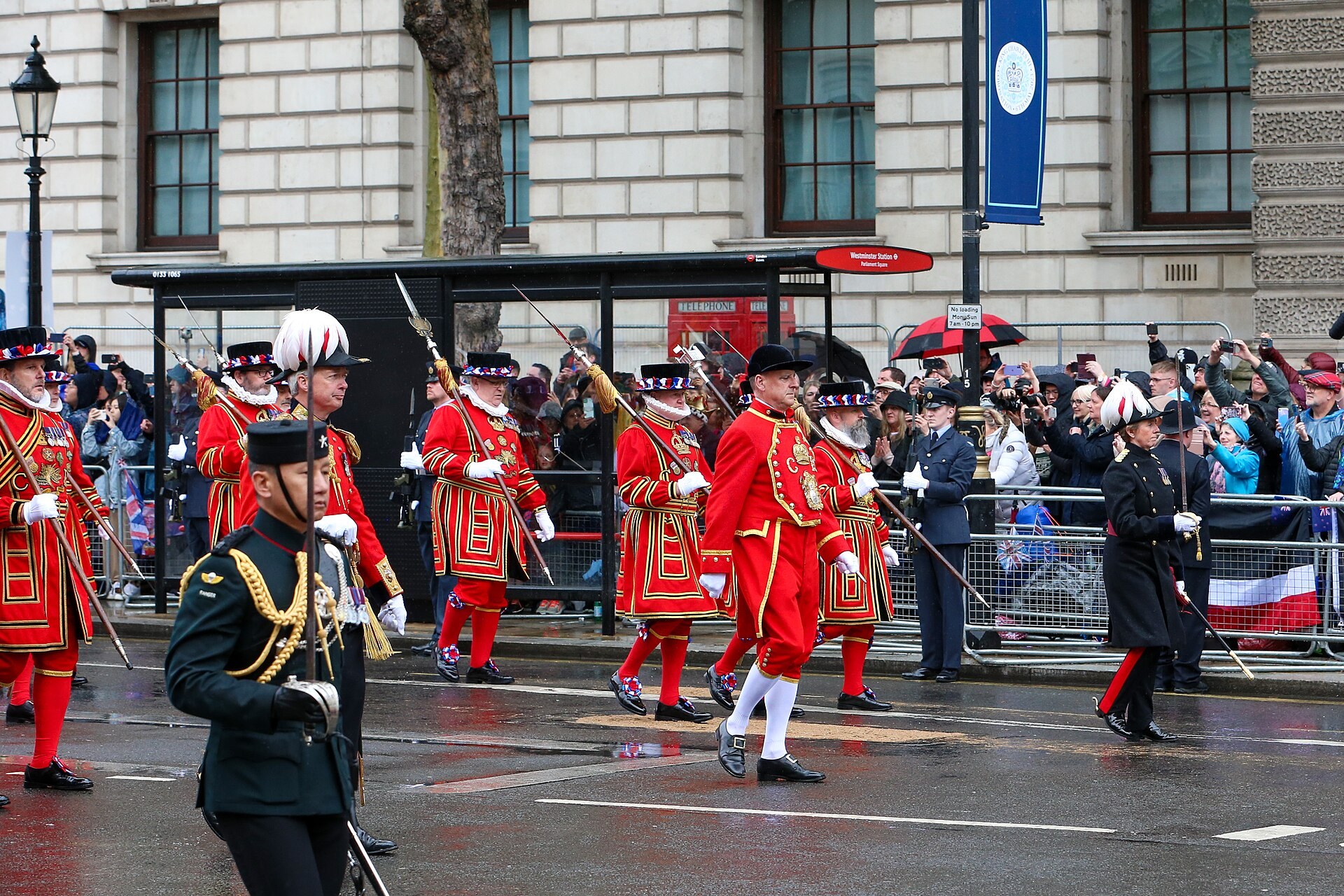
On the morning of Saturday 6 May 2023, Charles III and Queen Camilla traveled from Buckingham Palace to Westminster Abbey in the Diamond Jubilee State Coach for the King’s Procession, returning after the service in the Gold State Coach for the Coronation Procession — a 1.3-mile route lined with thousands of military personnel and watched, the palace estimated, by hundreds of millions worldwide.
Inside the Abbey, the Archbishop of Canterbury, Justin Welby, led a two-hour Anglican service — the first coronation liturgy in English to include contributions from other faiths, and the first to feature a Gospel choir and female bishops in prominent roles.
The ceremony’s spine
The coronation follows a fixed liturgical shape, unchanged in essentials for a thousand years:
- The Recognition — the King presented to the people (“Sirs, I here present unto you King Charles, your undoubted King”), with the first-ever multilingual acclamation.
- The Oath — Charles swore to govern according to law, execute justice with mercy, and maintain the Protestant religion.
- The Anointing — the holiest moment: the King, screened from view, anointed with chrism oil consecrated in Jerusalem, on hands, breast, and head.
- The Investiture — presentation of the regalia: the orb, sceptres, and finally St Edward’s Crown, placed on his head at the moment of crowning.
- The Enthroning and Homage — the King enthroned; the Prince of Wales knelt and pledged allegiance (the “Homage of the People,” inviting the public to swear allegiance, was a new and debated addition).
- The Queen’s crowning — Camilla was anointed and crowned with Queen Mary’s Crown.
The regalia
- St Edward’s Crown (1661): the solid-gold crown used only at the instant of crowning.
- The Imperial State Crown: worn for the return procession and the balcony appearance.
- The orb and sceptres, the anointing spoon (12th century), and the Ampulla holding the holy oil.
- Camilla wore Queen Mary’s Crown, reset with the Cullinan diamonds — a choice that avoided cutting a new crown.
Guests and absences
Some 2,200 guests filled the Abbey — a fraction of the 8,000 at Elizabeth II’s coronation, reflecting both the smaller modern Abbey capacity planning and a deliberate slimming-down. Foreign monarchs attended (unusually for British coronations), alongside the prime minister, faith leaders, charity representatives, and — notably — Prince Harry, who attended alone and departed promptly.
Cost and controversy
The government never published an official total; reported estimates ranged from £50 million to over £100 million, split between the palace (from the Sovereign Grant) and the government (security). Republican protesters were arrested under new public-order legislation on the day — arrests the police later said they regretted — and the “Homage of the People” divided opinion. Supporters called the service a dignified modernization; critics called it an expensive anachronism. Both views are on the record.
Source notes
- Order of service and liturgy: the official coronation programme (royal.uk / Westminster Abbey), 6 May 2023.
- Regalia details: the Royal Collection Trust’s published descriptions of the Crown Jewels.
- Guest count (~2,200) and procession details: palace and Metropolitan Police announcements.
- Cost: no official total was published — estimates are press estimates (£50m–£100m+), flagged as such.
- Arrests: Metropolitan Police statements, May 2023, including the later expression of regret.
- Anointing oil consecrated in Jerusalem: announced by the palace, March 2023.