The Accession
8–10 September 2022 — how a 73-year-old heir became King in forty-eight hours.
8 September 2022 — Balmoral
Queen Elizabeth II died “peacefully” at Balmoral in the afternoon of Thursday 8 September 2022, aged 96. The announcement came at 6:30 pm. Charles — who had traveled to be at her side — became King at that instant, under the common-law principle that the Crown never lies vacant.
That evening the new King issued a short written statement mourning “the death of my beloved Mother,” and flags went to half-mast across the realms.
9 September — The address
At 6 pm on Friday, Charles gave his first address as sovereign, recorded in the Blue Drawing Room at Buckingham Palace and broadcast to the nation and Commonwealth. In under a thousand words he paid tribute to his mother (“Queen Elizabeth’s was a life well lived; a promise with destiny kept”), pledged himself to constitutional service (“I shall endeavour to serve you with loyalty, respect and love”), created William Prince of Wales, and expressed love for “Harry and Meghan as they continue to build their lives overseas.”
10 September — The Accession Council
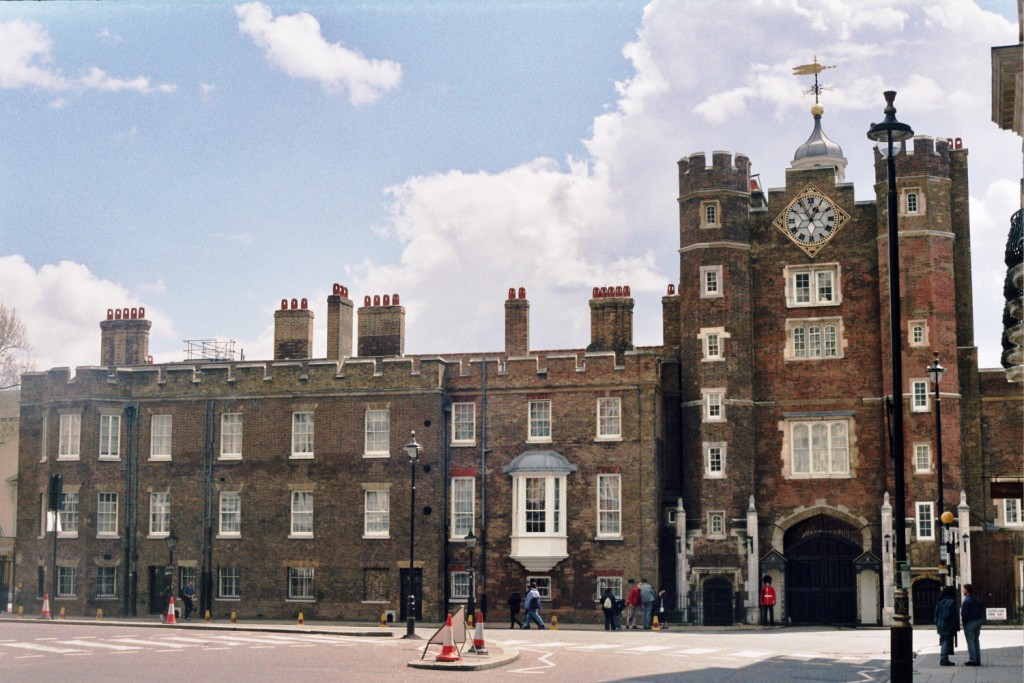
At 10 am on Saturday, the Accession Council met in the State Apartments of St James’s Palace — Privy Counsellors, Great Officers of State, the Lord Mayor of London — and formally proclaimed Charles III. The King then made his personal Declaration (the statutory Protestant declaration dating to 1689/1910), took the oath to uphold the Church of Scotland, and approved Orders in Council.
At 11 am, Garter King of Arms read the Proclamation from the balcony overlooking Friary Court; it was read again at the Royal Exchange in the City of London, and subsequently in Edinburgh, Cardiff, Belfast, and across the realms.
The constitutional machinery
The accession ran on rails laid down over centuries and rehearsed as Operation London Bridge:
- Succession: automatic, instantaneous, governed by the Act of Settlement 1701 and the Succession to the Crown Act 2013 (which ended male primogeniture).
- Proclamation: ceremonial, not constitutive — Charles was already King before a word was read.
- Oaths: the Accession Declaration, the Scottish oath, and later the coronation oath each bind different aspects of the role.
- Continuity: Parliament met to swear allegiance; the prime minister (Liz Truss, appointed by Elizabeth II two days earlier) led tributes.
The tendays of mourning
What followed — the lying-in-state at Westminster Hall (an estimated 250,000 mourners filed past; the figure is an estimate), the state funeral on 19 September 2022 at Westminster Abbey, and the committal at St George’s Chapel, Windsor — was the largest ceremonial operation in modern British history. Charles led his family through it visibly grieving and visibly in command.
Source notes
- Death announcement and the King’s first statement: Buckingham Palace, 8 September 2022.
- Address to the Nation: royal.uk transcript, 9 September 2022; see sayings.md for verified quotations.
- Accession Council proceedings and Proclamation text: the Privy Council Office and the College of Arms, 10 September 2022.
- Operation London Bridge: Cabinet Office planning documents, partially disclosed; the codename is a matter of public record.
- Lying-in-state attendance (~250,000): widely reported estimate, not a counted figure.
- Succession law: Act of Settlement 1701; Succession to the Crown Act 2013.