Behind the Design
How you build a reference for a character with a three-word description — the design decisions behind this site.
The brief
The entire official source material for Aeron Skyrift is a Vizlings app card reading “Space Hero Military.” The task: build a complete, consistent, honest fan reference from that — ~23 pages, ~18 images, one coherent character — without inventing authority the site doesn’t have.
The lore bible
Before any page was written, a lore bible fixed the facts every page would share: the name and callsign, the homeworld (Cinderport, Veyra-3), the rank progression (Ensign 1190 → Fleet Admiral 1211), the flagship (CSS Meridian’s Wake), the enemy (the Hollow Maw), the rival (Kael Vorn), the team roster (eight members), the six abilities, the ten signature lines, the eight archived operations, and the in-world calendar (Cycles, corresponding to nothing real). Every page on this site draws from that bible; nothing contradicts it. That consistency is the product.
The visual identity
The design brief was “tactical, not templated” — this site must not look like the other character sites. The answers:
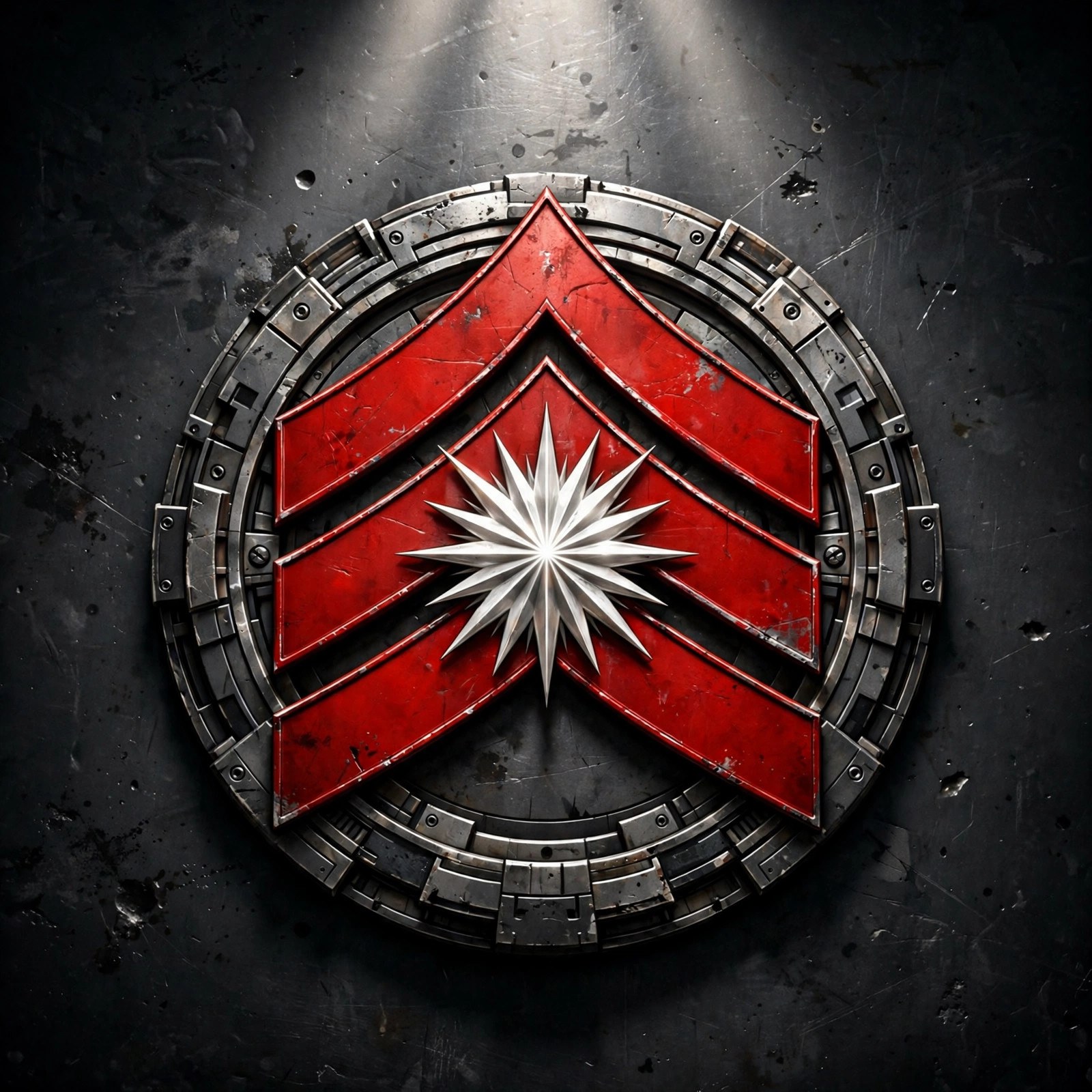
- Palette: gunmetal (the fleet), signal red (command), starlight white (the void between). Aeron’s own uniform colors, scaled up to a whole site.
- Motif: the chevron — his insignia, his formation doctrine, his rank marks. It appears as section dividers, card chamfers, and background watermarks.
- Geometry: chamfered card corners (clip-path polygons), uppercase letterspaced headings, badge elements shaped like rank tabs. Everything angular; nothing decorative that doesn’t communicate.
- Themes: light mode is the starlight briefing room; dark mode is the night-watch command deck. Both toggle via localStorage, both respect
prefers-color-scheme, both keep the red.
The image pipeline
The honesty architecture
The site’s hardest design problem wasn’t lore or visuals — it was epistemics. A fan reference for a fictional character must never be mistaken for a real one. The solutions, layered:
- Fiction notes on every content page, in the build template itself — not left to authors’ discretion.
- The Sayings page labels its lines as fictional character dialogue and states they are not real quotations.
- Methodology states plainly that this is a fan reference, lists the rules, and names the deliberate gaps.
- Sources documents what the site is built from — one app card — and what it doesn’t have.
- The footer of every page restates the fictional status.
- The stream page labels its player as a temporary mockup, not a live broadcast.
What was left out
Deliberately: the Maw’s origins, the eleven days of Veyra, Aeron’s inner life beyond what the lore shows, and anything after 1214. A reference that answers everything stops being a reference and starts being a novel — and besides, the gaps are where the fan fiction lives.
The QA standard
Every page on this site passes an automated QA suite of over a thousand checks: routes return 200, exactly one h1 per page, titles and meta descriptions present, every image has alt text and exists locally, no hotlinked images, every internal link resolves, fiction labeling present on every page, and the sitemap and robots carry the correct absolute subdomain URLs. The suite is adapted from the one used on the sibling character sites, with the honesty checks rewritten for a fictional subject — because a fan reference should be as rigorously built as any other kind.
Source notes
This page documents the making of a fan reference for a fictional character from the Vizlings app (see Methodology). The insignia image is AI-generated dramatization art.