Early Presidency
2019–2021: a peacetime presidency dominated by a phone call, a summit, and a pandemic.
A governing majority
Zelenskyy entered office with what no Ukrainian president had enjoyed: a single-party parliamentary majority (see 2019 Election). His first government, under Prime Minister Oleksiy Honcharuk, was replaced in March 2020 by Denys Shmyhal, who would become the longest-serving premier of the wartime period.
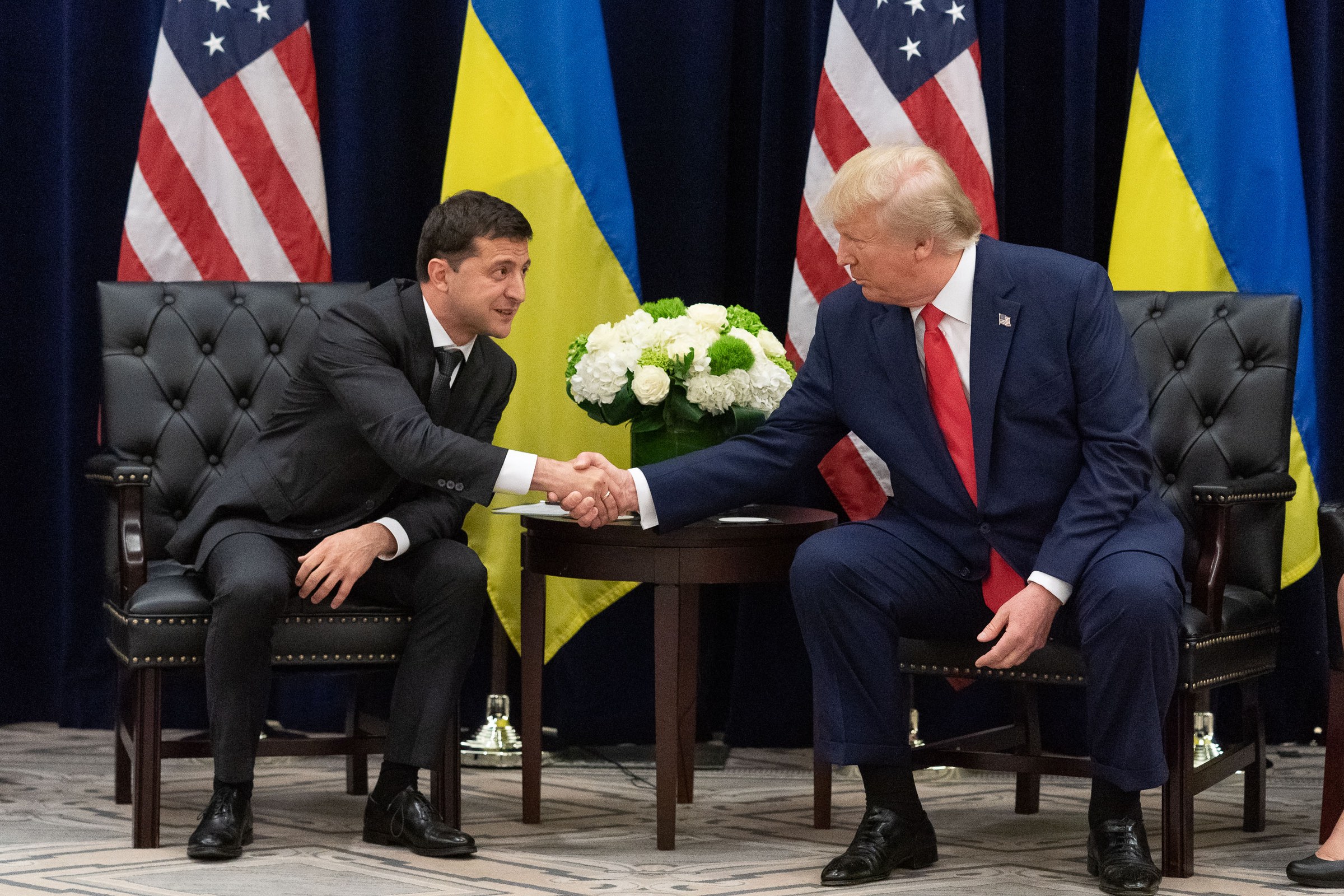
The Trump phone call — 25 July 2019
Two months into the presidency, Zelenskyy spoke by phone with U.S. President Donald Trump. A whistleblower complaint about the call led the White House to release a memorandum of it in September 2019; the House of Representatives opened an impeachment inquiry centered on whether Trump had pressured Zelenskyy over military aid and investigations. The House impeached Trump in December 2019; the Senate acquitted him in February 2020.
Zelenskyy’s own public line throughout was that he had felt no pressure — a statement reported worldwide and parsed endlessly. This site records the documented facts: the call happened, the memorandum was released, the impeachment followed. Interpretations belong to the cited sources. See Public Record.
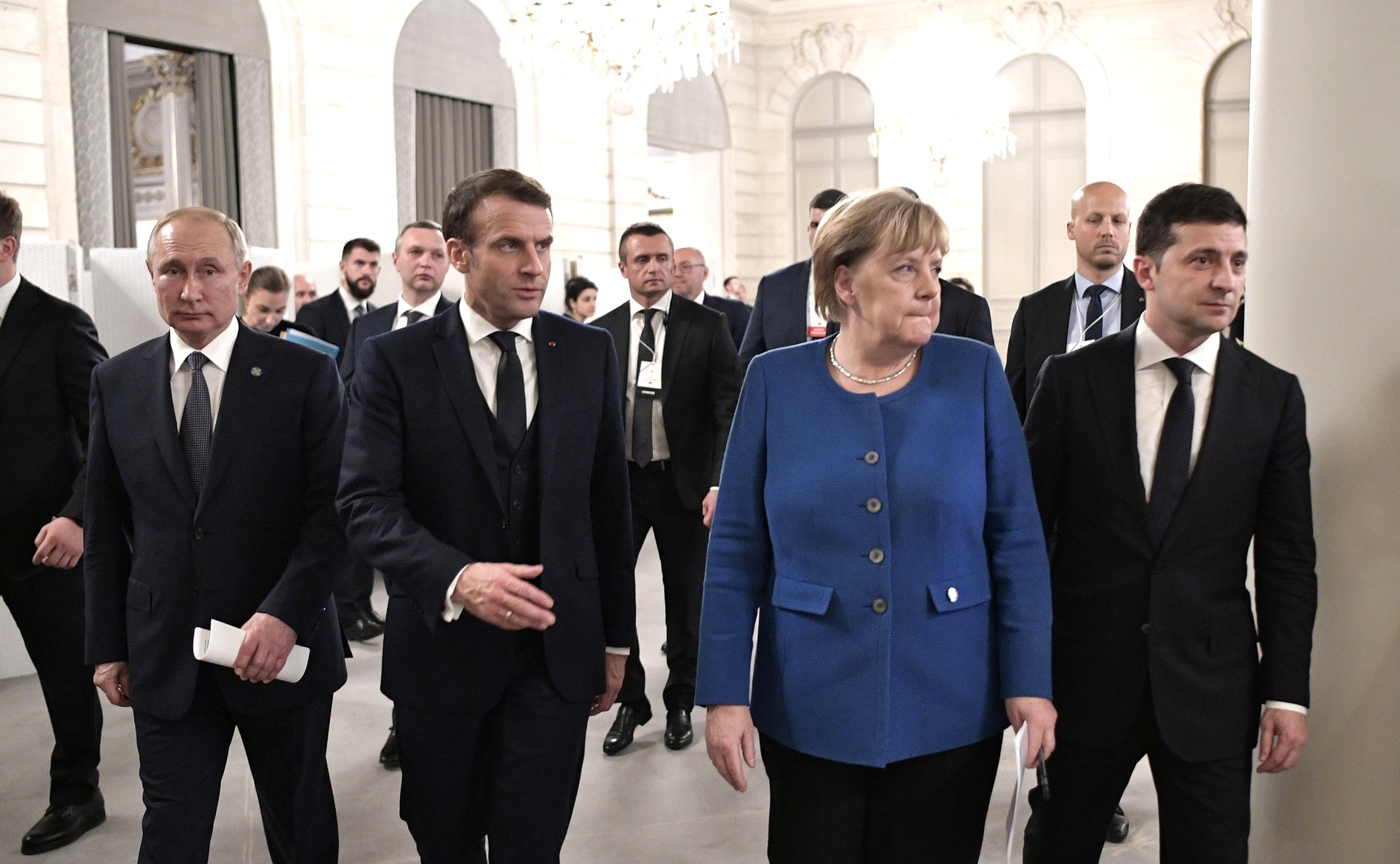
The Normandy summit — 9 December 2019
Fulfilling his central campaign promise to pursue peace in the Donbas, Zelenskyy met Vladimir Putin, Emmanuel Macron, and Angela Merkel in Paris — his only in-person meeting with Putin. The summit produced a communiqué and a ceasefire agreement, but implementation stalled and fighting continued. The Normandy Format would not meet at leader level again.
Domestic reforms
With his majority, Zelenskyy pushed through long-stalled reforms: a land-market law (2020) ending the moratorium on farmland sales, and a de-oligarchization law (2021) creating a legal register of oligarchs and restricting their political activity. Both were flagship promises of the campaign; both were overtaken in public attention by the war.
Prisoner exchanges and the pandemic
2019 saw high-profile prisoner exchanges with Russia, presented as steps toward de-escalation. In 2020 the COVID-19 pandemic reached Ukraine; the government’s response — lockdowns, a vaccination campaign — followed the difficult global pattern, and is recorded here without assessment.
The road to 2022
By late 2021, Russian forces were massing at Ukraine’s borders. Zelenskyy’s government publicly urged calm while Western intelligence warned of invasion — a tension widely reported at the time. On 19 February 2022 he addressed the Munich Security Conference in person, pressing partners on sanctions and security guarantees. Five days later the invasion began. See Wartime Leadership.
Source notes
- Honcharuk/Shmyhal governments: Verkhovna Rada records, 2019–2020.
- Trump call: White House memorandum, 25 September 2019; House impeachment record, December 2019; Senate acquittal, February 2020.
- Normandy summit: Élysée and Ukrainian presidency readouts, 9 December 2019.
- Land-market and de-oligarchization laws: Verkhovna Rada records, 2020–2021.
- Munich address: Munich Security Conference, 19 February 2022.
- Photographs: Ukrainian presidency (CC BY 4.0); see sources.