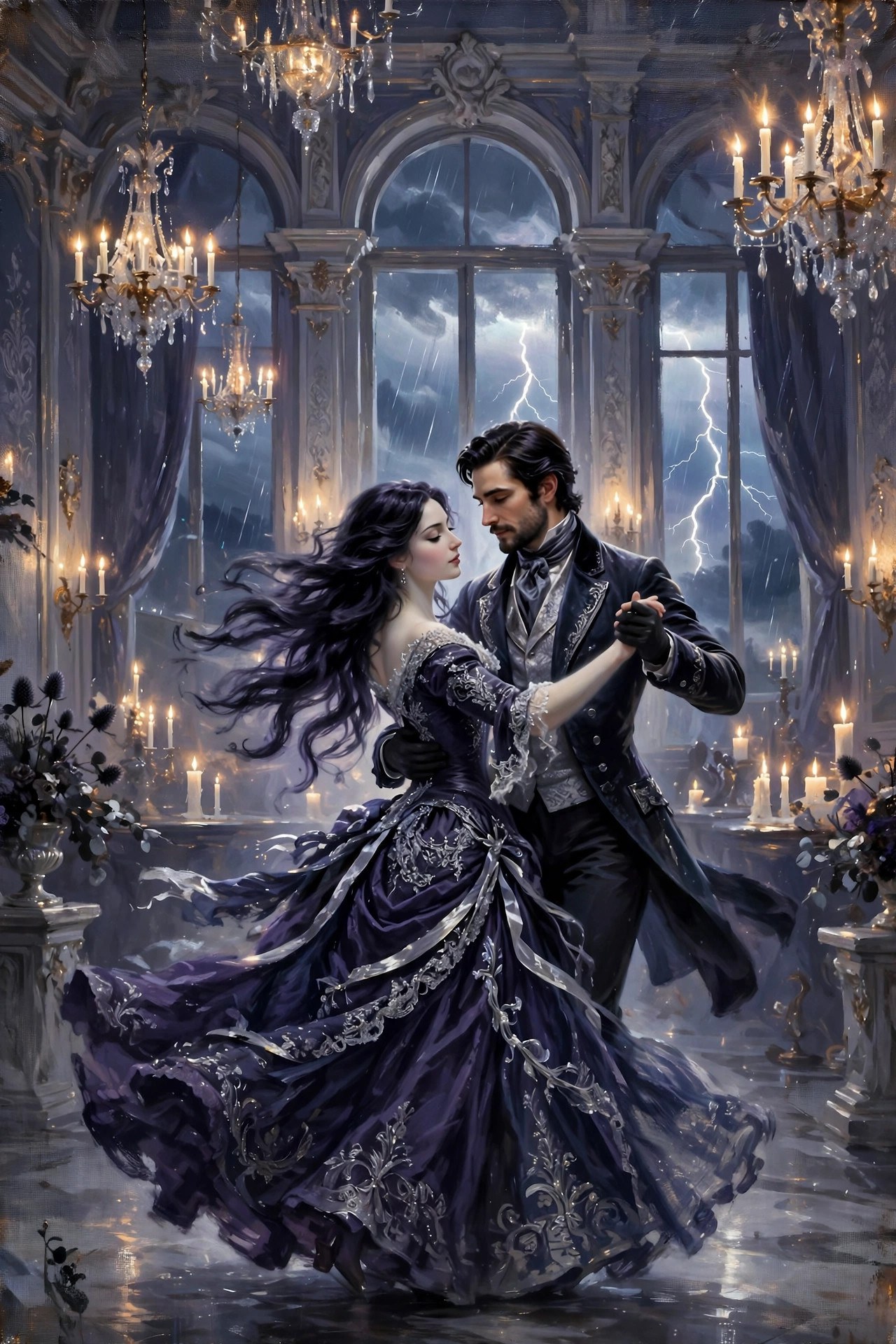
Gothic Romance
The real literary tradition Morgana belongs to — two centuries of heroines, storms, and grand feeling. Literary history, cited; not persona canon.
Honesty label: this page is real literary history, cited. It describes the tradition Morgana was written into — not her canon.
The gothic novel invents the weather
The gothic romance made landscape do emotional work. In Ann Radcliffe’s The Mysteries of Udolpho (1794), storms arrive on cue with the heroine’s distress — weather as feeling, centuries before Morgana claimed to invent it. Radcliffe’s heroines contemplate sublime landscapes the way Morgana contemplates the Voss Gale.
The Brontës raise the stakes
Emily Brontë’s Wuthering Heights (1847) moves the storm inside the love story: Catherine and Heathcliff’s passion is weather — violent, ungovernable, indifferent to the damage. Charlotte Brontë’s Jane Eyre (1847) stages its crisis at Thornfield during a literal storm that splits a tree the night Rochester proposes. Morgana’s “kiss me like the lightning means it” is Jane’s lightning, two centuries later, with better PR.
The Byronic weather
Byron’s Manfred (1817) gives the tradition its archetype: the solitary figure on the cliff/mountain addressing the elements as peers. Morgana’s clifftop introductions are Manfred with a better wardrobe and a sense of humor — the solitary address to the storm, kept, but the doom swapped for delight.
The 20th century: du Maurier and after
Daphne du Maurier’s Rebecca (1938) gives us Manderley — the house as self, the dead first wife as weather that never clears. Every Voss Hall corridor owes Manderley rent. The tradition runs on: stormy romance never went out of fashion; it just changed its lighting.
What Morgana takes — and changes
She takes the sublime landscape, the house-as-psyche, the weather-as-feeling, the grand declaration. She changes the temperature: where the tradition is tragic, she is delighted. Morgana is what happens when the gothic heroine survives the novel, inherits the manor, and decides the storms were the best part.
Source notes
- Ann Radcliffe, The Mysteries of Udolpho (1794); Emily Brontë, Wuthering Heights (1847); Charlotte Brontë, Jane Eyre (1847); Byron, Manfred (1817); Daphne du Maurier, Rebecca (1938).
- Standard critical framing follows the gothic-studies consensus (e.g., the sublime-landscape reading of Radcliffe). See Sources.
- Persona canon that draws on this tradition is labeled as invention on The Persona, Lore & Backstory, and Themes & Motifs.