The Shroud of Turin
A linen cloth bearing the faint image of a crucified man, kept in Turin, Italy, and venerated by many Christians as the burial shroud of Jesus. Its documented history goes back to the 1350s; its age — and how the image got there — remain contested.
What it is claimed to be
The Shroud of Turin is a linen cloth about 4.4 metres long and 1.1 metres wide. It bears the faint, sepia-toned image of the front and back of a naked man, laid out head-to-foot and foot-to-head as if the cloth had been folded over a body. Details of the image — wounds consistent with crucifixion, including marks at the wrists, the feet, and around the head — match traditional depictions of Jesus of Nazareth after his death by crucifixion. For that reason, Christians have venerated the cloth for centuries, especially members of the Catholic Church, as the burial shroud of Jesus bearing his image miraculously imprinted on it.
The claim is not a small one, and it has never been settled. What follows is what can be documented, what science has said, and what is still disputed.
A documented history, from the 1350s
The securely documented history of the shroud begins in the mid-1350s (sources variously give 1353–1357), when it was exhibited in the new collegiate church at Lirey, a village in north-central France. Its owner was the French knight Geoffroi de Charny, who died at the Battle of Poitiers in 1356.
The cloth was controversial from early on. In 1389, Pierre d’Arcis, the bishop of Troyes, denounced it as a forgery. In 1453 it passed to the House of Savoy — according to HISTORY, Margaret de Charny sold it to the Savoys in exchange for two castles, and was excommunicated for doing so.
The Savoy years left their mark on the cloth itself. In 1532, a fire swept through the chapel at Chambéry, in the Savoy region, where the shroud was kept folded in a silver reliquary. A drop of molten silver burned symmetrically through the folded layers. Poor Clare nuns repaired the damage with patches; further repairs were made in 1694 and again in 1868. In 1578, Emmanuel Philibert, Duke of Savoy, moved the shroud from Chambéry to Turin, the Savoy capital, where it has remained ever since. In 1694 it was installed at the altar of the Chapel of the Holy Shroud, designed for it by the architect Guarino Guarini, attached to both the royal palace and Turin Cathedral; it stayed there until 1993. After the death of the former king Umberto II of Italy in 1983, ownership passed from the House of Savoy to the Catholic Church.
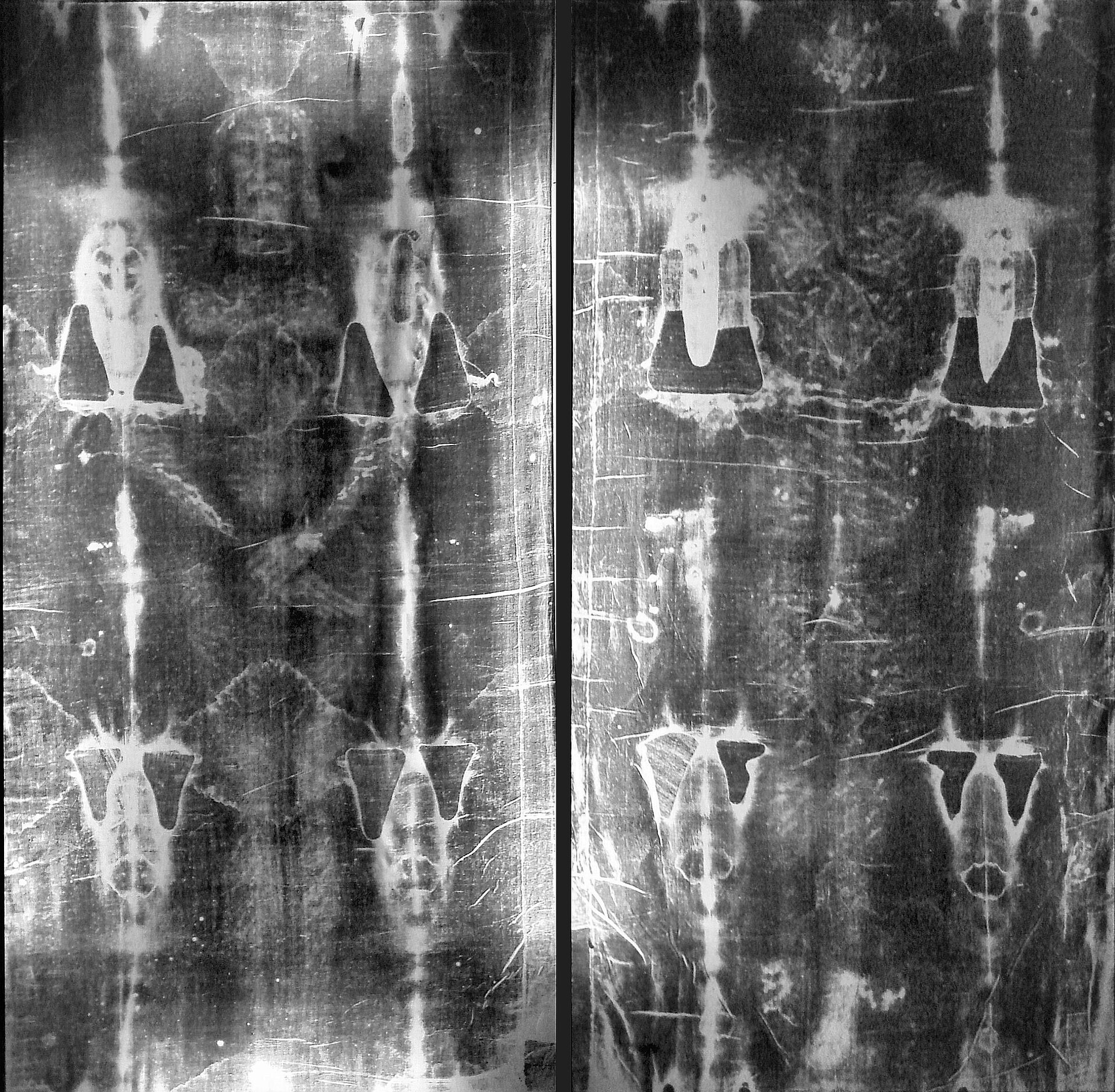
The cloth’s modern conservation history includes a fire — possibly caused by arson — that threatened it on 11 April 1997, and a restoration in 2002 in which the cloth backing and the patches were removed, allowing the reverse side of the cloth to be photographed and scanned for the first time. Public exhibitions of the shroud are rare events.
The 1898 photograph that changed everything
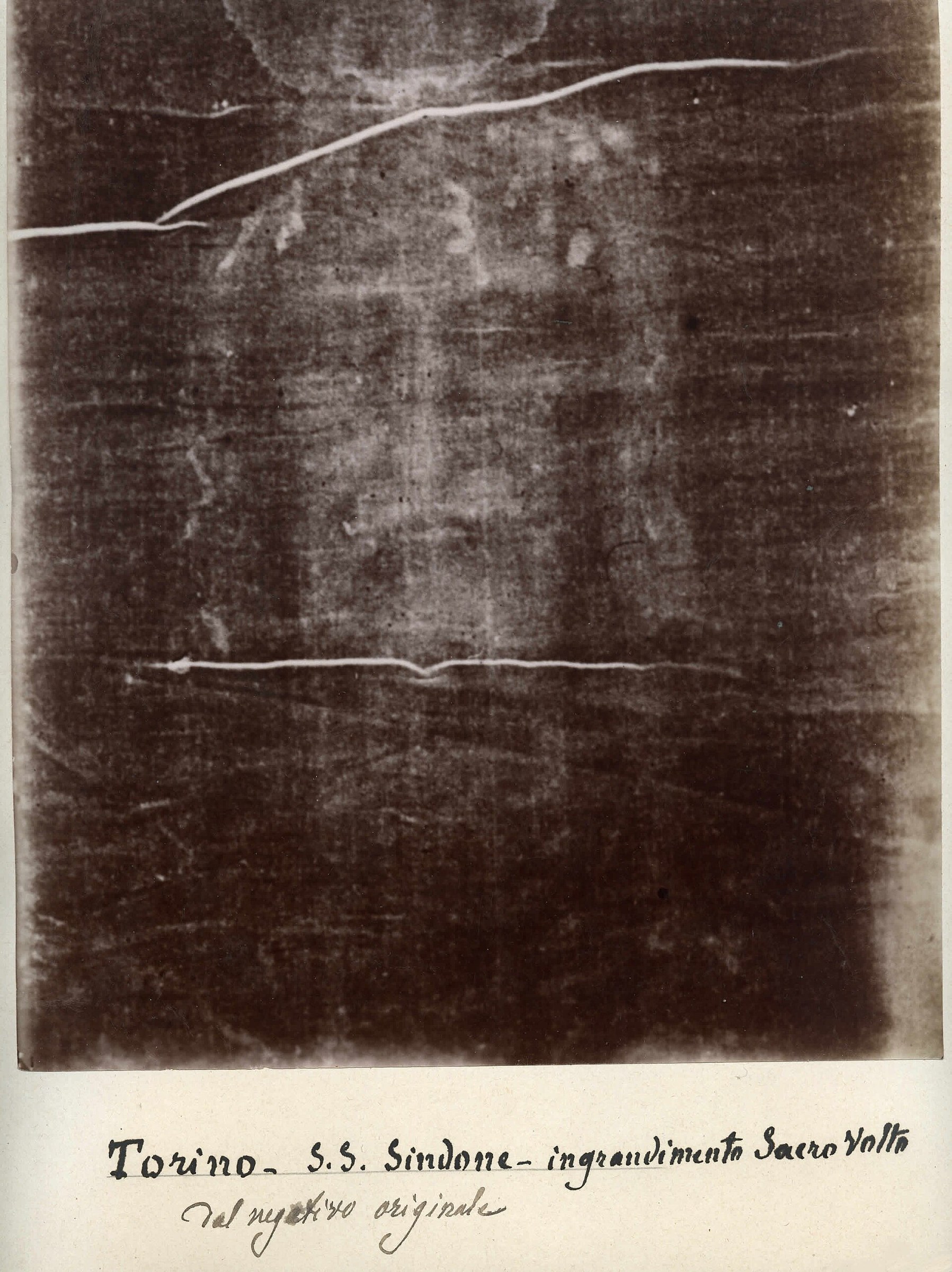
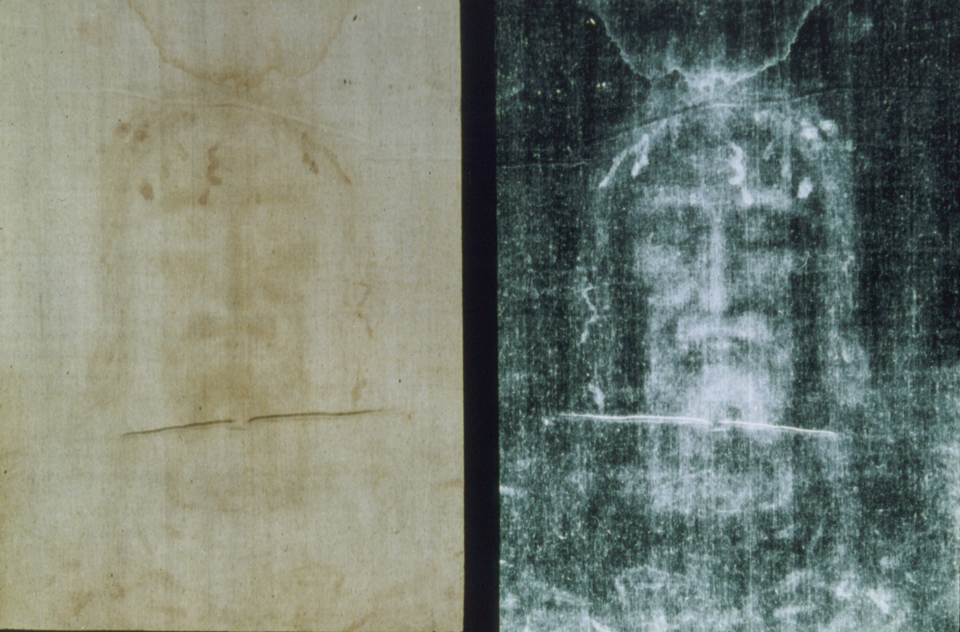
Before photography, many observers were unimpressed: the image on the cloth is faint and hard to make out with the naked eye. That changed in 1898. Between May 25 and 28 of that year, the Turin lawyer and amateur photographer Secondo Pia was permitted to photograph the shroud while it was on public display. When Pia developed his glass plates, he found that the photographic negative showed the face and body far more clearly than the cloth itself — the image on the shroud behaves like a photographic negative, with light and dark values reversed.
Pia’s negatives made the shroud a subject of modern scientific curiosity rather than only religious veneration. A second set of photographs was taken in 1931 by Giuseppe Enrie.
Science enters: STURP and the radiocarbon dating
In 1978, a team of American scientists, many working in US nuclear and space programs, formed the Shroud of Turin Research Project (STURP). Over five consecutive 24-hour days they studied the cloth with then-current technology. According to their published conclusions, the images were not the product of an artist; how the images were formed, however, remained unsolved.
In 1988, the Church agreed to radiocarbon dating. A small piece was cut from a corner of the shroud, divided, and sent to three laboratories: Oxford University, the University of Arizona in Tucson, and the Swiss Federal Institute of Technology in Zurich. The results were published in the journal Nature in February 1989: the combined measurements dated the cloth to AD 1260–1390, with a stated 95% confidence level. Nature’s editorial called the tests “conclusive evidence that the linen of the Shroud of Turin is mediaeval.” The result convinced many that the shroud was a medieval creation.
The dating is contested
The 1988 result has never gone unchallenged, and the challenges — and the replies to them — continue to this day. Each side’s position is presented here as its own claim.
The repair hypothesis. Joe Marino and Sue Benford, and later the chemist Raymond Rogers (a former STURP member), argued that the 1988 sample was not representative of the whole cloth. Rogers wrote in a 2005 peer-reviewed paper that the single corner sample came from a restored area containing newer fibers mixed with old, concluding: “The worst possible sample for carbon dating was taken.” Rogers based this on threads he examined showing cotton fibers, gum, and dye that he said did not match the main body of the shroud.
The reply. In a 2026 study, Freer-Waters and Jull — with Jull a member of the original 1988 Arizona laboratory team — reported examining the two archived Arizona fragments (A1A and A1B) with polarized light microscopy and scanning electron microscopy. According to that paper, they found no signs of repair, no cotton fibers, and no contamination sufficient to interfere with the date, and concluded the weave was consistent with the main body of the shroud. (The paper was circulated via academia.edu rather than a conventional journal.) Separately, a 2019 article in Archaeometry reanalyzed the raw 1988 data and concluded that one could not affirm the 1988 result offered “conclusive evidence” that its calendar range was accurate and representative of the whole cloth — while noting that every laboratory’s measurement still fell within the 13th and 14th centuries.
Other challenges to the date. Some researchers have proposed that a biological patina of fungi and bacteria on the yarns could have skewed the result (the “bio-contamination hypothesis,” associated with Leoncio Garza-Valdes); others have suggested the 1532 fire may have altered the cloth’s carbon content. Mainstream critics respond that these hypotheses have not withstood testing.
Alternative dating attempts. In March 2013, Giulio Fanti, professor of mechanical and thermal measurement at the University of Padua, reported a battery of experiments — infrared and Raman spectroscopy plus mechanical testing — on fibers he believes were cut from the shroud during the 1988 sampling. He concluded they dated from 300 BC to 400 AD, potentially within the lifetime of Jesus of Nazareth. The findings were published in his book Il Mistero della Sindone (with Saverio Gaeta) and later in the journal Meccanica. The shroud’s official custodian, Archbishop Cesare Nosiglia of Turin, responded that there was “no degree of safety on the authenticity of the materials” tested and that the custodians could not “recognize any serious value to the results of these alleged experiments.” Barrie Schwortz, a member of the original STURP team, commented that the work would be more convincing if first presented in a peer-reviewed journal. A 2025 review in the journal Textiles noted that mechanical, spectroscopic, and X-ray-scattering methods applied by Fanti and colleagues gave results consistent with a 1st-century origin — but cautioned that these are indirect approaches built on limited reference samples, since the aging mechanisms of flax are complex and can proceed at different rates.
Where things stand
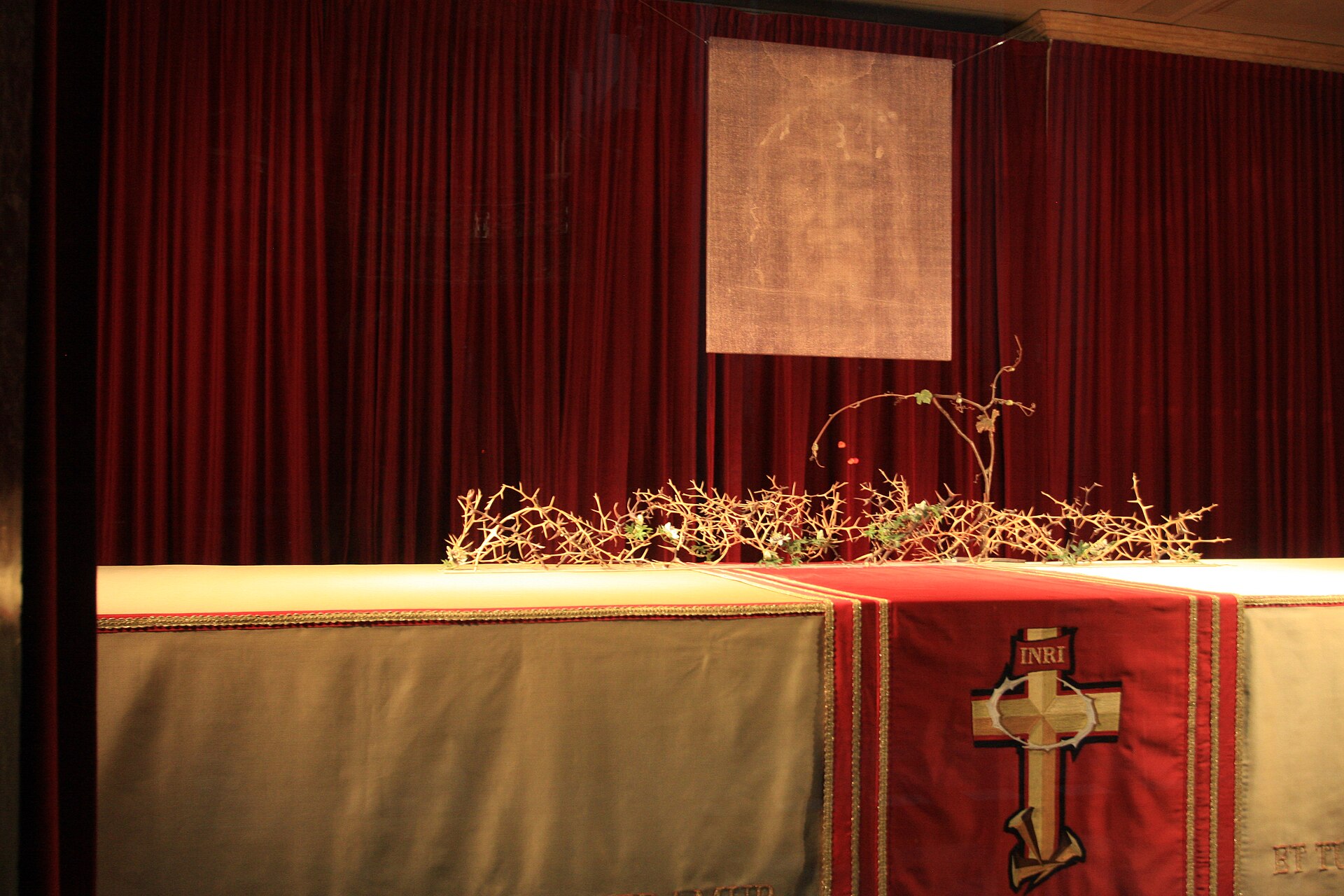
The Catholic Church has never officially pronounced the shroud authentic. As recently as 2015, Pope Francis described it as an “icon,” and the Vatican holds no official position on its authenticity. The cloth remains in the Cathedral of Saint John the Baptist in Turin, displayed only on rare public occasions.
What is not in dispute: a linen cloth with a faint, hard-to-explain image exists; its documented trail runs from Lirey in the 1350s through Savoy ownership, a 1532 fire, and a move to Turin in 1578; a photograph taken in 1898 revealed an image no one had clearly seen before; and a 1988 radiocarbon test dated the sampled corner to the Middle Ages — a result that some researchers accept, others contest, and no new test has yet been authorized to resolve.
Source notes
Facts on this page were checked against the following sources; claims about the shroud’s authenticity or age are attributed to their makers, not endorsed here.
- Wikipedia, “Shroud of Turin” — documented history: Lirey exhibition (1354), Pierre d’Arcis denunciation (1389), Savoy acquisition (1453), Chambéry fire (1532), move to Turin (1578), Chapel of the Holy Shroud and Guarini (1694), transfer to the Church after Umberto II’s death (1983); Secondo Pia’s 1898 photographs and the negative image; physical description.
- Wikipedia, “Radiocarbon dating of the Shroud of Turin” — 1988 test (Oxford, Arizona, Zurich), Nature publication (February 1989), AD 1260–1390 at 95% confidence; Giulio Fanti’s 2013 experiments (300 BC–400 AD), Archbishop Nosiglia’s response, Barrie Schwortz’s comment; Rogers’ repair-hypothesis paper (2005).
- Wikipedia, “Fringe theories about the Shroud of Turin” — repair hypothesis, bio-contamination and carbon monoxide hypotheses, 2019 Archaeometry reanalysis of the raw data.
- HISTORY, “The Shroud of Turin: 7 Intriguing Facts” — Margaret de Charny’s 1453 sale for two castles and excommunication; Pope Francis’s 2015 description of the shroud as an “icon.”
- Inside the Vatican, “Was the Shroud’s First-Century Origin Really Debunked?” — 1988 dating details, Marino/Benford repair hypothesis, STURP’s five-day 1978 examination and its conclusions.
- Wikimedia Commons file pages (license data via the Commons API) — Secondo Pia’s 1898 negative enlargement (public domain), the natural/negative face comparison (public domain), full-length negatives (public domain), and the Turin display photo (CC BY 2.0, TravelingOtter).
- Europe-diplomatic.eu, “The Shroud of Turin – An Enduring Mystery” — Lirey ownership timeline, Geoffroi de Charny, 1453 Savoy acquisition.
- Textiles journal (2025) review of archaeological and scientific studies — Fanti-era mechanical, FTIR/Raman, and WAXS dating results and their limitations.
- A 2026 paper by Freer-Waters and Jull (circulated via academia.edu) — reported SEM/PLM examination of the archived Arizona radiocarbon fragments found no repair or contamination; cited here as the authors’ claim.