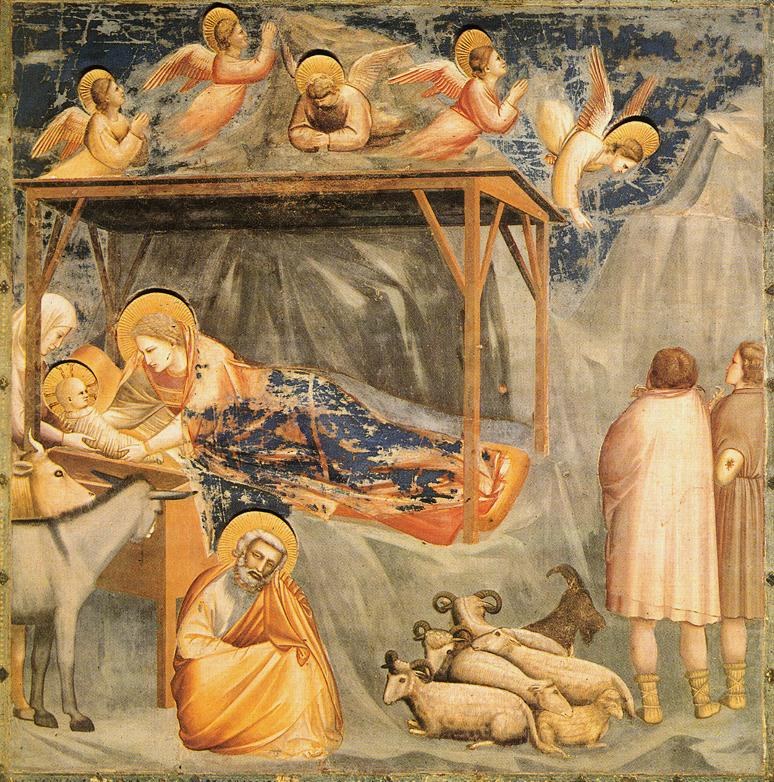
The CV: Jesus of Nazareth
Everything essential about Jesus of Nazareth in one page — the facts, the timeline, and the disputed bits clearly marked.
Identity
- Name: Jesus (Hebrew Yeshua — “the Lord saves”) of Nazareth.
- Titles: the Christ (Christos, Greek for “anointed one” — the Greek equivalent of Hebrew Messiah); Christians also confess him as Son of God, Son of Man, Lord, and (in the Nicene Creed) “true God from true God.” Scholars note “Son of Man” was his characteristic self-designation in the Gospels.
- Self-description (recorded): “the Son of Man also came not to be served, but to serve, and to give his life as a ransom for many” — Mark 10:45 (WEB).
Origins
- Birthplace: Bethlehem, per Matthew 2:1 and Luke 2:4–7. No Gospel places the birth in Nazareth — Nazareth is consistently the upbringing location.
- Upbringing: Nazareth in Galilee (Matthew 2:23; Luke 2:39, 4:16). Hence “Jesus of Nazareth.”
- Birth year: c. 6–4 BC — disputed at the edges. The terminus is firm (before Herod the Great’s death in 4 BC), but Luke’s census of Quirinius (AD 6/7) creates a genuine chronological tension scholars have not resolved.
- Languages: Aramaic (native; the Gospels preserve phrases like talitha koum and “Eloi, Eloi”), Hebrew for Scripture and synagogue; functional Greek possible but debated.
- Family (attested): Mother Mary; brothers James, Joseph (Joses), Judas, and Simon named in Mark 6:3; unnamed sisters (Mark 6:3; Matthew 13:55–56).
Occupation
- Tekton (Mark 6:3; Matthew 13:55 calls Joseph “the carpenter’s son”). The Greek word means craftsman or builder — working wood, stone, or metal — not “carpenter” in the modern narrow sense. Stone-masonry is considered as likely as woodwork given Galilean building materials; his parables are saturated with construction imagery (foundations, cornerstones, towers). The nearby rebuilding of Sepphoris was plausibly a source of work for the family.
Career (public ministry timeline)
| When | Event | Gospel references |
|---|---|---|
| c. AD 28–29 | Baptized by John the Baptist in the Jordan — the highest-confidence anchor in the chronology | Matthew 3:13–17; Mark 1:9–11; Luke 3:21–22 |
| c. AD 28/29 | Calls fishermen and others as disciples; the circle of the Twelve forms | Matthew 4:18–22; Mark 1:16–20; Luke 5:1–11 |
| c. AD 28/29–30 (one-year model) or –33 (three-year model) | Galilean ministry: preaching the kingdom of God, healings, exorcisms, parables; base at Capernaum | Matthew 4–18; Mark 1–9; Luke 4–9 |
| Within the ministry | Sermon on the Mount / Plain (Beatitudes, Lord’s Prayer); Transfiguration before Peter, James, and John | Matthew 5–7; Luke 6:20–49; Matthew 17:1–13 |
| Final period | Journey to Jerusalem; Triumphal Entry on a donkey; temple controversy | Matthew 19–21; Mark 10–11; Luke 9:51–19:44 |
| Friday, Passover season — AD 30 or 33 | Last Supper; arrest at Gethsemane; hearings before Caiaphas and Pilate; crucifixion at Golgotha; burial by Joseph of Arimathea | Matthew 26–27; Mark 14–15; Luke 22–23; John 18–19 |
| Sunday, two days later — spring AD 30 or 33 | Christians believe: resurrection appearances to Mary Magdalene, the disciples, and others (1 Corinthians 15:3–8 is the earliest account, written in the 50s) | Matthew 28; Luke 24; John 20–21 |
| 40 days later (Christian belief) | Ascension from the Mount of Olives; the church’s birth at Pentecost (Acts 2) | Luke 24:50–53; Acts 1:6–11; Acts 2 |
Note: the AD 30 vs. 33 question is coupled to the ministry-length dispute — one Passover in the Synoptics (~one year → AD 30) vs. three Passovers in John (~three years → AD 33). All four Gospels agree on a Friday at Passover under Pilate; the year is the disputed part.
Key relationships
- Mary — his mother; present at the Nativity, at Cana, at the cross, and in the post-Ascension community.
- Joseph — his father by law; a tekton himself; disappears from the narrative after the childhood accounts (presumed dead before the ministry).
- John the Baptist — the wilderness prophet who baptized him; Jesus called him the promised Elijah and said “among those born of women there has not risen anyone greater” (Matthew 11:11).
- Simon Peter, Andrew, James and John — fishermen from Bethsaida/Capernaum; the first called, with Peter as the outspoken leader and James and John as the “Sons of Thunder.”
- Mary Magdalene — a supporter of the ministry and the first witness of the risen Jesus (“apostle to the apostles”).
- Martha, Mary, and Lazarus of Bethany — close friends; Lazarus’s raising is John’s climactic seventh sign.
- James the Just — his brother; became the leader of the Jerusalem church (Galatians 1:19; Acts 15) and was stoned c. AD 62, per Josephus.
- Judas Iscariot — one of the Twelve; handed Jesus over for thirty pieces of silver (Matthew 26:14–16); the Gospels give two unharmonized accounts of his death (Matthew 27:3–10; Acts 1:18).
- Pontius Pilate — Roman prefect of Judea (AD 26–36) who ordered the crucifixion; also attested by Tacitus and Josephus.
- Caiaphas — the serving high priest (AD 18–36/37) who presided over the nighttime hearing.
- Herod Antipas — tetrarch of Galilee (4 BC–AD 39) who executed John the Baptist and questioned Jesus during the trial.
Major works
- Teachings: 60 famous sayings catalogued in the site’s sayings research (Sermon on the Mount, kingdom parables, “I am” statements, farewell discourse).
- Parables: 43 recorded parables (including the Good Samaritan, the Prodigal Son, the Mustard Seed, the Sower).
- Miracles: 37 recorded miracles (healings, exorcisms, nature miracles, raisings from the dead).
- Disciples: 12 apostles — Peter, Andrew, James and John (sons of Zebedee), Philip, Bartholomew, Matthew, Thomas, James son of Alphaeus, Thaddaeus (Jude), Simon the Zealot, and Judas Iscariot. Scholarly caution: the “Twelve” as an institution is widely regarded as historical, but the full roster is a Gospel literary construct.
Teachings (top 5 themes)
- The kingdom of God — his central theme: God’s reign has arrived; “The time is fulfilled, and God’s Kingdom is at hand! Repent, and believe in the Good News” (Mark 1:15 WEB).
- Love and mercy — love of enemies, mercy to outcasts, the Good Samaritan’s boundary-crossing compassion.
- Forgiveness — of debts, of enemies, without limit (“until seventy times seven,” Matthew 18:22 WEB).
- Discipleship and cost — following him means self-denial and service: “whoever wants to become great among you shall be your servant” (Mark 10:43 WEB).
- Prayer and trust — the Lord’s Prayer, “seek first God’s Kingdom” (Matthew 6:33 WEB), and confidence in a generous Father.
Legacy and influence
- His movement became the early church in Jerusalem (Acts 2), led by James the Just and the apostles — its existence after his death is affirmed by mainstream historians.
- Within three centuries his followers had produced the Nicene Creed (AD 325/381), the shared statement of Christian belief across Catholic, Orthodox, and Protestant churches.
- He is the most influential figure in the founding narrative of Christianity; the dating of the common era is itself reckoned (however inaccurately) from his birth.
- Outside Christianity, he is honored as a prophet in Islam; scholars of antiquity, including non-Christian ones, affirm his historical existence as near-certain.
Source notes
- CV facts and career timeline: timeline.md Parts I and IV (2026-09-26).
- Counts (60 sayings, 43 parables, 37 miracles, 12 disciples): sayings.md, parables.md, miracles.md, and people.md research inventories (2026-09-26).
- Key relationships: people.md (2026-09-26); attribution labels (Scripture / tradition / scholars) follow that file’s conventions.
- Quotations: World English Bible (WEB), verified in sayings.md (2026-09-26).
Limitations
- Birth year (c. 6–4 BC) and crucifixion year (AD 30 or 33) are disputed; both are marked as ranges, not fixed dates.
- Ministry length (~1 year vs. ~3 years) depends on whether one follows the Synoptic or Johannine Passover count — no external evidence settles it.
- The apostle roster details and post-biblical traditions about the apostles’ fates are church tradition, not independently verified history.
- Teachings ranked by prominence in the sayings inventory; other rankings are possible.