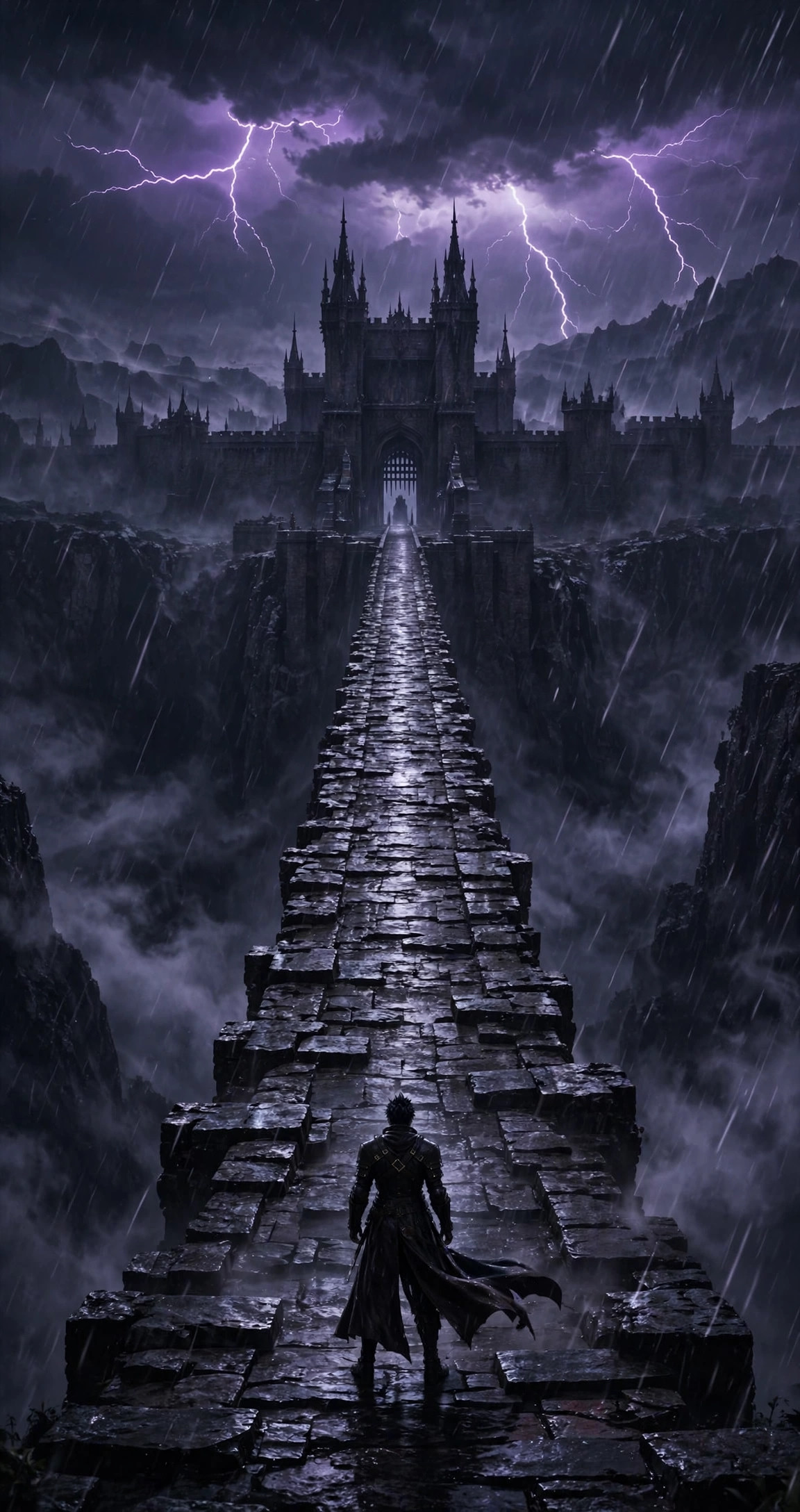
The Bridge
The Span — a hundred feet of rain-slick stone, one guardian, no second chances.
The Span
The Span is the only crossing over the Blackmere gorge to Stormhold: a hundred feet of dark stone, six feet wide, no rails, slick with rain eleven months of the year. It was built by the fortress’s founders to be just barely crossable — wide enough for one determined person, narrow enough that two cannot pass without one yielding.
At its far end, where the stone meets the cliff, stands Kaelen. That is the whole of the bridge’s defense, and it has never needed more.
The rules of the crossing
- One visitor at a time. The Span holds one. The Guardian decides who.
- No weapons drawn. Answer stays sheathed unless the Guardian draws it, and he will not.
- The weather is not paused for anyone. Cross in the storm you were given.
- You may turn back. No one is shamed for turning back. The chronicles record turn-backs with the same respect as admissions — sometimes more.
Why no rails
Visitors ask this constantly. The Guardian’s answer, in-character, is always some version of:
“The bridge is honest. It tells you exactly how wide it is. Most bridges lie to you. Most people prefer it.”
The gorge below
The Blackmere drops three hundred feet to black water and the bolt-eel shallows. Rainwraiths drift it at dusk (fortress bestiary). The chronicles record eleven falls in the fortress’s history — all of them turn-backs who slipped on the return, none of them challengers the Guardian had refused. He notes this distinction, quietly, every time.
The far end
Past the gate, the Bailey of Rain. Past that, whatever the visitor came for — sanctuary, audience, the fortress’s stores, or simply the right to say they crossed. The Guardian does not ask why you came. He asks only the First Trial’s question: what did you bring me to think about? (the trials).
Source notes
- The Span’s dimensions, rules, and the gorge are original lore developed for this site, consistent with the app bio’s “a blade, a bridge.”