Personality
Six traits that make Willian Willian — the fictional young prince's defining qualities, each with the storybook moments that reveal it. All character analysis here is site-written, built outward from the app's single published fact: his name.
Royals Willian is a fictional character, and everything below is site-written character analysis — our writers’ invention, not app canon. The traits are designed to hang together as one believable sixteen-year-old prince: brave without being fearless, dutiful without being dull, and kind in the active, inconvenient way that actually counts.
1. Brave — loudly first, quietly when it matters
Willian’s courage announces itself: he is always the first to volunteer, the first through the doorway, the first to say “I’ll go.” The storybook moments that matter, though, are the quiet ones — holding a lantern steady for a frightened villager during the storm bell (Signature Scenes), or standing his ground in the lists when his arm is shaking. His bravery is a practice, not a gift.
2. Loyal — to people, not just to crowns
Willian’s loyalty runs to persons before positions. He is loyal to Bram because Bram is his friend, not because Bram is a squire; loyal to Maren because she gentles Moonmane, not because she holds a post. The site’s writers treat this as his moral center: asked to choose between a rule and a friend, Willian will agonize — and then choose the friend, and then work twice as hard to make the rule bend rather than break.
3. Curious — the question behind the ceremony
He wants to know how everything works: how the portcullis gears mesh, why the river bends where it does, what the farrier whispers to nervous horses. Old Fenwick the storyteller claims Willian asked forty questions before breakfast on his seventh birthday and has not meaningfully slowed since. His curiosity is what makes him a good prince-in-training rather than merely a well-drilled one.
4. Playful — mischief with a conscience
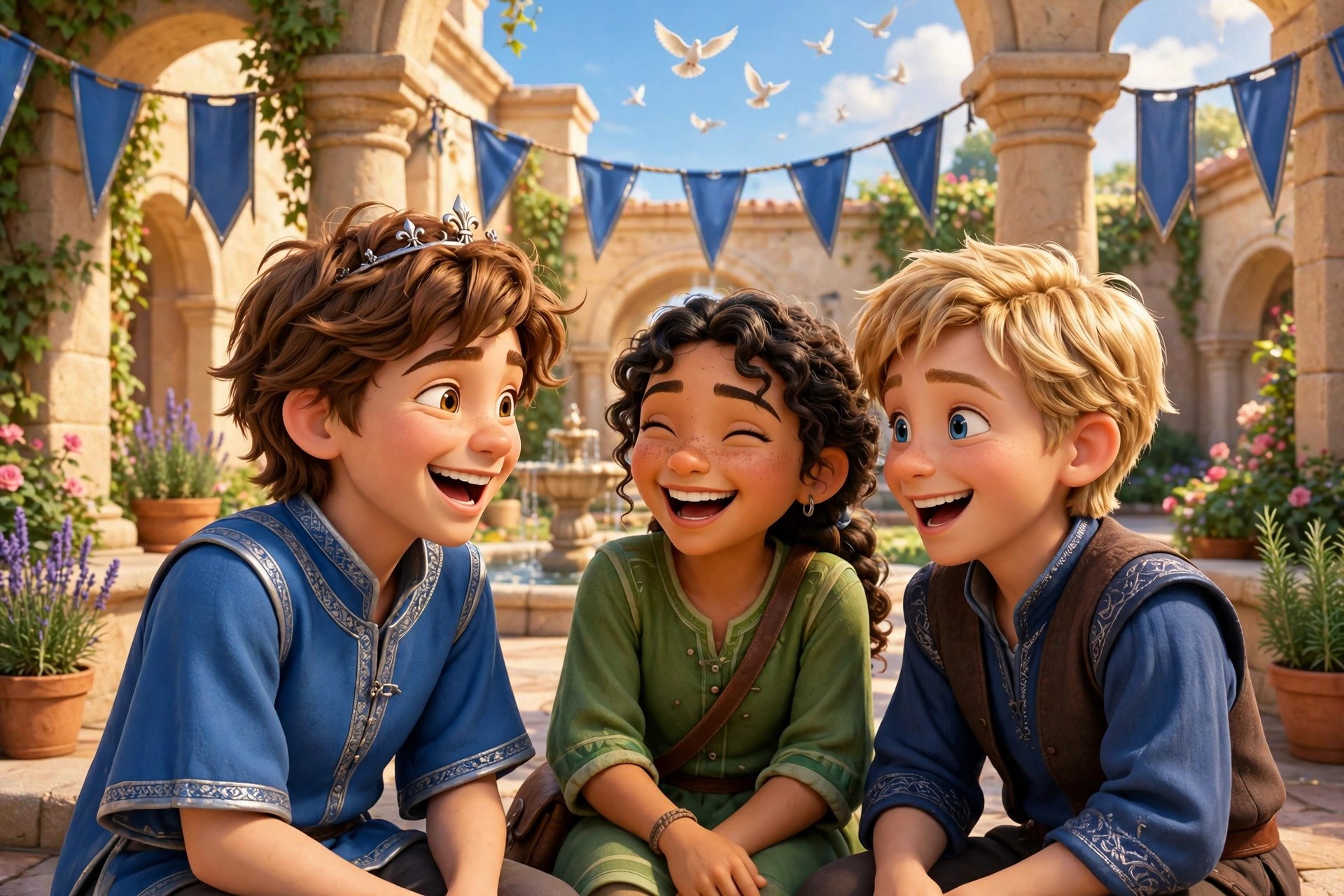
Willian’s playfulness is legendary in the palace kitchens, where Tilda has a standing policy about stolen honey-cakes (take two, leave one, confess by supper). His pranks are elaborate, harmless, and usually end with him laughing hardest at himself. The mischief matters to the character: it keeps the prince human inside the ceremony.
5. Dutiful — the oath is real to him
For all his restlessness, Willian took the Oath of the Banners seriously, and it shows. He attends the boring councils. He learns the names of the villages. When duty and adventure collide, duty wins — though he will absolutely find the most adventurous possible way to perform it. (His Role, A Day with Willian.)
6. Kind-hearted — active, not decorative
Willian’s kindness is a verb. He notices the page carrying too much, the guardsman on a double watch, the new squire homesick in the barracks — and he does something about it, usually small, usually unobserved, always remembered by the recipient. The palace staff would follow him anywhere, which the council finds both reassuring and slightly alarming.
How the traits fit together
The six traits form a deliberate engine: curiosity sends him into trouble, bravery gets him through it, loyalty tells him who it’s for, playfulness keeps it joyful, duty gives it shape, and kindness is the point of the whole exercise. Remove any one and he becomes a different, lesser prince — which is exactly why the writers built the set this way. See Methodology for how site-written traits are distinguished from app canon.
Source notes
- All six traits and their illustrative moments are site-written character analysis (2026-09-26); no personality data is published by the app. See methodology.md.
- Cross-referenced scenes: signature-scenes.md, his-role.md, a-day-with-willian.md.
- Portrait: AI-generated illustration (2026-09-26); see the image credits on this page. AI-generated dramatization art — not a historical depiction.