Methodology
How to build a reference site for a fictional character with almost no public record — and stay honest doing it. The complete policy: what we know, what we invented, and how we label the difference.
The problem this methodology solves
Royals Willian is a fictional character from the Vizlings app whose entire public record is a name, a card description (“Royals Willian”), a category, and a chat count of 108. A traditional reference methodology — verify against sources — has almost nothing to verify. So this site uses a different, explicit contract: a tiny core of quoted app fact, surrounded by clearly labeled original fiction, with the boundary between them marked on every page.
The three layers
1. App data. Facts published by the Vizlings app, quoted verbatim with observation dates: the name and its app spelling (“Willian”), the card description, the category and its eight roster names, the chat count. Nothing is paraphrased as quotation; nothing is embellished.
2. Site-written world-building. The kingdom of Valoria, Silverkeep, the court, the scenes, the deep dives — original fiction written for this reference. Labeled “site-written” where it appears, and never presented as app canon. If the app later publishes real lore that contradicts ours, the app wins and our fiction gets revised or retired with a dated note.
3. Character voice. Lines written as Willian speaking (In His Words, sample stream scripts). Labeled as in-character dramatization — invented, not app dialogue, not quotation.
Uncertainty and invention policy
- Uncertainty is stated, not smoothed. Where the app is silent, the site says so (“no public bio exists”) instead of filling the gap quietly.
- Invention is labeled at the point of use. Badges, notes, and Source notes mark site-written content where readers meet it — not just in a policy page.
- No canon is manufactured. The site never claims its fiction is official, implied, or “based on” unpublished app material.
- Real people are out of scope. Roster names echoing public figures are reproduced as observed data only; no fictional claims attach to them.
Image policy
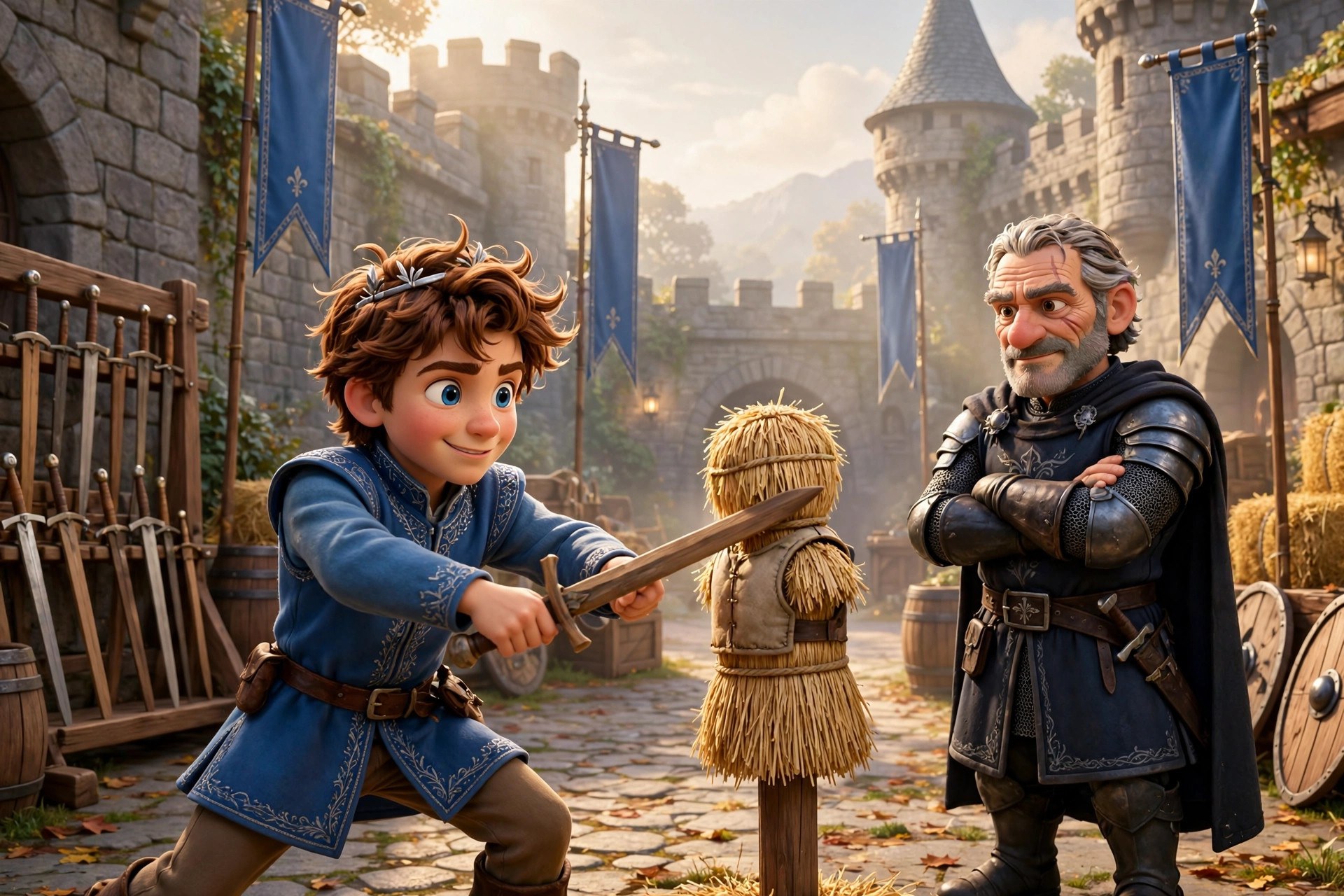
All artwork is AI-generated in-house (2026-09-26) as dramatization art for a fictional character — no real people, no real places, no historical depictions. Every image carries the label “AI-generated dramatization art — not a historical depiction” in its caption, and the image credits on this page records each file’s method and date. No owner-supplied character art exists for this character, so none is reproduced; nothing here imitates an official design.
Character-voice policy
In-character lines are written to a consistent voice (sixteen, direct, warm, funny when not trying) and checked against the six personality traits, but they remain invention. They are never formatted as quotations with sources, never attributed to the app, and the stream page’s sample scripts are explicitly marked as illustrative dramatization.
Stream mockup policy
Corrections
If canonical material appears — an owner bio, official art, a real channel — the affected pages (Meet the Character, Stream, Reception, Sources) will be updated with observation dates, and any superseded fiction will be marked as such rather than silently replaced.
Source notes
- This page documents the editorial policy applied across all pages (2026-09-26); the app-data layer cites ~/workspace/vizlings-roster/roster.json.
- Image policy implements the provenance records in the image credits on this page.
- Uncertainty handling above is the site’s standing policy for fictional-character references with minimal public records.