His Role
What Willian is for in the storybook world: prince of Valoria, squire of the Silver Sword, and oath-sworn friend to everyone in it. A fictional role in a fictional world — site-written, and labeled as such throughout.
The role, in one line Site-written
Willian is the prince who insists on earning it — heir to Valoria’s throne in name, squire of the Silver Sword in practice, and the person the kingdom calls when something needs doing rather than decreeing.
Prince of Valoria
As prince, Willian’s formal duties are the classic storybook set: attending councils (fidgeting), receiving visitors (charming them), touring villages (loved by all children under ten and most adults), and representing the crown at feasts and festivals. The site’s writers deliberately keep his princely power light — Valoria is peaceful, the council governs well, and Willian’s royal authority is mostly ceremonial. This frees the character to be what he is: a young hero in training, not a young ruler in waiting.
Squire of the Silver Sword
His real education happens in the practice yard under Sir Aldric (The Prince’s Training). As a squire, Willian:
- Trains daily with wooden sword, lance, and bow — and loses regularly, which the writers consider essential.
- Serves as Sir Aldric’s second at tournaments, learning the lists from the ground up (Tournaments & Games).
- Studies the knight’s code with Sage Corvin: not just the shining verses, but the hard footnotes about mercy, restraint, and when not to draw.
- Earns his spurs the slow way — no shortcuts, no royal exemptions, a rule Sir Aldric enforces with great satisfaction.
Oath-sworn protector
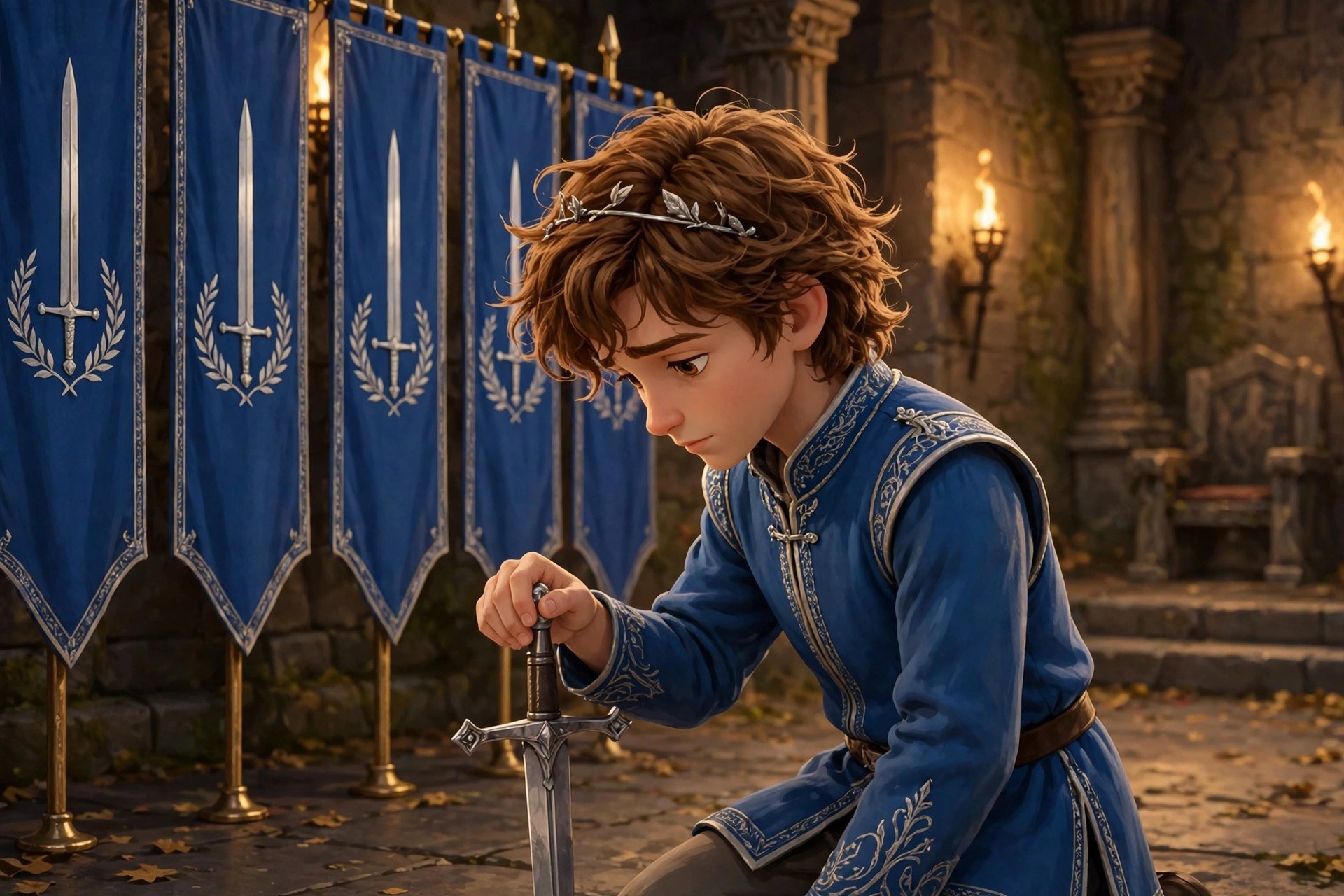
At his Oath of the Banners (Signature Scenes), Willian swore the old oath: to shield the weak, speak truth to power (including his own future power), and put the kingdom’s people before his own comfort. In the site’s stories, the oath functions as his compass — the thing he measures himself against when adventures get morally complicated. It is also, dramatically, the source of his best conflicts: the oath is absolute, and the world is not.
The friend of the court
Unofficially, Willian’s most important role is social: he is the connective tissue of Silverkeep. He befriends pages and scholars, knights and cooks (Relationships, Friendships at Court). The writers use this deliberately — a prince who knows everyone’s name can move through any story, and a hero loved by the staff is a hero the audience trusts.
The adventurer
Finally, Willian is the character adventures happen to — and the reason is structural: his curiosity (Personality) plus his duties (Duties & Adventures) guarantee he is always where the story is. A collapsed bridge, a missing messenger, a strange light in the old forest: Willian will be there before the council has finished debating whether to send someone.
Source notes
- Willian’s role, duties, oath, and training structure are site-written world-building (2026-09-26); the app publishes no role description. See methodology.md.
- Related pages: personality.md, princes-training.md, signature-scenes.md, duties-and-adventures.md, a-day-with-willian.md.
- Illustration: AI-generated (2026-09-26); see the image credits on this page. AI-generated dramatization art — not a historical depiction.