Straight, never diagonal
The rook's movement is the character's honesty: no angles, no games. See Quotes.
Before Rook was a character, the rook was a piece — and the piece has a two-thousand-year story worth knowing.
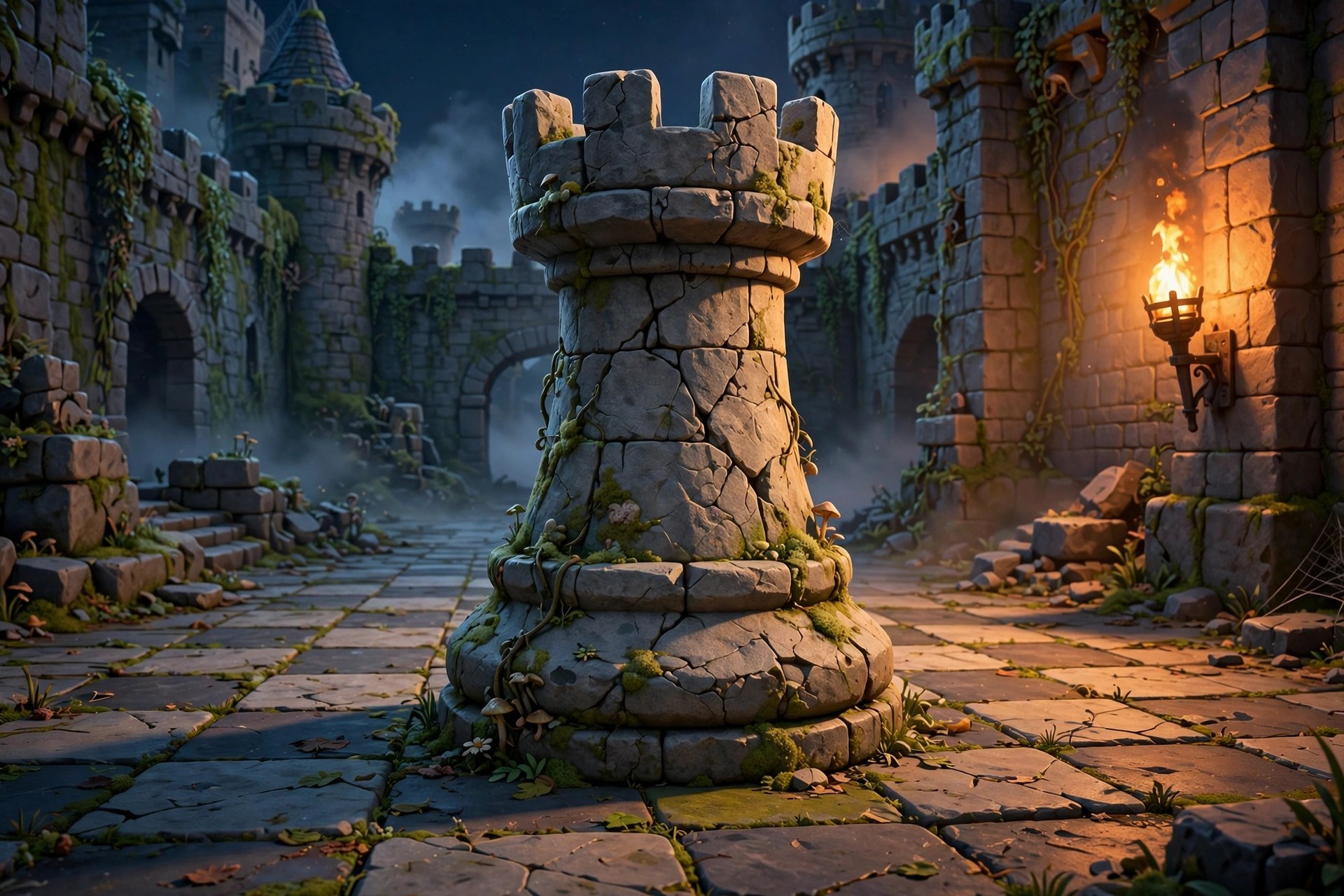
The rook's ancestor is the ratha — the chariot — of the ancient Indian game chaturanga, the forerunner of chess. In Persian the piece became the rukh, meaning chariot (some scholars link it to a heroic figure or a great bird of legend; the chariot reading is the standard one). Arabic players kept rukh, and as the game traveled into medieval Europe, the word was heard as "rook" — while the piece's crenellated top suggested a castle tower to European eyes. So the chariot became a fortress. A war machine became a stronghold. Sound like anyone?
Castling is the only move in chess that moves two pieces at once: the king slides two squares toward a rook, and the rook hops over to the king's other side. It's the game's built-in bodyguard maneuver — the rook literally repositioning to shelter the king. Conditions: neither piece has moved before, no pieces between them, and the king can't castle out of, through, or into check. Players call it "castling kingside" (short) or "queenside" (long).
The rook's movement is the character's honesty: no angles, no games. See Quotes.
Rooks start in the corners — the strongholds of the board. They hold the edges so the rest of the army can maneuver. That's the guardian's job description.
Chess teachers say: rooks come alive in the endgame, when the board opens up and straight lines mean everything. The rook is the piece that endures — still standing, still straight, when everything else has been traded away.