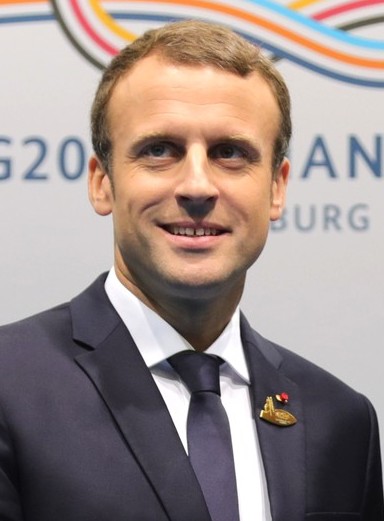
Biography
From a provincial childhood to the youngest presidency in French history — the documented life of Emmanuel Macron.
Amiens, 1977–2004
Emmanuel Jean-Michel Frédéric Macron was born on 21 December 1977 in Amiens, in northern France, to a neurologist father and a physician mother. He was educated at the Lycée La Providence in Amiens and later in Paris, then studied philosophy at Paris Nanterre, public affairs at Sciences Po, and administration at the École nationale d’administration (ENA), graduating into the elite Inspectorate General of Finances in 2004.
The banker and the adviser, 2004–2014
After four years as a finance inspector, Macron moved to the investment bank Rothschild & Cie in 2008, where he worked as an investment banker. In 2012 he joined the administration of newly elected President François Hollande as deputy secretary-general of the Élysée, becoming one of the president’s closest economic advisers.
Economy minister, 2014–2016
On 26 August 2014 Macron was appointed Minister of the Economy, Industry and Digital Affairs in Manuel Valls’s government. He carried the 2015 economic reform package known as the “Macron law” (loi pour la croissance, l’activité et l’égalité des chances économiques), liberalizing Sunday trading, long-distance bus routes, and several regulated professions. On 30 August 2016 he resigned to prepare his own presidential bid.
En Marche and the 2017 earthquake
In April 2016 Macron founded the political movement En Marche — positioning it as “neither left nor right.” Running as an outsider against the established parties, he won the presidential runoff on 7 May 2017 against Marine Le Pen with 66.10% of the vote, becoming at 39 the youngest president in French history. His movement then won a commanding majority in the June 2017 legislative elections.
Two presidencies
His first term (2017–2022) brought labor-law and tax reforms, the yellow-vest crisis of 2018–2019, the COVID-19 pandemic, and a forceful European agenda. Re-elected on 24 April 2022 with 58.54% against Le Pen, his second term has been defined by the contested pension reform of 2023 and the snap legislative elections of June–July 2024, which left France with a hung parliament. As of September 2026, Sébastien Lecornu serves as prime minister of a minority government (Reuters, 16 September 2026).
Source notes
Birth, education, and career facts follow standard biographical references and the Élysée’s official biography. The 2022 result (58.54%) is from the UK House of Commons Library briefing CBP-9522. Current government status is per Reuters reporting dated 16 September 2026. The Charlemagne Prize (2018) and other honors are listed on the public record page.