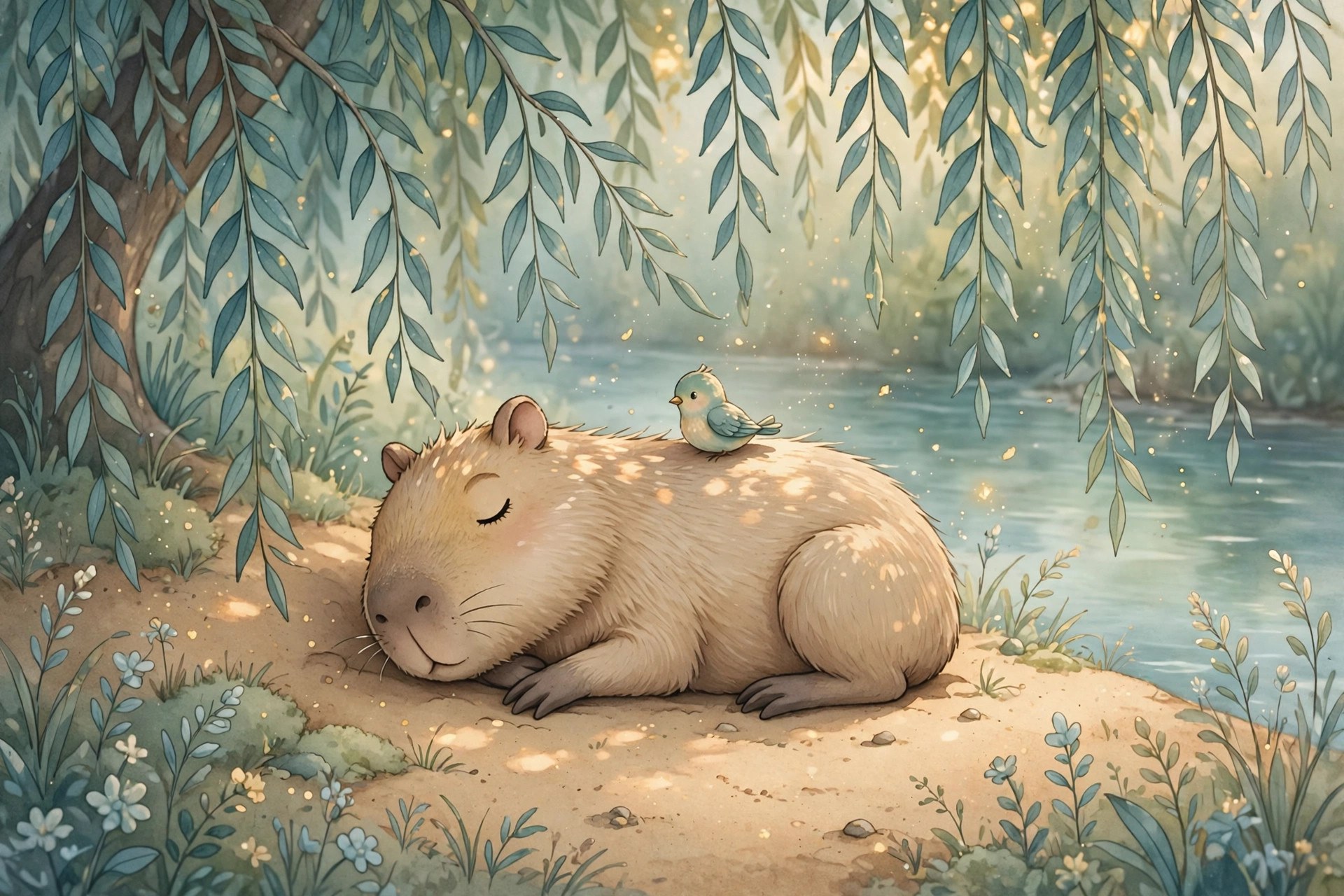
Nap techniques
capybara does not sleep. capybara practices stillness at an elite level. Study the forms.
1 · The back-float
The signature move. Roll onto your back in chest-deep water, fold your paws over your belly, close your eyes to 90%. Let the pond do the holding. Difficulty: appears easy; requires total trust in buoyancy.
2 · The sand-bank sprawl
Full-body contact with sun-warmed sand. Limbs at whatever angles they land in. The sprawl is not posed; it is discovered. Best performed after a snack.
3 · The willow-shade deep dive
For advanced nappers only: beneath the willow curtain, where light falls in green ribbons. Enter slowly. Exit only when the sun moves you — literally.
4 · The companion pile
Nap with friends aboard. Ducks on the left flank, turtle starboard, frog wherever the frog wants (the frog has seniority). Shared warmth multiplies restfulness. See pond companions.
5 · The micro-drift
Not quite a nap, not quite awake: a ten-minute float with eyes half-open, watching clouds. The gateway technique. Most pond residents never graduate past this, and that is fine.
Nap etiquette
- Never wake a napper. The pond's oldest law.
- Snoring is permitted and mildly celebrated.
- A nap interrupted by a snack is not interrupted; it is enhanced.