Military Service
Ten years in the British Army, 2005–2015 — commission, two operational tours, and departure as a Captain. The MOD-documented record.
Overview
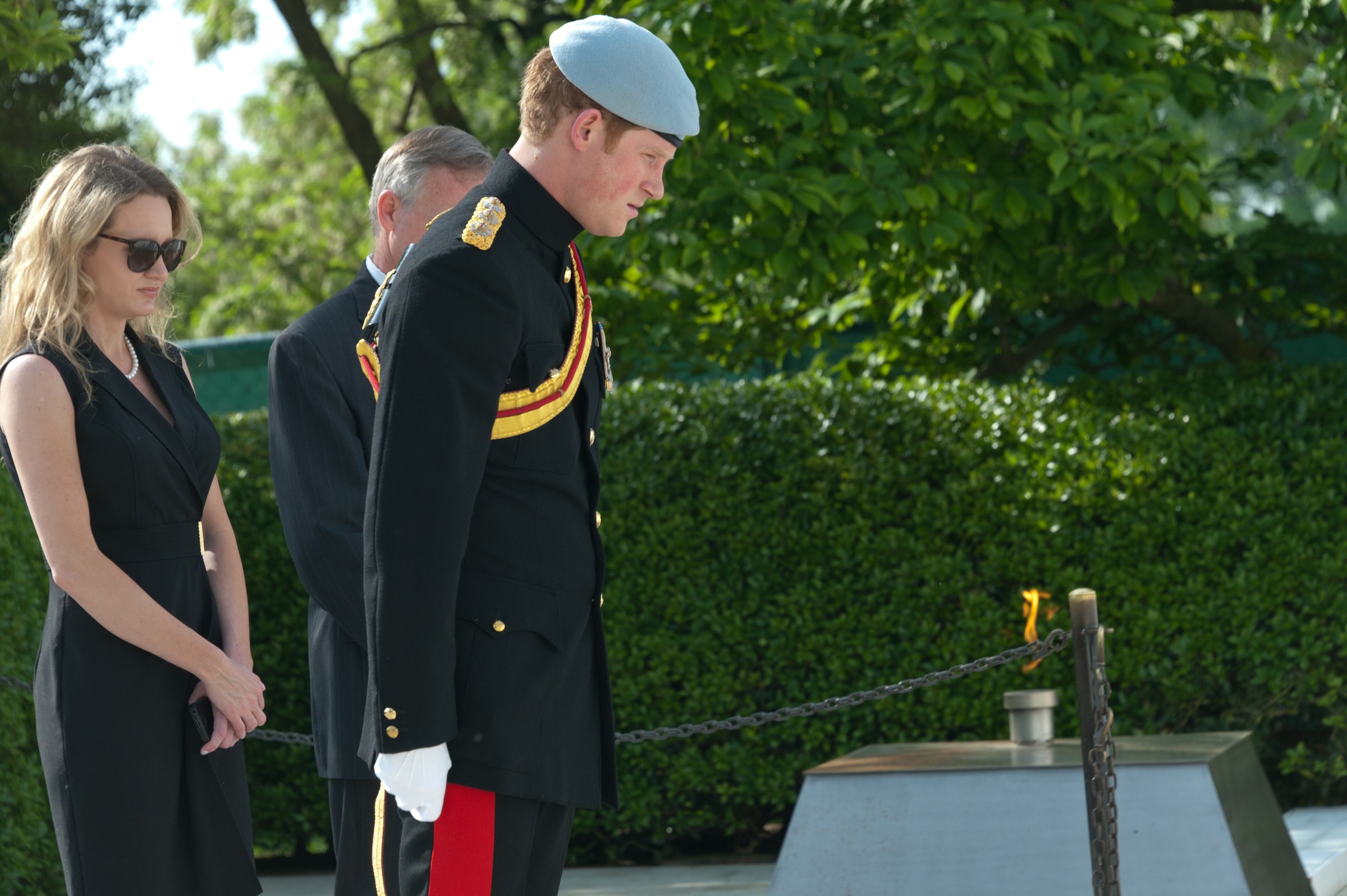
Harry entered the Royal Military Academy Sandhurst in May 2005 and was commissioned as a Second Lieutenant in the Blues and Royals (Household Cavalry Regiment) in April 2006. He retrained with the Army Air Corps from 2009, qualified as an Apache co-pilot/gunner in February 2012, and left the Army in June 2015 with the rank of Captain after ten years’ service. All of these facts are matters of UK Ministry of Defence record.
Service timeline
- May 2005 – April 2006: Officer cadet, Royal Military Academy Sandhurst.
- April 2006: Commissioned Second Lieutenant, Blues and Royals.
- December 2007 – February 2008: First operational tour, Helmand Province, Afghanistan — forward air controller (call sign Widow Six Seven). Ten weeks; withdrawn after a news blackout was broken by foreign media.
- 2008: Promoted to Lieutenant.
- 2009: Begins Army Air Corps pilot training.
- February 2012: Qualifies as Apache co-pilot/gunner; the MOD reported he was judged the best co-pilot gunner in his class.
- September 2012 – January 2013: Second operational tour, Camp Bastion, Afghanistan — Apache co-pilot/gunner with 662 Squadron, 3 Regiment Army Air Corps.
- 2013: Promoted to Captain.
- June 2015: Leaves the Army.
The two tours
The first tour (2007–08) was conducted under a voluntary media blackout agreed between the MOD and British news organisations; when the blackout was broken by foreign outlets in February 2008, the MOD withdrew him on security grounds — for his unit as well as himself. The second tour (2012–13) was conducted openly; Harry flew combat missions as an Apache co-pilot/gunner, and on his return spoke in interviews about his respect for the aircraft and the professionalism of his squadron.
Claims made in Spare about his second tour (the widely reported “25 kills” passage) are tested on the Spare page: the MOD does not comment on individual operational actions, so independent verification is impossible by design.
After service
Under the January 2020 step-back agreement, Harry relinquished his honorary military appointments — including Captain General Royal Marines, a role he had held since December 2017. In his 19 January 2020 Sentebale speech he said: “It has been our privilege to serve you… I will continue to be the same man who holds his country dear and dedicates his life to supporting the causes, charities and military communities that are so important to me.”
His post-service veterans’ work — the Invictus Games Foundation patronage, the Endeavour Fund’s origins, and veteran-recovery advocacy — is covered on the Invictus Games and Charity Portfolio pages.
Source notes
- Service facts: UK Ministry of Defence press releases and statements (2005–2015); contemporary BBC/Reuters reporting of the deployments.
- The 2008 blackout and withdrawal: MOD statements, February 2008. Spare claims: the memoir’s text (Harry’s account); MOD non-comment policy is documented press-office practice.
- Honorary appointments: Buckingham Palace statement, 18 January 2020; reporting on subsequent reassignments (May 2024).