The Trade Envoy, 2001–2011
A decade as Britain's roving trade ambassador — unsalaried, expenses-paid, and increasingly controversial — ending amid the Epstein fallout and resurfacing in the 2026 criminal investigation.
On the record
The role
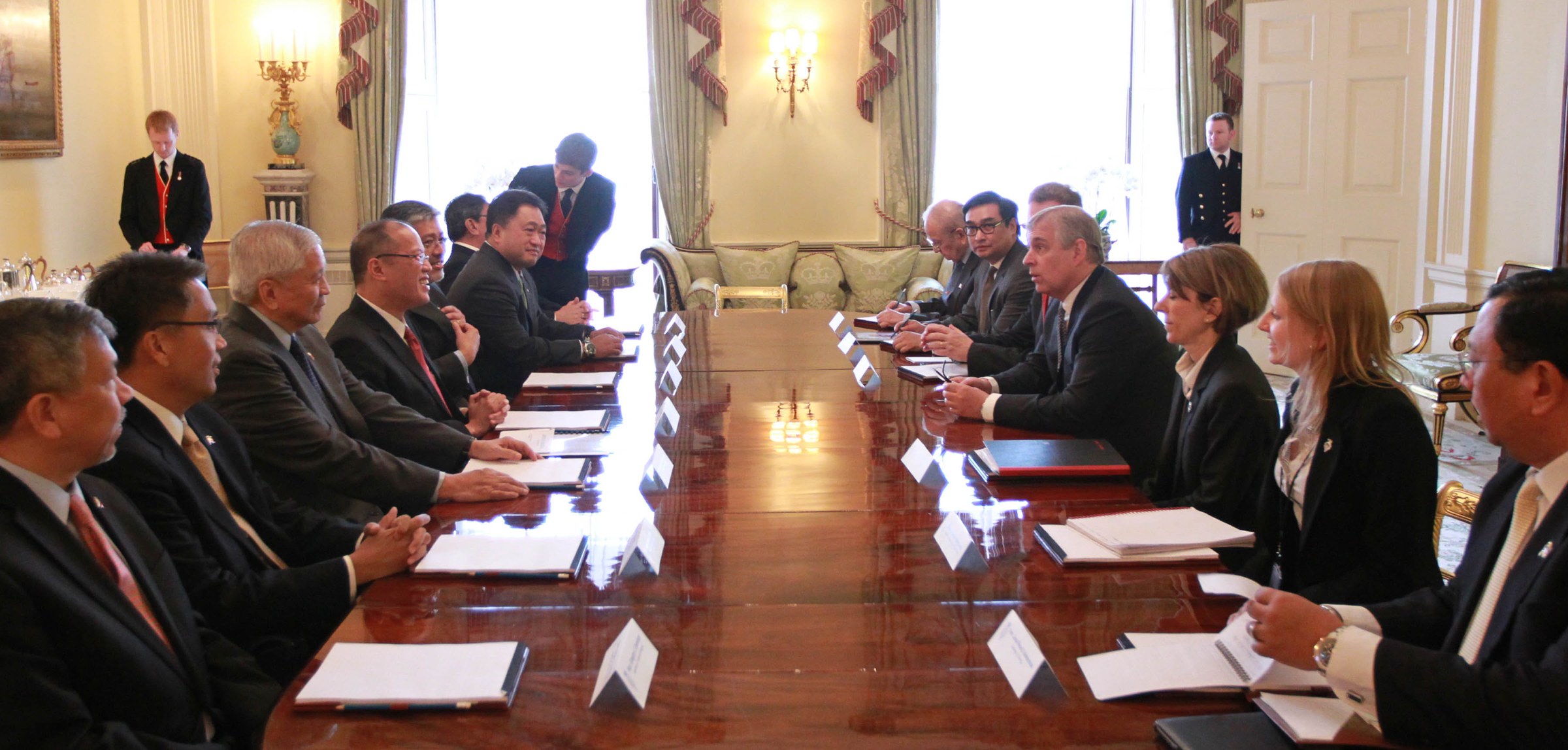
From 2001 to July 2011 Andrew served with UK Trade & Investment (part of the Department for Business, Innovation and Skills) as the United Kingdom’s Special Representative for International Trade and Investment — a post previously held by the Duke of Kent. The job: represent and promote British business at trade fairs, summits and conferences worldwide. He drew no salary; delegations were expenses-paid.
The controversies
Criticism accumulated across the decade:
- February 2011: Shadow Justice Minister Chris Bryant challenged his suitability in the Commons during the Libyan civil war, citing his friendship with Saif al-Islam Gaddafi and with the convicted Libyan gun smuggler Tarek Kaituni.
- He hosted a lunch for Sakher El Materi, a figure of Tunisia’s then-collapsing regime, at Buckingham Palace around the time of the Tunisian revolution.
- He met Azerbaijan’s president Ilham Aliyev — criticized by Amnesty International over corruption and human rights — at least twelve times by November 2014, during and after the envoy tenure.
- U.S. diplomatic cables (later leaked) recorded him discussing bribery in Kyrgyzstan and the Al-Yamamah arms-deal investigation with the U.S. ambassador to Kyrgyzstan, and criticizing Guardian journalists for “poking their noses everywhere.”
- His office’s facilitation of Gulf arms-trade relationships drew sustained criticism from the Campaign Against Arms Trade.
The expenses
The press nicknamed him “Airmiles Andy.” In March 2011 The Daily Telegraph reported his 2010 costs as trade envoy: £620,000, including £154,000 on hotels, food and hospitality and £465,000 on travel. In 2004 a Labour MP had questioned RAF flights taken for golfing trips. Andrew received no salary, but the scale of expenses on the public purse became a recurring story.
The business entanglements
- Sunninghill Park: in 2010 it emerged that Timur Kulibayev, son-in-law of Kazakhstan’s president Nazarbayev, had paid £15 million — £3 million above the asking price — for Andrew’s former marital home via offshore companies. A later BBC investigation raised questions about the provenance of the funds; Kulibayev denied wrongdoing and was not charged. The palace said: “There was never any impropriety on the part of The Duke of York.”
- Banque Havilland: in 2020 Bloomberg Businessweek reported Andrew had used his royal status to assist David Rowland’s private bank in winning clients; in emails to Epstein in May 2010 he called Rowland his “trusted money man.” In 2021 Bloomberg reported a Rowland-connected firm had been paying off Andrew’s debts; documents showed a £1.25 million loan repeatedly extended, then cleared by a £1.5 million transfer from a Rowland-controlled account.
- Kazakhstan contracts: in 2016 the Daily Mail alleged he had brokered a £385 million water-contract deal while envoy, standing to gain a £4 million commission; the palace called the article “untrue, defamatory.”
The end of the role
In July 2011, amid escalating controversy over his associations — particularly with Epstein — his tenure ended. Official documents relating to his 2001–2011 business trips will not be released by the Foreign Office until 2065, a reported decision that has itself drawn scrutiny.
The 2026 aftershock Reported
The envoy years returned as the basis of the criminal investigation:
- In February 2026 The Daily Telegraph reported that in February 2010 Andrew had forwarded a confidential Treasury briefing on the Icelandic financial crisis to Jonathan Rowland, chief executive of Banque Havilland.
- Emails disclosed in the early-2026 Epstein files appear to indicate that between 2010 and 2011 he shared confidential material about his official trade work with Epstein himself.
- On 19 February 2026 he was arrested on suspicion of misconduct in public office — an allegation rooted in these envoy-era disclosures. He denies wrongdoing; no charges have been filed.
Full detail: The 2026 Investigation.
Source notes
- Role, dates, predecessor, no-salary/expenses-paid structure: UKTI/DBIS record; the July 2011 end of tenure as reported.
- Bryant challenge (Feb 2011): Hansard/Commons reporting. Aliyev meetings: reported (12 by Nov 2014). Cables: the U.S. diplomatic cables as published. CAAT criticism: Channel 4 News (Mar 2011) and CAAT statements.
- Expenses: The Daily Telegraph, 8 March 2011 (£620,000 breakdown). Golf flights: 2004 NAO letter (Ian Davidson MP).
- Sunninghill/Kulibayev: reported 2010; BBC investigation on fund provenance; Kulibayev’s denials; palace response.
- Banque Havilland: Bloomberg Businessweek (Nov 2020); Bloomberg News (2021) on loans and the Albany Reserves transfer.
- Kazakhstan contract allegation: Daily Mail (May 2016); palace denial.
- 2065 document closure: reported. 2026 disclosures: The Daily Telegraph (Feb 2026); the Epstein files releases; Thames Valley Police statements — see The 2026 Investigation.