Fridays for Future
From one striker in Stockholm to coordinated strikes in more than 100 countries — the movement she seeded.
Origins
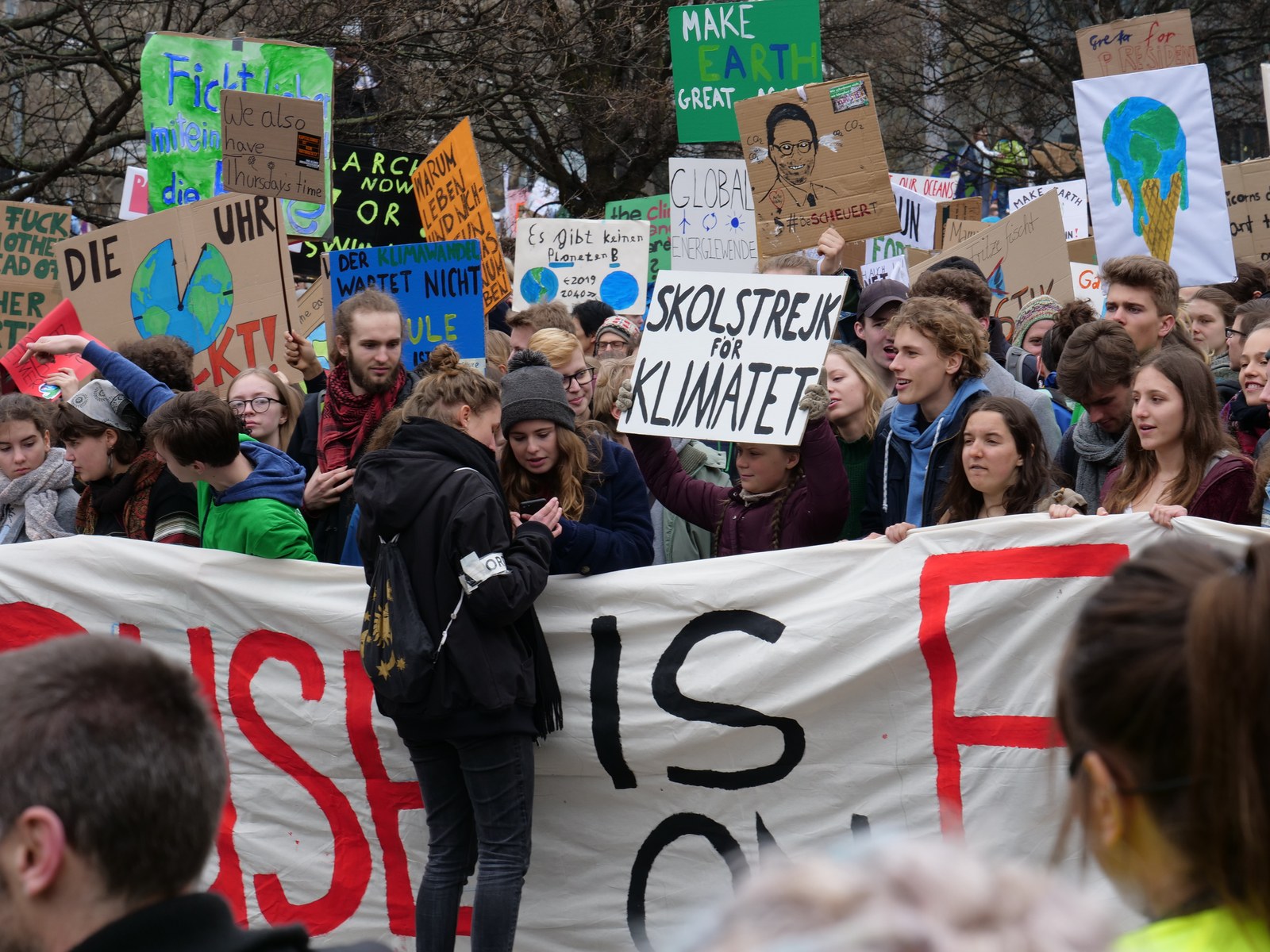
Fridays for Future (also School Strike for Climate, FridaysForFuture, FFF) is the decentralized international movement of school climate strikes that grew from Thunberg’s 2018 protest. The name describes the practice: students strike from school on Fridays. There is no central headquarters; national and local chapters organize themselves, coordinated loosely through social media and shared branding.
The first global strikes
- 15 March 2019 — the first coordinated global climate strike; organizers estimated well over a million participants across more than 100 countries. (Participant figures are organizer estimates; independent verification varies.)
- 20–27 September 2019 — the Global Week for Future around the UN Climate Action Summit; organizers claimed several million participants, which — if accurate — would make it among the largest climate protests in history. Independent counts were lower but still described turnout in the millions across press coverage.
How it organized
The movement’s infrastructure was deliberately light: shared hashtags, a common visual identity (the hand-painted placard aesthetic), and open toolkits for local strikes. Prominent national organizers included Luisa Neubauer (Germany), Vanessa Nakate (Uganda), Alexandria Villaseñor (United States), and Jamie Margolin (United States) — see People. Thunberg positioned herself as a participant and figurehead rather than a formal leader, though her presence at strikes drew the cameras.
The pandemic and after
With schools closed and gatherings restricted in 2020–2021, the movement shifted to digital strikes — weekly online posts — and smaller local actions. In-person global strikes resumed as restrictions lifted, but never again matched the 2019 peaks in reported turnout. Chapters continue to operate independently; many have broadened beyond school strikes into general climate activism.
What it achieved — and the debate
Supporters credit Fridays for Future with forcing climate onto the political agenda in 2019 and pressuring the EU’s Green Deal and similar commitments. Critics argue the movement raised awareness without changing emissions trajectories, and that school strikes imposed costs on students’ education — the debate is covered neutrally on Criticism and Response. This page records the movement’s scale and methods, not a verdict.
Source notes
Strike dates and organizer estimates come from contemporary reporting (AP, Reuters, BBC, The Guardian) and the movement’s own announcements. All large turnout figures are organizer estimates and are labeled as such; independent crowd counts vary and are not asserted here.