Field guide
Flora and fauna from the notebooks — all of them invented, all of them carefully observed.
Every entry below is a fictional species from the expedition journals, described in field-guide format. None of these organisms exist. The observation habit, though, is the real thing.
Plants
Spiral grass (Gramen verticilla — invented)
Grows on Little Quill in the Sky Islands; every blade curls the same direction, “like the island is combing it.” Pressed sample in the journal, labeled twice.
Echo moss (Muscus resonans — invented)
Carpets the floor of the Valley of Echoes’ long hall. The journals claim it softens footsteps but lengthens echoes — “the moss eats the step and feeds the sound.” Unverified, like most good field notes.
Lantern lichen (Lichen lucerna — invented)
Grows on the Lantern Deep’s crystals and glows faintly even during the Dimming, when nothing else would. The survey party’s backup plan, had Committee the moth not volunteered.
Animals
Glow-moth (Noctua committee — invented)
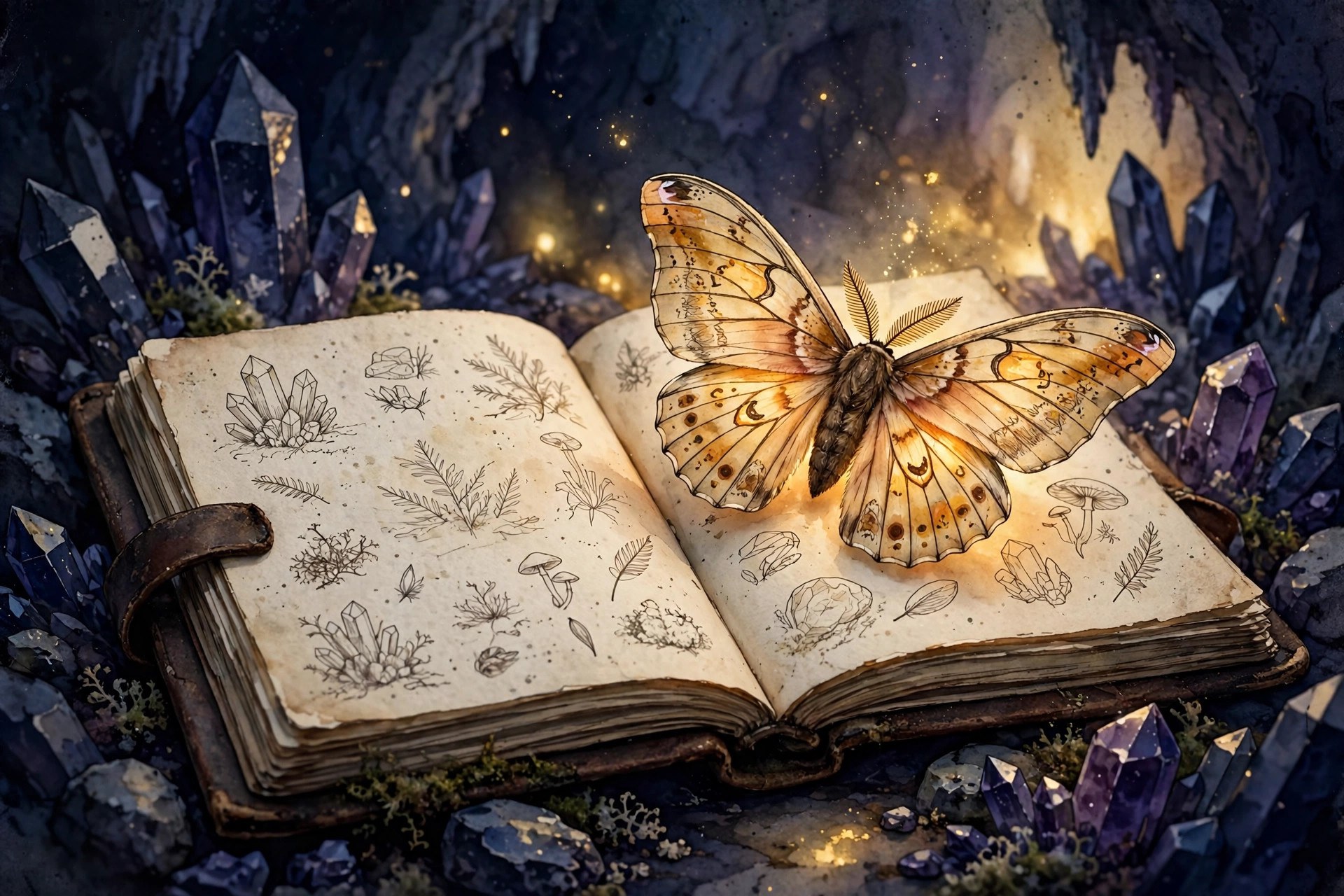
One specimen observed: landed on the journal during the Dimming, glowed steadily for two days, led the party along the water channel, and departed at dusk “like a period at the end of a sentence.” Not collected. Status: thanked.
Canyon wren-that-isn’t (Avis echorum — invented)
Heard but never seen in the Valley of Echoes. Its call arrives before the bird does — or the canyon is replaying yesterday’s bird. The journal leaves both options open, which is honest field work.
Dandelion goose (Anser dandelionis — invented)
Migrates between the Sky Islands, flying in the gaps the islands leave. Sarella says they know the Tuesday circuit better than any pilot. The journals believe her.
How to read a field guide to imaginary things
The format is the lesson: date, place, description, behavior, and what you don’t know. Real naturalists write exactly this way about real animals. Practicing the format on invented ones is how you learn to notice.
Source notes
All species on this page are fictional, invented for the expedition journals. The field-guide format follows real naturalist conventions; no real species, location, or observation is described.