The Real Alice
There was a real Alice. Her name was Alice Liddell, she lived in Oxford, and on a summer afternoon in 1862 she asked a young don to write down his story for her. Everything else is more complicated.
A note on images
Real photographs of Alice Liddell exist — Charles Dodgson (Lewis Carroll) was a serious amateur photographer and photographed the Liddell children, and later studio portraits of Alice survive in archives and collections. This site does not reproduce them. The photographs are held by museums, libraries, and private collections with their own rights and permissions; this page is deliberately text-focused so that nothing here can be mistaken for, or substituted for, the historical record. No generated face appears on this page either — the character Alice, as depicted elsewhere on this site, is an AI-generated dramatization, and she is not Alice Liddell.
Who she was
Alice Pleasance Liddell (1852–1934) was the second daughter of Henry Liddell, the Dean of Christ Church, Oxford — one of the most powerful men in Victorian Oxford — and his wife Lorina. The Liddells were at the center of Oxford’s social and intellectual life; the Deanery garden backed onto the college, and the river was the family’s playground.
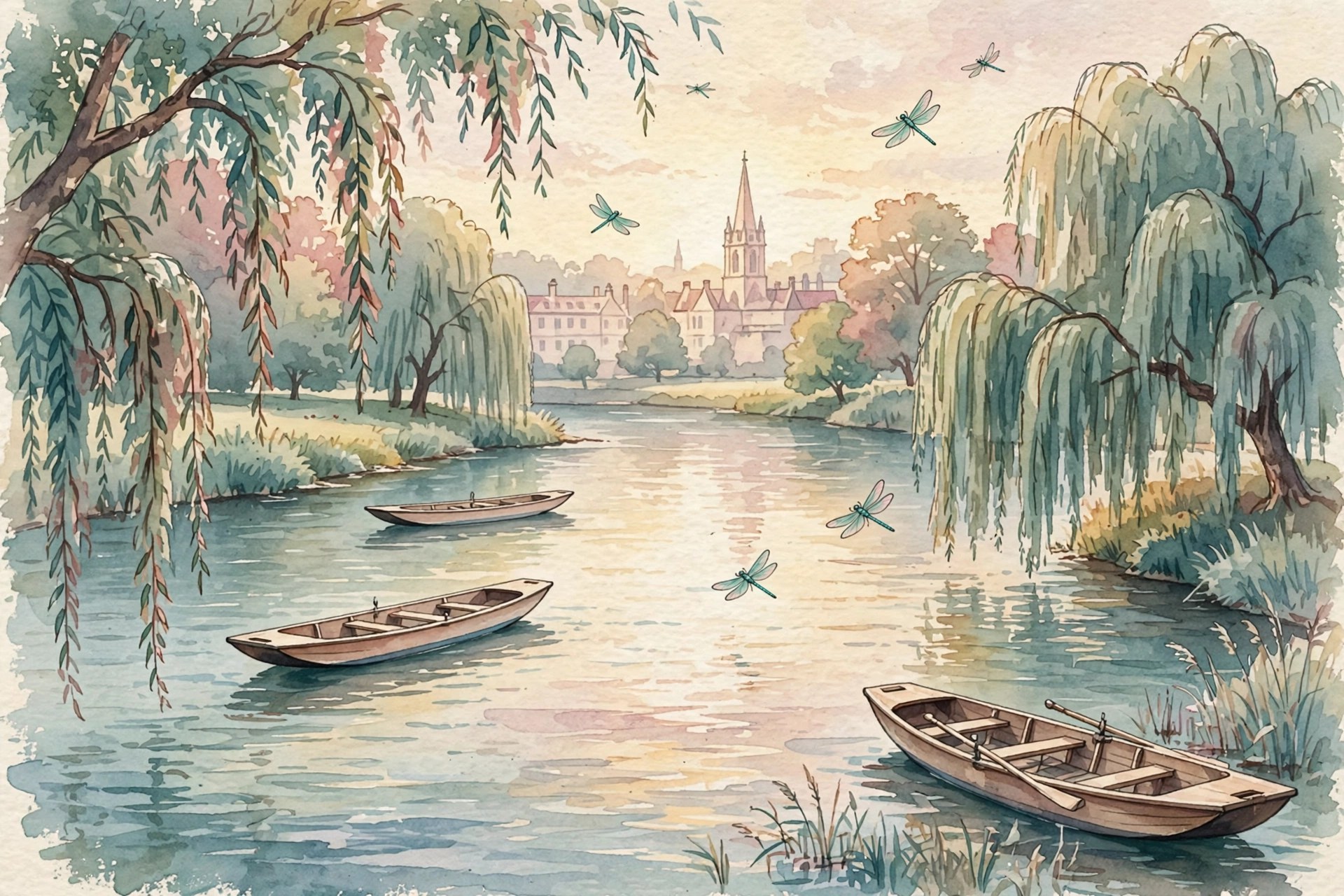
Charles Dodgson, a mathematics lecturer at Christ Church, became a friend of the family and a favorite of the children. He took Lorina, Alice, and Edith on river outings, told them stories, and photographed them. Alice — the middle sister, ten years old in the summer of 1862 — was, by Dodgson’s account, his particular audience: quick, imaginative, and insistent. When he told the story that became Wonderland on the boat trip of 4 July 1862, it was Alice who asked him to write it down.
What she contributed
The documented facts are these:
- Alice asked Dodgson to write out the story, and he gave her the handwritten, hand-illustrated manuscript — Alice’s Adventures Under Ground — as a Christmas gift in 1864.
- The dedication poem in the published Wonderland addresses “a dear child, in memory of a summer day.”
- Alice herself, in later life, spoke warmly of the boat trips and confirmed that the stories began there.
Beyond that, the record thins. How much of the fictional Alice’s personality derives from the real Alice is a matter of interpretation, not documentation. Carroll never claimed the character was a portrait; the name is the documented link, and the spirit — by the testimony of those who knew both — may be the rest. This site does not claim more.
Her later life
Alice grew up, as children do. She married Reginald Hargreaves, a cricketer and landowner, in 1880, and lived at Cuffnells in Hampshire. She had three sons; two were killed in the First World War. In 1928, widowed and needing money, she sold the original Under Ground manuscript at Sotheby’s — it fetched £15,400, then the highest price ever paid for a manuscript at auction. (It was later bought by American collectors and presented to the British Library, where it remains.)
She died in 1934, at eighty-two. In her final years she was celebrated — and sometimes wearied — as the living original of one of literature’s most famous children. She is said to have remarked that being the “real Alice” was, on the whole, a tiresome distinction.
The Dodgson question, handled plainly
Readers today often ask about the nature of Charles Dodgson’s attachment to Alice Liddell and her sisters. The honest answer is that the historical record is incomplete and contested. Dodgson’s diaries for the years in question are missing pages; his friendships with children were open, family-approved, and typical of a Victorian bachelor don in some respects and unusual in others; modern scholars disagree about how to read them. This site takes no position beyond the documented facts: he was a family friend, the stories were told openly on family outings, and Alice Liddell herself maintained affection for him into old age. Readers who want the full debate should consult the biographies listed on the sources page.
Source notes
- Biographical facts: Alice Pleasance Liddell (1852–1934); daughter of Henry Liddell, Dean of Christ Church; married Reginald Hargreaves 1880; the 1928 Sotheby’s sale of the Under Ground manuscript; the manuscript’s current home in the British Library.
- The dedication: prefatory poem to Alice’s Adventures in Wonderland (1865).
Limitations
- No contemporary transcript of the 1862 boat trip exists; accounts come from later recollection.
- The missing diary pages and the scholarly debate around them are real; this page summarizes the state of evidence rather than resolving it.
- Photographs of Alice Liddell are real and numerous; none are reproduced here, by editorial choice.