"Deep Dive: Kindle"
The e-reader Amazon built in secret to disrupt itself — before anyone else could.
The threat
By the mid-2000s, Bezos saw the logic clearly: digital books would eventually replace physical ones, and if Amazon — the bookstore — didn’t lead that transition, someone else would. The internal champion was Steve Kessel, the executive running Amazon’s physical-books business, who argued Amazon should cannibalize itself. Bezos agreed and gave Kessel a mandate with extraordinary secrecy.
Lab126
Hardware development was hidden inside Lab126, Amazon’s R&D lab founded in 2004 in Cupertino (the name nods to A→Z: 1st and 26th letters). The Kindle project ran for three years under tight compartmentalization — even within Amazon, few knew the full picture.
The launch (November 2007)
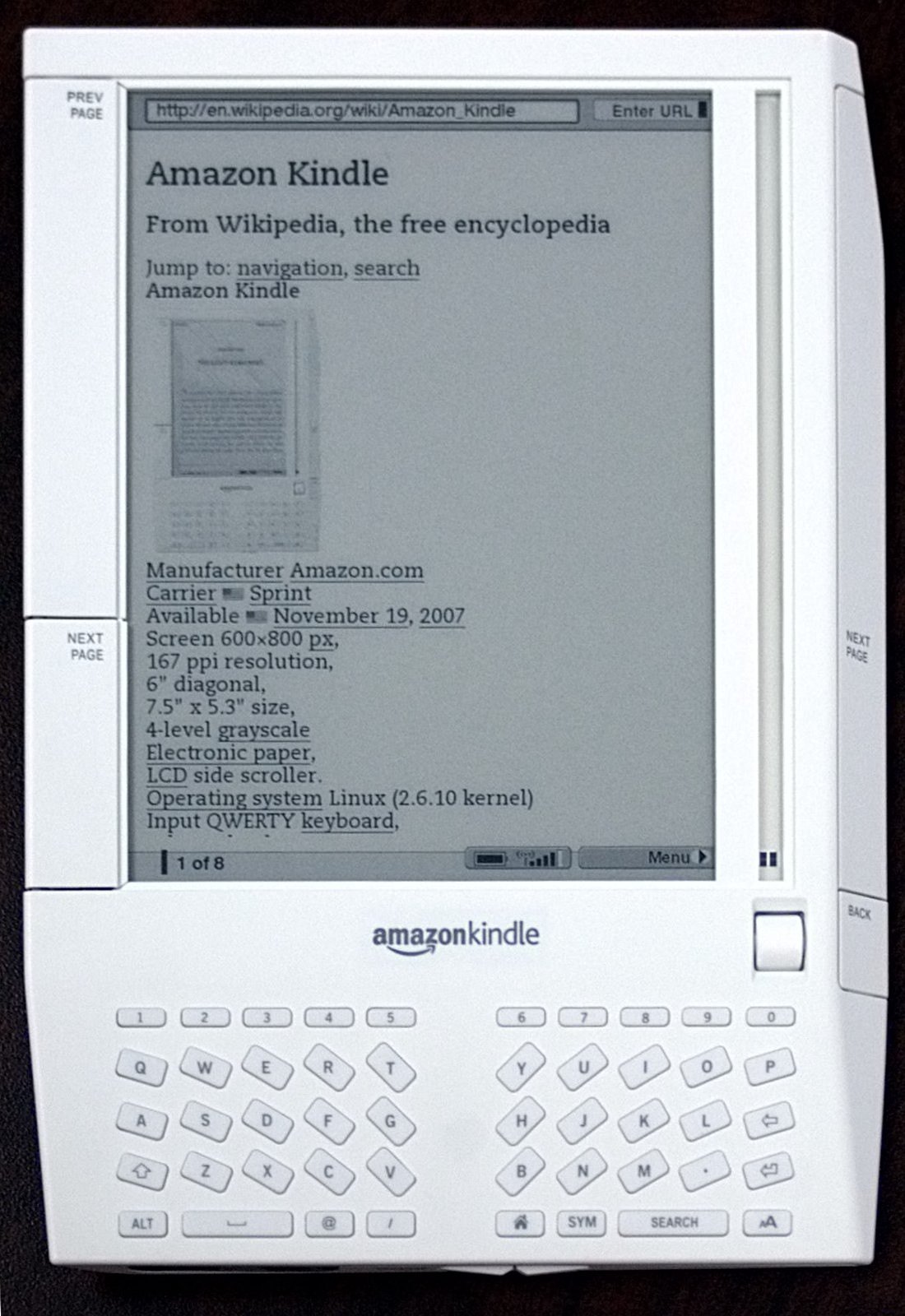
The first Kindle launched 19 November 2007 at $399: e-ink display, free 3G “Whispernet” downloads (no computer required — the key insight), and a store with ~90,000 titles. It sold out in hours. The device wasn’t the most advanced e-reader technically; it was the first one where buying a book took sixty seconds with no cables, no syncing, no computer.
The ecosystem play
Kindle’s real product was the frictionless loop: one-click purchase → Whispernet delivery → reading progress synced. Later moves — the $139 Kindle 3 (2010), Kindle Fire tablets (2011), Kindle Unlimited, self-publishing via KDP (which upended publishing’s gatekeepers) — extended the loop. By the early 2010s, Amazon sold more Kindle e-books than all print books combined (per Amazon’s 2011 announcement).
The publishing wars
The Kindle put Amazon on a collision course with publishers: the $9.99 e-book pricing fight, Macmillan’s 2010 showdown (Amazon briefly delisted Macmillan titles), and the agency-model battles that drew the DOJ’s 2012 e-book price-fixing case against Apple and publishers (Amazon was the beneficiary, not the defendant). Authors split: many decried Amazon’s leverage; many more built careers on KDP that traditional publishing would never have offered.
Source notes
- Self-cannibalization logic, Kessel’s role, Lab126 secrecy and founding (2004, Cupertino), launch (19 Nov 2007, $399, Whispernet, ~90,000 titles, sold out): The Everything Store (Stone, 2013).
- Kindle 3 ($139, 2010), Fire (2011), “more Kindle books than print” (May 2011 announcement): Amazon announcements.
- Macmillan delisting (Jan–Feb 2010), $9.99 pricing dispute, DOJ e-book case (2012): contemporaneous reporting.
Limitations
- Sales figures for Kindle hardware were rarely disclosed by Amazon; market-share estimates come from analysts.