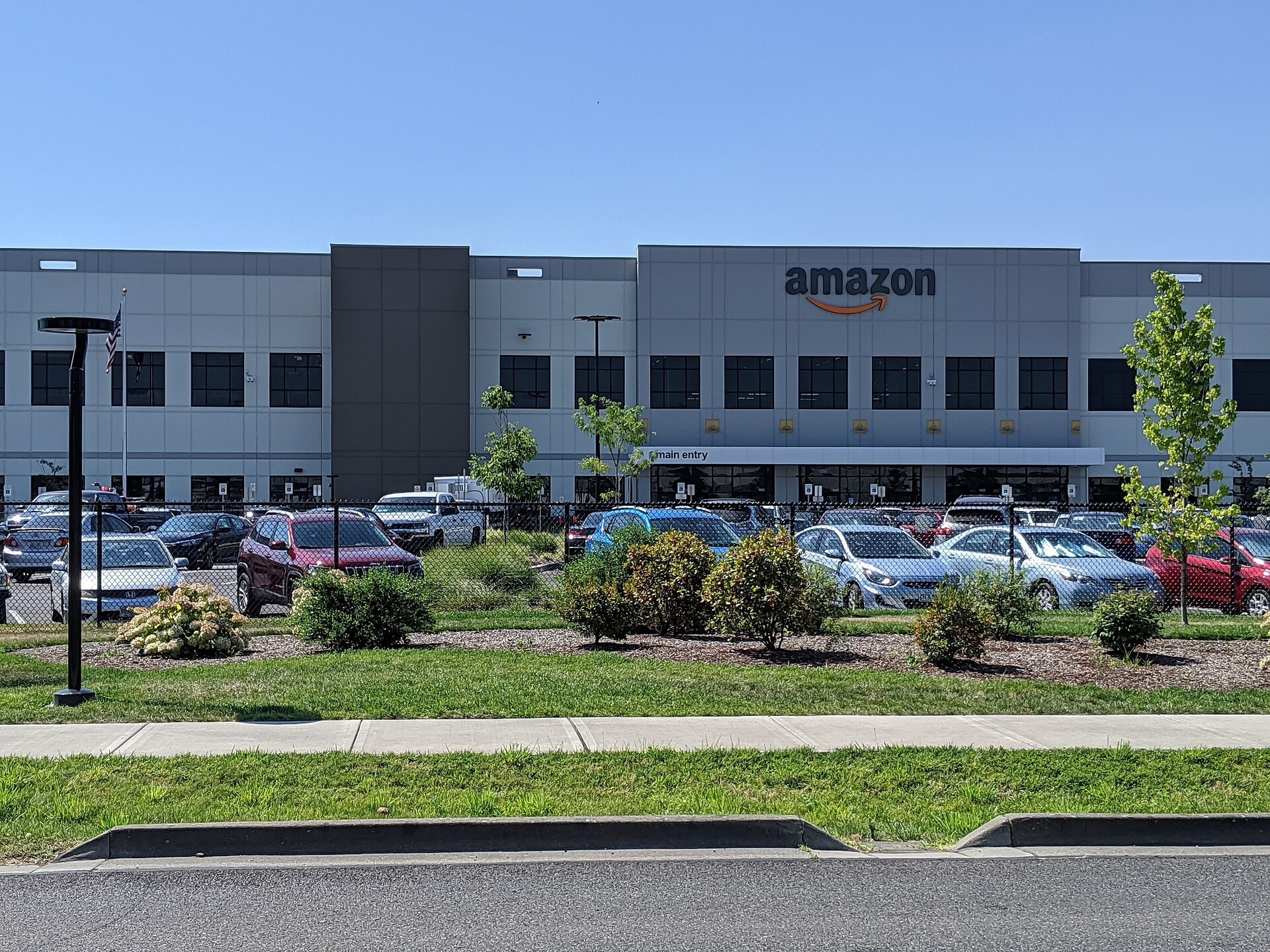
The Amazon Story
How a Bellevue-garage bookstore became the everything store — the decisions, the near-death, and the machine it became.
Why books
In 1994 Bezos made a list of about twenty products that could be sold on the internet and chose books for cold economic reasons: no dominant mail-order bookseller existed, the catalog was enormous (millions of titles vs. a superstore’s ~175,000), and books were standardized commodities — a copy is a copy. The insight wasn’t “sell books”; it was that the internet rewarded selection over location.
1994–1997: The garage and the IPO
Incorporated 5 July 1994 (as Cadabra, renamed Amazon.com after the river), launched 16 July 1995. Early operations were famously frugal: desks made from doors, a bell rung when a sale came in (retired when the ringing never stopped). The company went public 15 May 1997 at $18/share, raising $54M. The 1997 shareholder letter — reprinted with every annual report since — introduced Day 1.
1998–2000: “Get big fast”
Amazon expanded into music and video (1998), then toys, electronics, and home improvement (1999), plus the zShops marketplace precursor. The mantra was “get big fast”; critics called it “Amazon.toast.” Revenue grew violently; profits didn’t exist.
2000–2001: The crash
The dot-com collapse cut Amazon’s stock roughly 95% from its December 1999 peak. Analysts predicted bankruptcy. Bezos raised convertible debt, cut ~15% of staff (about 1,300 people in January 2001), closed some distribution centers — and in Q4 2001 posted the company’s first profitable quarter: $5M net income on $1.12B revenue. Survival, barely, was the achievement.
2002–2010: The flywheel years
The surviving company built the machinery of the next two decades:
- Marketplace (2000/2002): third-party sellers on Amazon’s platform — today the majority of units sold.
- Prime (2005): $79/year for free two-day shipping; conceived by engineer Charlie Ward and championed by Bezos as a loyalty flywheel — Prime members buy more, which funds better selection and faster shipping, which attracts more members.
- The “two-pizza” organization: small, autonomous, single-threaded teams owning services end to end.
- Kindle (2007): the e-reader that made Amazon a hardware company and digitized its original category. (See Kindle.)
2010–2021: The conglomerate
The 2010s layered on: Kiva warehouse robotics (2012, $775M), Amazon Studios and original video, the Fire Phone failure (2014, ~$170M write-down — Bezos’s favorite kind of failure: a big swing), Echo and Alexa (2014–15), Whole Foods (2017, $13.7B), the HQ2 contest (2017–18), and AWS’s rise to the company’s profit engine. By the time Bezos stepped down as CEO on 5 July 2021, Amazon employed over a million people and AWS generated most of its operating income.
The controversies, stated plainly
A neutral account can’t skip them:
- Labor: Amazon’s warehouses have faced sustained criticism and organizing efforts over pace, injury rates, and surveillance; the company disputes the characterizations and cites safety investments. Unionization votes (e.g., Bessemer, Alabama, 2021; Staten Island JFK8, 2022 — the latter won by organizers) are matters of public record. This site reports outcomes, not verdicts.
- Market power: regulators in the US and EU have pursued antitrust cases against Amazon (notably the FTC’s 2023 suit); outcomes are pending or partial as of this writing. The claims are stated as claims, with their sources.
- Taxes: reporting (including ProPublica, 2021) has shown Amazon and Bezos paying low effective federal income tax rates in some years through legal mechanisms (R&D credits, stock-compensation deductions, loss carryforwards). The figures are disputed in interpretation; the mechanisms are legal and documented. See Myth vs. Record.
Source notes
- Founding narrative, book choice, garage details, parental investment (~$300,000), IPO terms: Brad Stone, The Everything Store (2013); see founding-1994.md.
- “Get big fast,” crash survival, Q4 2001 profit, convertible debt: The Everything Store; Amazon SEC filings; see dotcom-survival.md.
- Prime conception (Charlie Ward), flywheel framing: The Everything Store; Bezos shareholder letters; see prime.md.
- Kindle/Lab126/Kessel: The Everything Store; see kindle.md.
- Kiva ($775M, 2012), Fire Phone (~$170M write-down, 2014), Whole Foods ($13.7B, closed 28 Aug 2017), HQ2 timeline: dated press reporting and Amazon filings; see logistics-empire.md.
- Labor disputes, union votes (Bessemer 2021, JFK8 2022), FTC suit (filed Sept 2023), ProPublica tax reporting (June 2021): attributed to their outlets; characterizations from involved parties are labeled as such — see mythology-vs-record.md.
Limitations
- This page summarizes; the deep dives carry the full citations.
- Antitrust and labor matters are ongoing; outcomes described are as of the page’s writing — see methodology.md on dating contested claims.