DEEP DIVE 01 · PROPULSION
Reusable Rockets
The bet that nearly killed SpaceX — and then remade the launch industry.
The problem
Rockets were disposable. Every launch threw away the vehicle — tens of millions of dollars burned per flight. Musk’s first-principles conclusion: the raw materials of a rocket cost a few percent of its price, so the price could collapse if the vehicle could be reused like an airplane.
The hard part
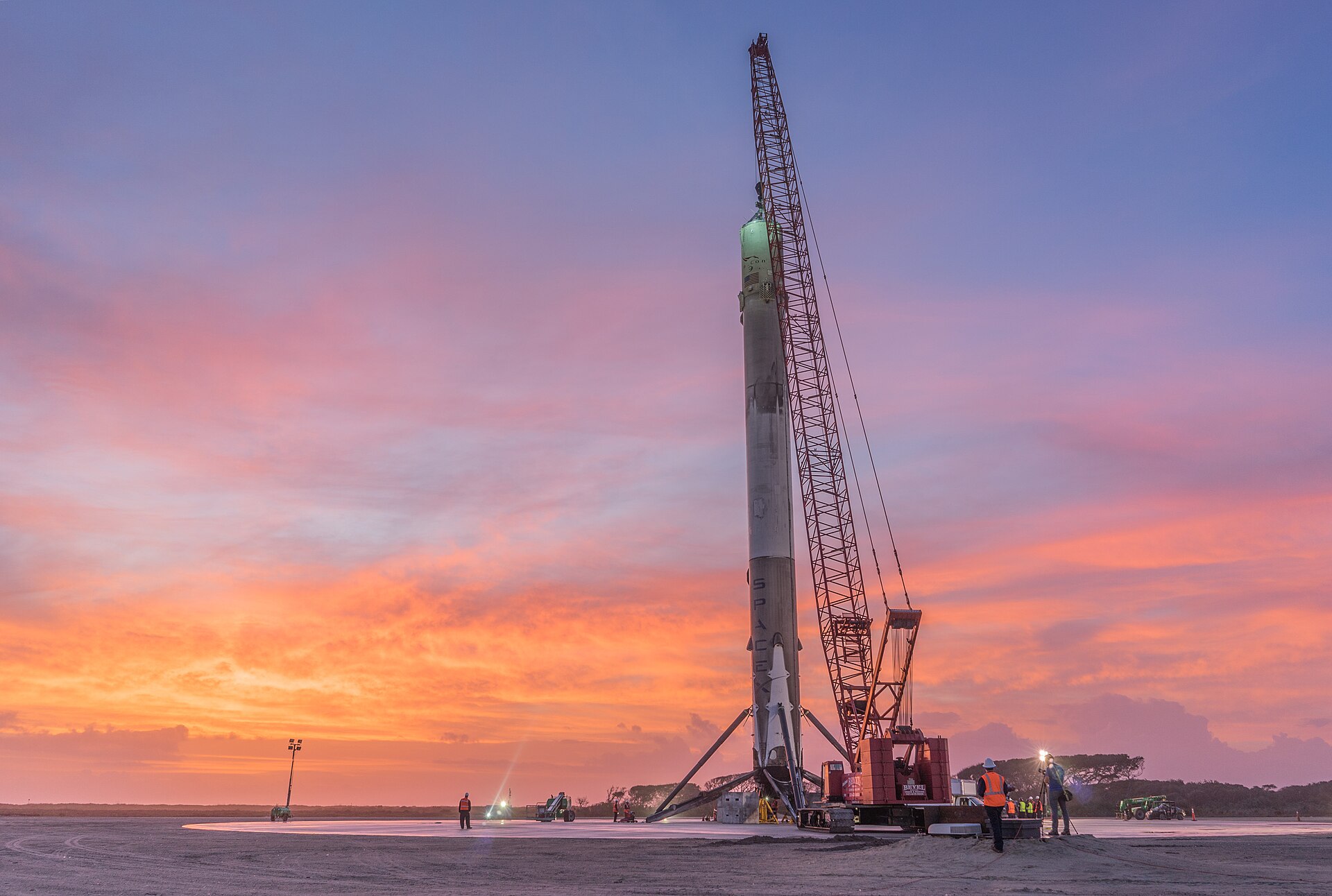
Landing an orbital-class booster means flipping a 14-story tube traveling at hypersonic speed, reigniting its engines, and setting it down on a pad — or a drone ship in the ocean. SpaceX failed publicly and repeatedly: the early 2015 attempts ended in spectacular crashes (the famous blooper reel, released 2017, documents them).
The breakthroughs
- December 21, 2015: Orbcomm OG-2 — first Falcon 9 first-stage landing at LZ-1.
- April 8, 2016: First droneship landing (CRS-8).
- March 30, 2017: First reflight of a landed booster (SES-10).
- February 6, 2018: Falcon Heavy’s two side boosters land in formation.
- October 13, 2024: Starship Flight Test 5 — the Super Heavy booster caught by the launch tower’s arms.
The economics
SpaceX’s published list price for a Falcon 9 launch fell to roughly $67 million (as listed publicly in the mid-2020s) — a fraction of legacy launch costs. Reuse didn’t just cut prices; it let SpaceX fly at a cadence competitors couldn’t match, launching the majority of the world’s orbital payloads in peak years and deploying Starlink.
Source notes
Launch history from SpaceX webcasts and announcements; pricing from SpaceX’s published price list; industry context from NASA and financial press reporting. See sources.