DEEP DIVE 04 · INTERPLANETARY
Mars Plans
The founding reason SpaceX exists — a self-sustaining city on Mars. The plan, the hardware, and the honest state of the schedule.
The founding idea
SpaceX was founded in 2002 with Mars as its stated purpose. Musk’s premise: humanity must become multiplanetary to survive long-term existential risk. The goal is a self-sustaining city on Mars — not flags and footprints, but civilization-scale settlement.
The architecture
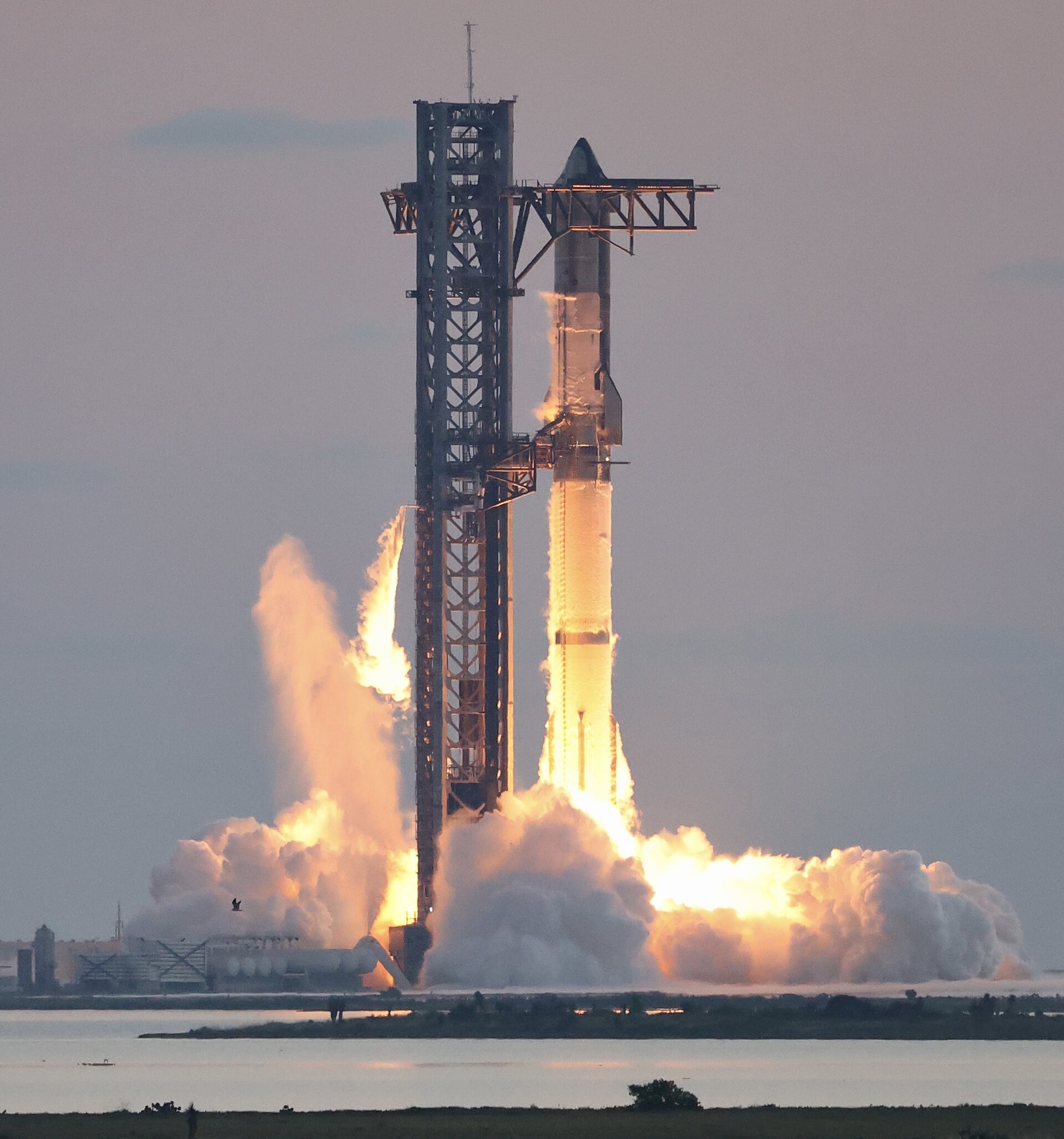
Starship is the vehicle: a fully reusable super-heavy system (Super Heavy booster + Starship upper stage), refueled in orbit, designed to carry ~100+ people or 100+ tonnes to Mars. Key milestones so far:
- 2023: First integrated flight tests (April and November) — both ended in vehicle loss, both yielded data.
- 2024: Flight Test 3 (March) reached orbital velocity; Flight Test 4 (June) achieved controlled splashdowns; Flight Test 5 (October 13, 2024) caught the booster with the tower arms.
- NASA’s bet: Starship was selected as the Human Landing System for Artemis III — the first crewed Moon landing since Apollo — which makes Mars hardware also Moon hardware.
The timelines (and the slips)
Musk’s Mars dates have slipped for two decades: early talk of humans on Mars within 10–20 years (2011), 2016–2017 presentations implying 2020s cargo missions, later talk of the late 2020s. As of 2026, no crewed Mars mission has flown. The pattern is documented on Mythology vs. Record: aspirational management or chronic overpromising, depending on your view.
The honest state
Starship is the largest flying rocket ever built and the only fully reusable super-heavy system in development. Orbital refueling, life support for Mars transit, and in-situ resource utilization (making fuel on Mars) remain unsolved at scale. The hardware is real; the city is a plan.
Source notes
Flight-test history from SpaceX webcasts and FAA records; presentation timelines from the 2016/2017 IAC talks; Artemis HLS from NASA announcements. See sources.