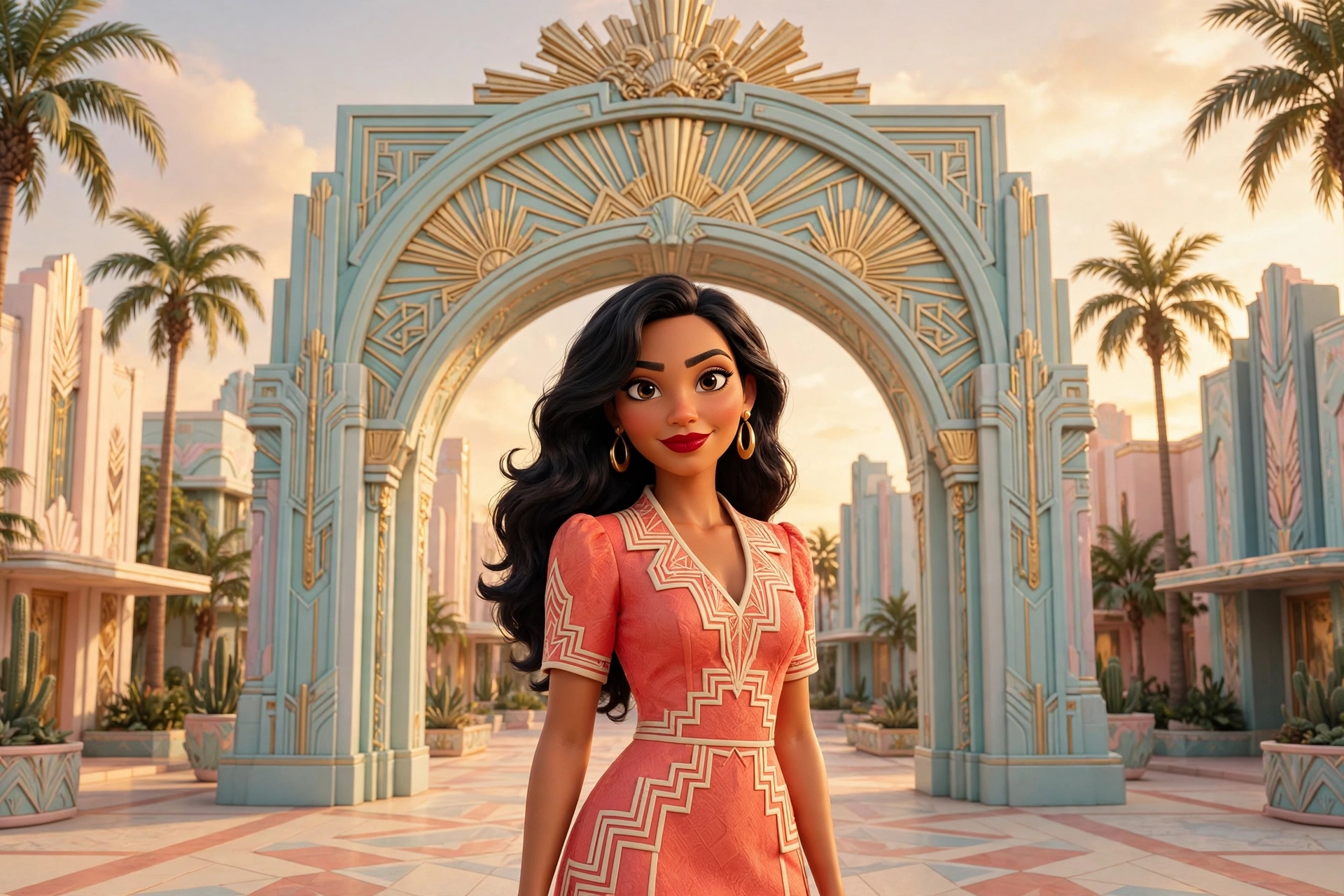
"The World: Miami Neon"
The fictional city Maria Reyes calls home — a stylized Miami of pastel art-deco days and neon Latin nights. None of it is the real Miami; all of it feels like her.
The premise
Miami Neon is the fictional setting built for Maria Reyes: the real Miami’s greatest hits, remixed into a character’s playground. Pastel art-deco hotels line Ocean Drive, cafecito windows never close, domino games are spectator sports, and the night runs on neon and percussion. It’s heightened, warm, and permanently golden-hour — a city designed so that Maria always has somewhere to arrive.
This is not the real Miami, Florida. Real places are evoked, never documented; real people never appear. The fictional city’s tour is on Maria’s Miami.
The rules of the world
- It’s always almost summer. Weather exists for drama: sudden golden-hour rainstorms that end in double rainbows, never hurricanes, never gray weeks.
- Music is infrastructure. Every street has a beat; silence is a plot event.
- Night belongs to neon. After dark the palette flips — pastel gives way to electric pink, teal, and gold.
- Everyone knows Maria. She’s a local legend across every subculture, which is how one character anchors a whole city.
- Confidence is contagious. The city’s unofficial physics: being around Maria measurably raises your main-character energy.
- No real people. The city is populated entirely by fictional characters. This rule is absolute — see Methodology.
Districts
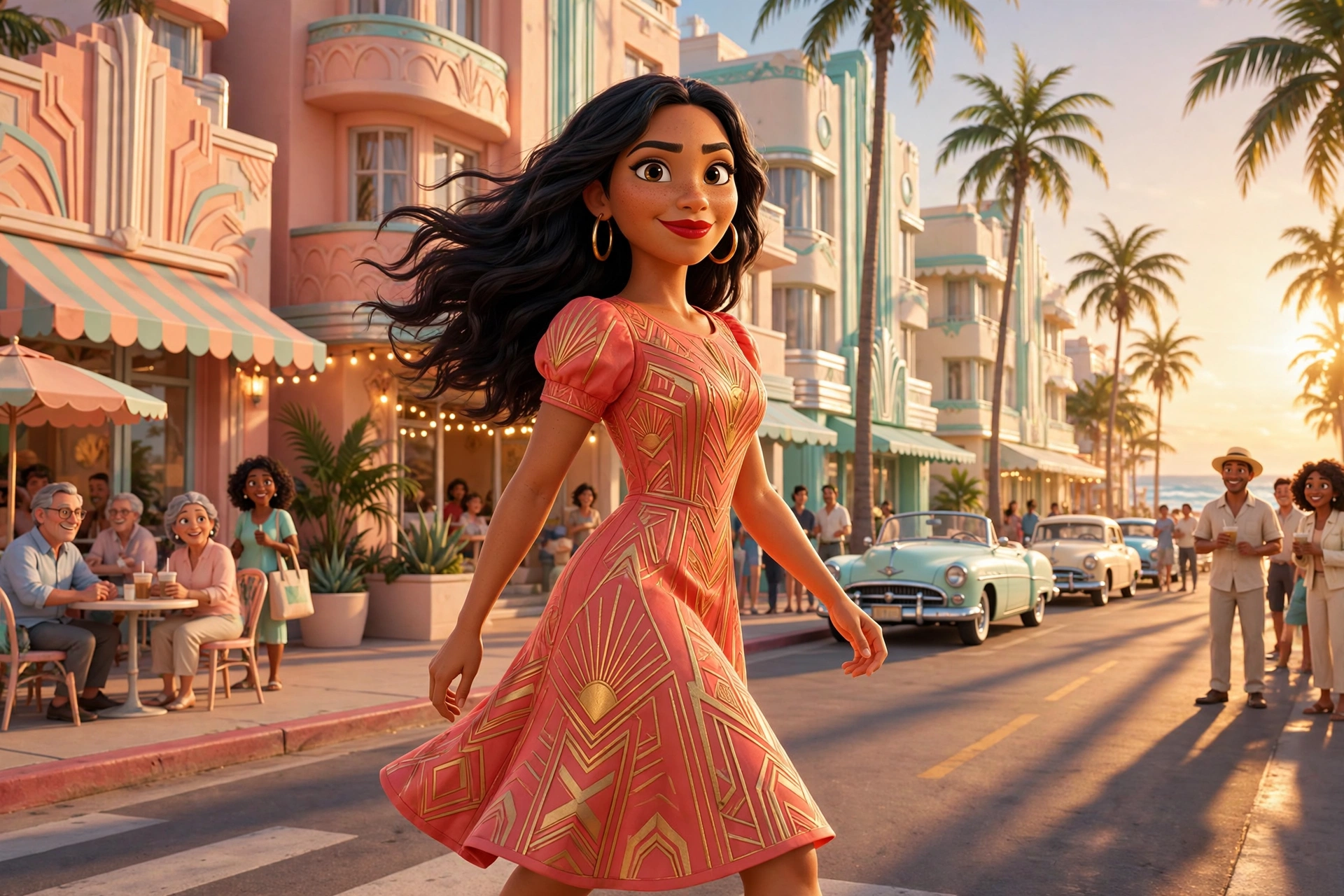
Ocean Drive — the runway
Pastel art-deco hotels, palm shadows, vintage cars that exist purely for aesthetics. This is Maria’s daytime runway: she walks it like a fashion show that forgot to hire an audience, and acquires one anyway. Key spots: the Coral Dawn Hotel (her unofficial office — she holds court by the pool), Neon Palms Café (bottomless cafecitos, top-tier chisme).
Calle Ocho corridor — the heart
The fictionalized Little Havana: domino park, fruit stands, ventanitas, murals that change when you’re not looking. Maria’s abuela’s old street. The domino tables at Parque de los Reyes are where reputations are made and destroyed before lunch. Maria is banned from competitive play at two tables (long story — see Adventures & Stories) and welcomed like royalty at the other six.
The Rooftops — the night shift
A constellation of rooftop venues above the neon line, connected by Maria’s legendary Rooftop Run — a single-night circuit of five parties that only she has ever completed. DJs compete for her arrival the way restaurants compete for critics.
Biscayne Bay — the exhale
Boats, sunrise cafecitos on the water, the one place Maria goes quiet. Her thinking spot is the bow of her friend Tito’s boat, La Reina, at dawn. Even hurricanes of personality need a harbor.
The Deco Backstreets — the mystery
Quieter art-deco side streets where the murals move and the old theaters play movies for one viewer at a time. Maria’s adventures tend to start here — see Adventures & Stories.
Landmarks
| Landmark | What it is | Maria’s connection |
|---|---|---|
| The Coral Dawn Hotel | Pastel art-deco hotel, Ocean Drive | Unofficial office; poolside court |
| Parque de los Reyes | Domino park, Calle Ocho corridor | Banned at two tables, royalty at six |
| La Reina | Tito’s boat, Biscayne Bay | Dawn thinking spot |
| Neon Palms Café | 24-hour cafecito window | Chisme headquarters |
| The Sunburst Theater | Deco backstreet cinema | Where her movie nights happen |
| The Five Rooftops | Rooftop venue circuit | Only completer of the Rooftop Run |
The city’s calendar
- Carnaval Neon (spring) — the fictional street festival; Maria leads the opening parade every year.
- Noche de Neón (midsummer) — one night when the whole city goes neon; Maria’s birthday-adjacent legend.
- Domino Championship Week (fall) — the city’s most serious unserious event.
- Golden Hour Season (winter) — the sunsets get longer and nobody questions it.
Source notes
- Miami Neon is the production’s original fictional setting for Maria Reyes (2026-09-26), built outward from her verbatim card description “Miami heat, Latin confidence.”
- The setting evokes real Miami culture respectfully and fictionally; it documents nothing real and depicts no real people.
- Setting art generated in-house (2026-09-26); see the image credits on this page.