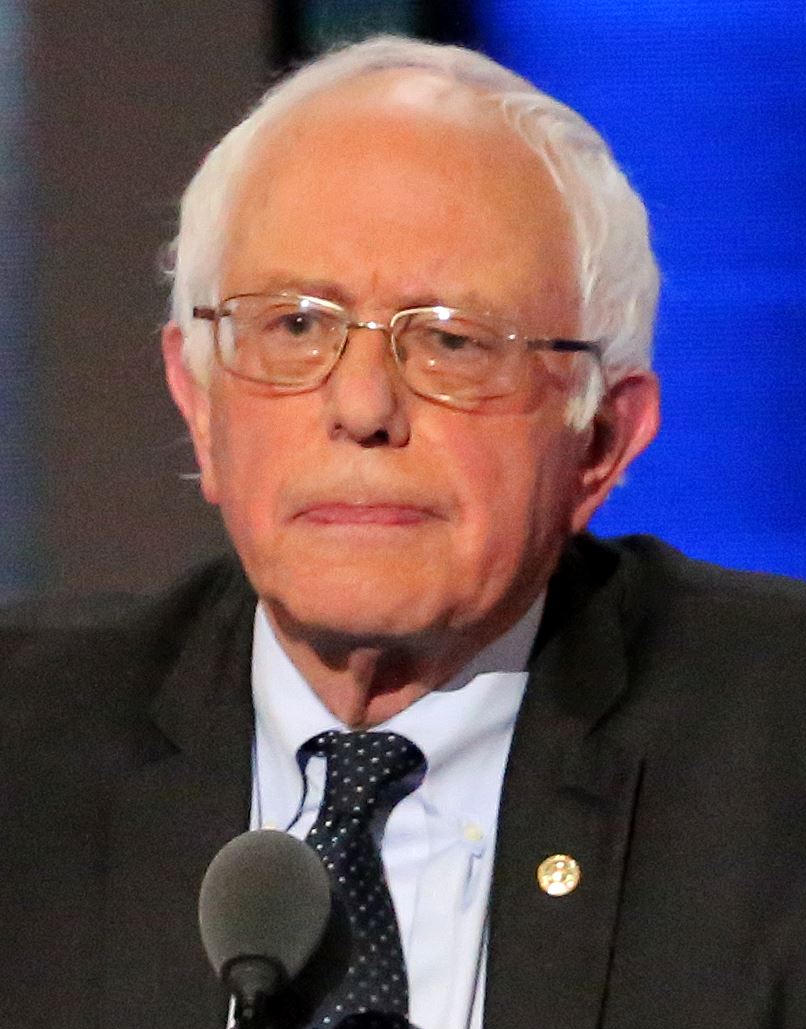
2016 Campaign
The insurgent campaign that won 23 contests and 13.2 million votes — and reshaped the Democratic Party's debates.
Launch
Sanders announced his candidacy for the Democratic presidential nomination on May 26, 2015, at a rally on the Burlington, Vermont, waterfront — the same waterfront his mayoral administration had fought to keep public. He entered the race as a heavy underdog against former Secretary of State Hillary Clinton.
The campaign
Sanders’s campaign was built on small-dollar fundraising: the campaign reported an average donation of about $27, a figure widely cited in reporting, and raised roughly $228 million over the cycle, according to Federal Election Commission filings as reported in the press. His platform centered on Medicare for All, tuition-free public college, a $15 minimum wage, and breaking up large financial institutions — his stated positions.
He won the New Hampshire primary decisively and carried 23 contests overall, drawing some of the largest rally crowds of the cycle.
The results
By the commonly used tabulations of the 2016 Democratic primaries:
- Popular vote: about 13,210,550 votes (43.1%).
- Contests won: 23.
- Convention delegates: 1,865 (1,848 pledged and 17 unpledged, in the convention roll-call accounting).
Clinton clinched the nomination in June 2016.
The endorsement
Sanders endorsed Clinton on July 12, 2016, at a joint rally in Portsmouth, New Hampshire, saying: “I have come here to make it as clear as possible as to why I am endorsing Hillary Clinton and why she must become our next president.” He spoke for her at the Democratic National Convention in Philadelphia on July 25, 2016.
Aftermath and interpretation
Analysts across the spectrum credit the 2016 campaign with moving the Democratic Party’s policy conversation leftward — on health care, the minimum wage, and college affordability — though they disagree about how much of that shift the campaign caused versus reflected. The role of superdelegates and the Democratic National Committee’s handling of the primary remained contentious; leaked DNC emails in July 2016 showed staff favoring Clinton, a revelation that led to the resignation of DNC chair Debbie Wasserman Schultz. This site reports the facts of the controversy without taking a side in it.
Source notes
Vote, delegate, and fundraising figures reflect commonly used tabulations reported in reputable outlets and on the 2016 Democratic primaries’ reference pages; see the sources page. Direct quotations are cited with venue and date on the sayings page.
Factual baseline: September 2026.