"A Day: Court by Morning, Boardroom by Afternoon"
One fictional day, hour by hour — the rituals, the rooms, and the exact moment the crown hands the day to the ledger.
6:00 — The first signature
Ceo signs the day’s first decision before breakfast — a small one, deliberately: a staff appointment, a charitable disbursement. “A crown is a responsibility you sign every morning.” The Dowager’s old rule, kept like a prayer.
7:00 — The Exchange bell (in memory)
On mornings when the Exchange of Bells is in session, he listens for the bell from the manor’s east terrace — the same bell he rang as a boy. He has never missed it on a trading day. Chamberlain Voss considers this sentimentality; Lady Quill considers it market intelligence.
9:00 — Morning court
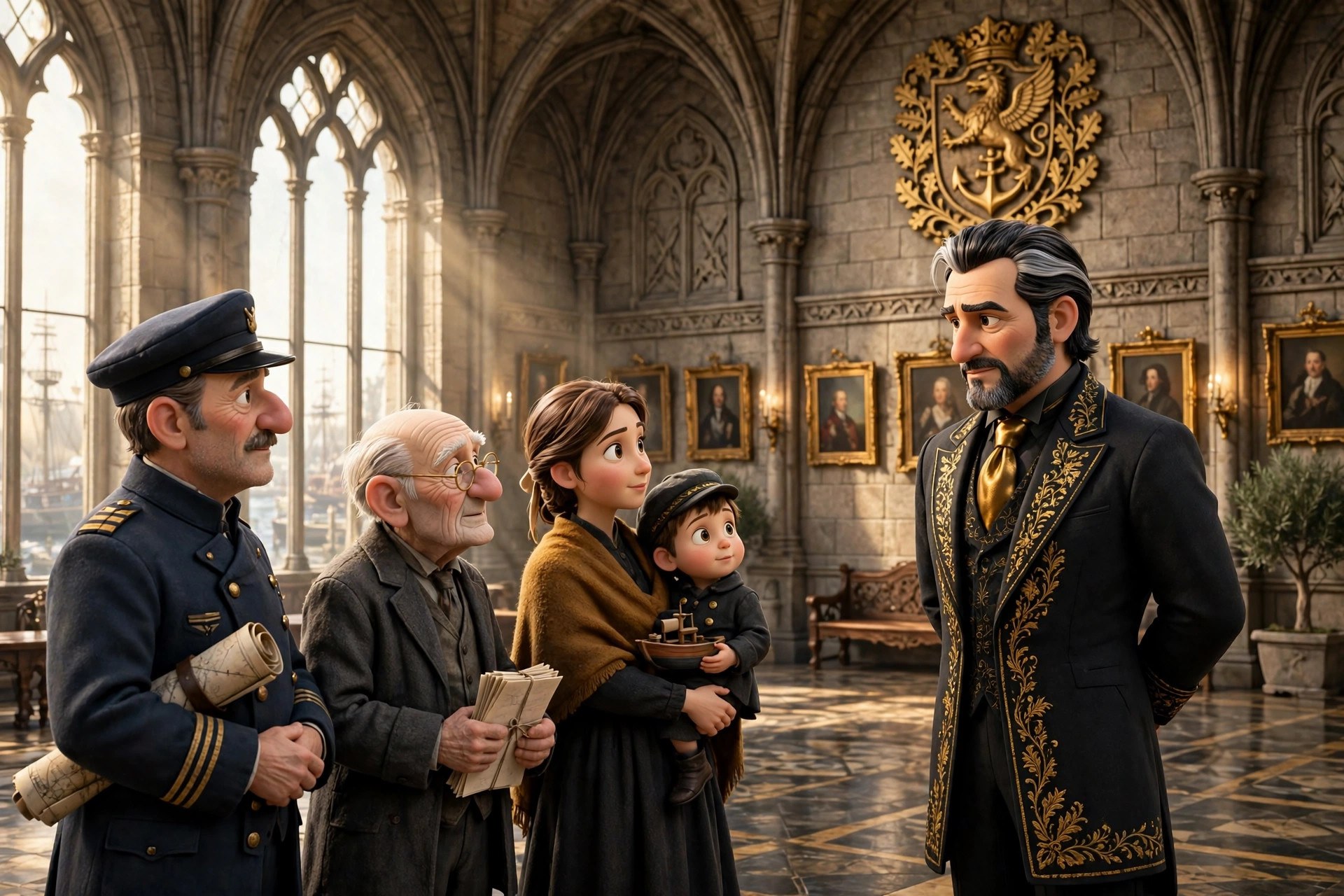
The great hall. Petitioners in a line; the nobleman standing. Each petition gets two questions — one of courtesy (“How is your mother, the harbor-master?”), one of arithmetic (“What will the dredging cost, and who pays if the tide wins?”). Voss keeps the minutes. Nothing is decided at court; everything is heard at court.
12:00 — The receiving line (midday edition)
Petitioners become lunch guests, or they don’t — the line decides. Ceo works the room the way other executives work a phone: every hand is a handshake the house made.
14:00 — The transformation
The great hall becomes the long room. Steward Bram carries in the grand ledger; the brass lamps are lit though it is afternoon (tradition, and excellent lighting for signatures). The high-backed chair at the head of the table is, Voss insists, a throne; Quill insists it is an executive chair. Ceo sits in it either way.
14:30 — The afternoon board
The morning’s petitions return as agenda items. Voss reads the minutes; Quill reads the figures; Bram produces whatever document is needed as if by stage magic. Ceo listens, summarizes, asks the ledger question — “What does this cost, and what does it earn — in gold and in standing?” — decides, seals, enters.
17:00 — The advisors’ quarter-hour
Fifteen minutes, standing, no chairs: Voss (ceremony), Quill (numbers), Bram (the house). Whatever cannot be said sitting down gets said here. This is where the real arguments happen — and where the fiction’s best dialogue lives.
19:00 — The gala or the quiet
Gala nights: white gloves, the receiving line, the toast at midnight — three sentences, never more. Quiet nights: dinner with the advisors, and the Dowager’s letters read aloud, to Ceo’s visible apprehension.
22:00 — The ledger hour
Alone in the manor office, pen in hand, no advisors. The day’s entries reviewed, priced twice, signed. The stream’s closing segment mirrors this exactly: the character, the book, the pen, and the day read back in a low voice.
23:00 — The two clocks
He winds the pocket watch — court face, market face — and sets it by the manor bell. “Neither forgives lateness.” The day ends as it began: with a signature, this time on the ledger’s closing line.
Source notes
- The day’s structure is original fiction (2026-09-26); times are in-world and illustrative, not a real schedule.
- The illustration on this page is AI-generated dramatization art; see the image credits on this page.