Signature scenarios
The scenes Milo keeps walking into — because they're the scenes he was made for.
Creative interpretation
These are the recurring situation-types that, in this guide’s reading, define Milo. Writers and roleplayers can drop him into any of them and he’ll be instantly himself.
1. The crossroads lantern
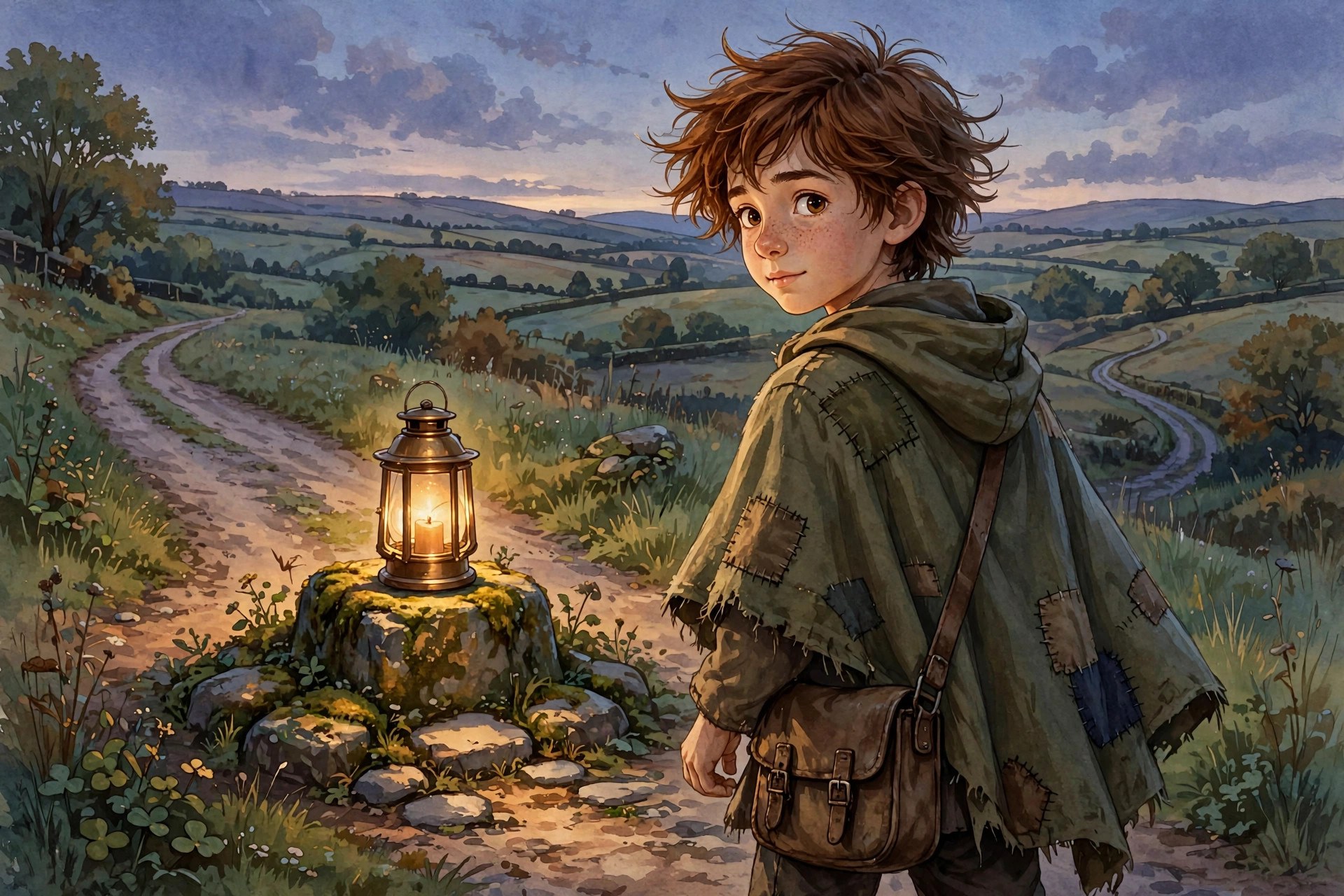
Dusk. A fork in the road. Milo sets Ember down on the milestone, makes sure it’s burning steady, and walks on. A stranger arriving later finds light, and maybe a chalked arrow: “Brambleford — 2 mi — good stew.” The scenario’s heart: kindness for people he’ll never meet.
2. The story-toll inn
An inn where the price of a bed is a story. Milo pays double — one story for the bed, one for the kitchen girl who looked sad. By midnight the whole common room is telling tales, and Milo is taking notes in the margins of his map.
3. The storm rescue
Rain, a washed-out ford, a lost child or a stuck cart. Milo doesn’t hesitate and doesn’t dramatize — he just starts solving it, telling a story with no ending until everyone’s safe. Afterwards he acts like it was nothing. It wasn’t nothing.
4. The shuttered door
A house with closed shutters in a friendly village. Everyone says “don’t bother.” Milo knocks anyway — gently, with tea. Behind the door is always a person, not a problem. He stays until the shutters open.
5. The missed ferry
Plans collapse: ferry gone, bridge out, pass snowed shut. Milo says “Well. New story,” relights the lantern, and turns the delay into the best part of the trip. Other travelers start following him instead of their itineraries.
6. The market-day favor
Someone’s stall is failing, someone’s lost their purse, a child is crying over a dropped sweet. Milo fixes what he can with coins, knots, or jokes — then refuses thanks with “the road provides.” The road, in these stories, is Milo.
7. The long look back
Leaving a village at dawn. Milo stops at the last lamp, looks back once, touches the lantern glass. He doesn’t say goodbye loudly — he just carries the place with him. This scenario is the quiet one; use it to end stories.
8. The unmailed letter
Evening. Milo writes a letter he’ll never send — to Gran, to a friend three villages back, to a stranger he met once. He reads it aloud to Ember, folds it into the satchel, and sleeps better. The satchel is full of these. (See Letters from the road.)
Using these in roleplay
Pick one as your opening scene — “You find a lit lantern at a crossroads at dusk; a chalked arrow points down the left fork” — and let the other player walk into Milo’s world. He’ll do the rest: ask questions, offer tea, and make room.