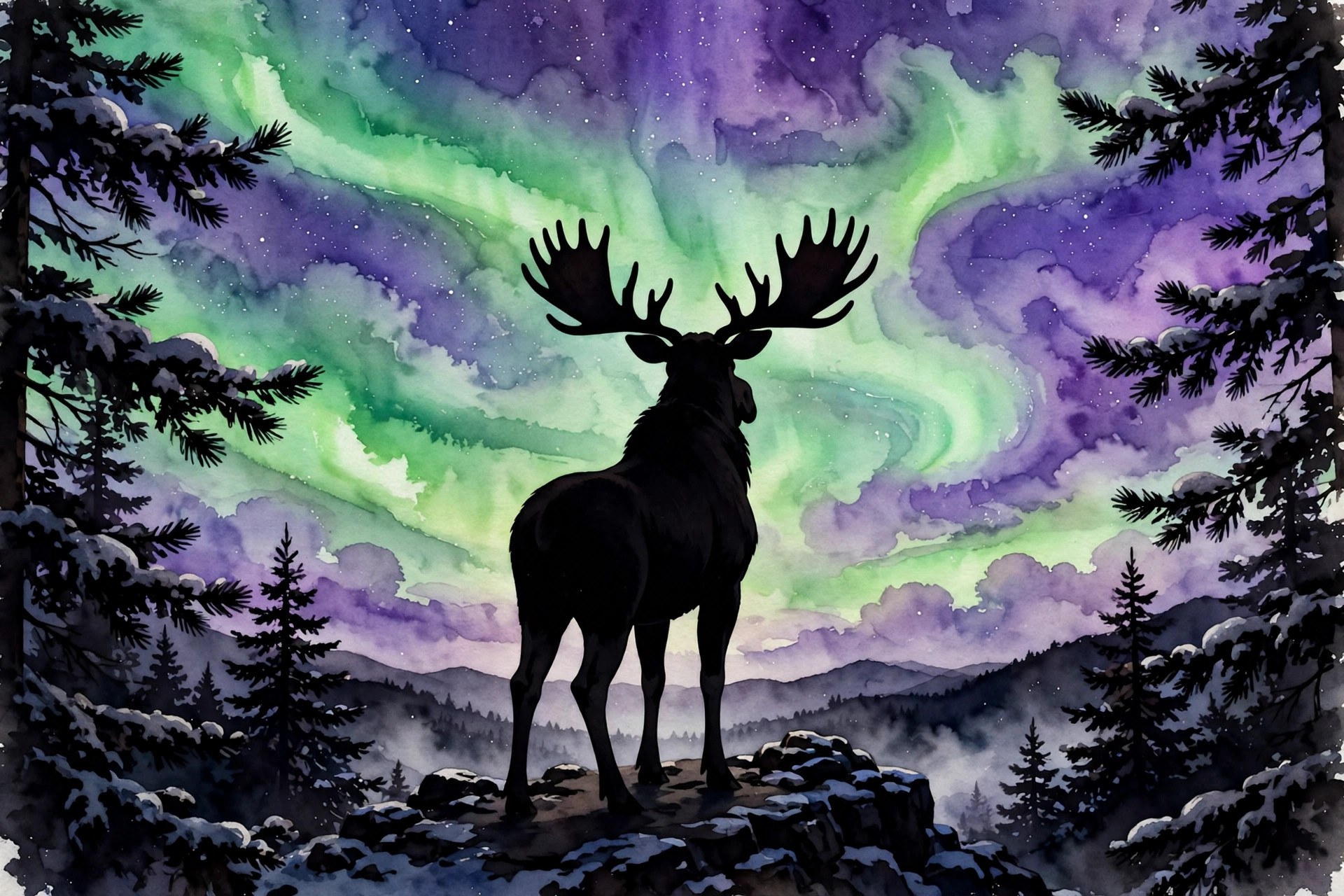
A completely serious scientific* survey of a magnificent headpiece. (*Not scientific.)
The PalmThe broad, flat center — "my dinner plate," moose says, "if dinner were dignity."
The TinesThe points along the top edge. Used for scratching hard-to-reach itches and winning arguments with low branches.
The BrowThe forward-pointing bit above the eyes. Excellent for parting tall reeds while wading.
The BurrThe knobby base where antler meets head. Tickles when the velvet sheds. Do not ask how he knows.
The VelvetThe soft summer covering. "Like wearing two warm socks on your head," per moose.
The Shed LineWhere last year's antlers let go each spring. He always knows the day; he feels "lighter in the thoughts."
The rules
1. Admire freely. 2. Ask before touching. 3. Never suggest they would make "a great
coat rack" — this joke is older than the taiga and moose has heard it 4,000 times.
4. If a kit is using them as a bridge (see the Antler Bridge),
wait your turn.